
Quick answer: Importers choosing a China treadmill manufacturer often miss the details that decide landed cost and after-sales risk: legal factory identity, production role, motor type, running belt size, incline structure, max user weight, console options, packing strength, certificate match, spare parts, QC records, payment terms, loading plan, and warranty workflow. A safe factory checklist should verify the company, the exact treadmill model, the production process, and the export documents before sample approval or bulk production.
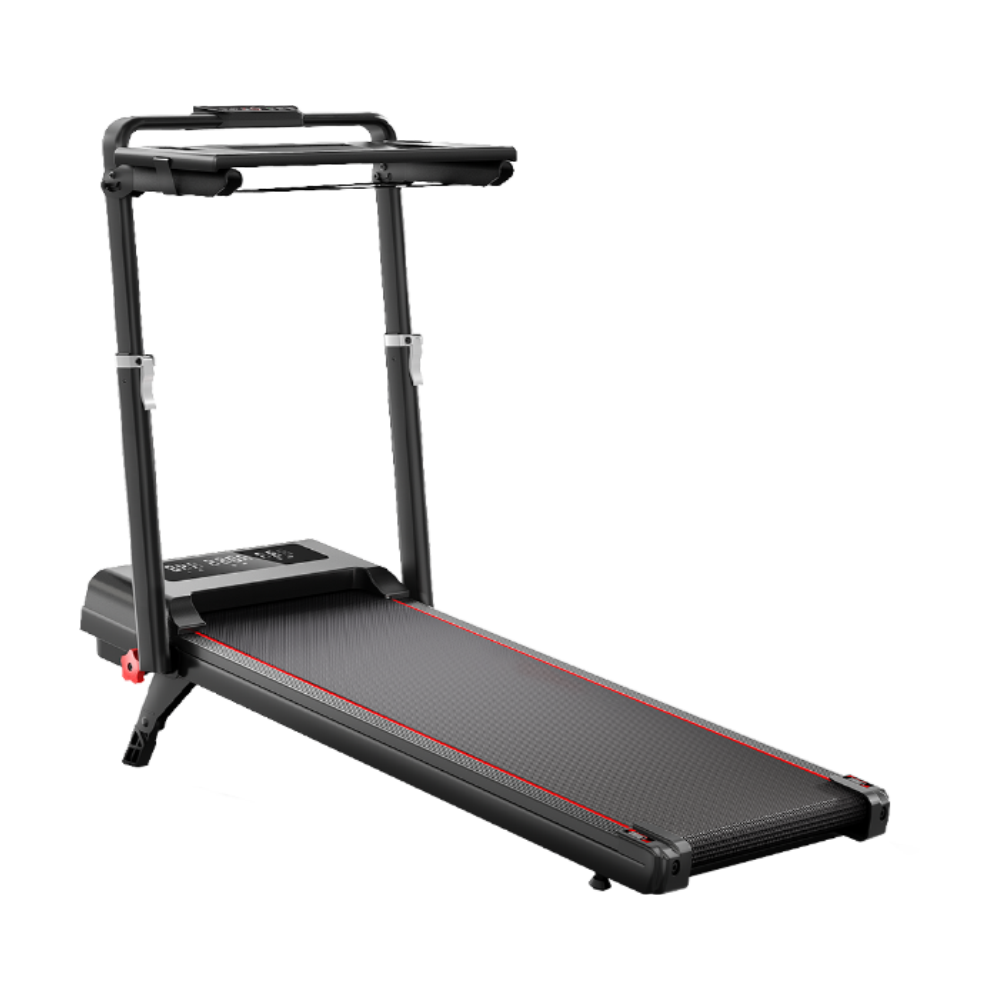
China has many treadmill suppliers, but importers should not evaluate them by price and catalog photos alone. Two quotes may use similar product pictures while hiding different motors, controllers, belt sizes, incline systems, cartons, certificates, and spare-part support. Those differences can decide whether a shipment becomes a stable product line or a long after-sales problem.
This checklist explains what importers often miss when sourcing treadmills from China and how to verify a manufacturer before placing a larger order. It also uses YPOO’s current treadmill range and factory information as a practical reference for what buyers should request from any supplier.
Start With Factory Role
The first question is not the unit price. It is whether the company can prove its role in production. A real treadmill manufacturer should be able to show legal company name, factory address, product line, sample room, production process, QC area, warehouse, packing area, and export order experience. A trading company may still help with sourcing, but it should be transparent about the actual factory behind the quoted model.
YPOO describes itself as one of the largest manufacturers in China, specializing in treadmills, elliptical trainers, spinning bikes, and rowers, with development, design, production, and direct sales. For importers, this kind of factory positioning should still be verified model by model through live walkthroughs, samples, documents, and inspection records.
1. Legal Entity and Payment Match
Many importers ask for a catalog before they ask who they are paying. That is a mistake. Before sending a deposit, request the business license, legal company name, address, export entity, bank beneficiary, and contract name. These should be consistent or clearly explained in writing.
If the sales company, factory name, payment account, and certificate holder are all different, the importer should understand the relationship between them. Different names are not always a problem, but unexplained differences can make claims, inspections, and repeat orders harder to manage.
2. Factory Address and Live Audit
Ask for a live video audit before sample confirmation. The video should show the entrance sign, sample area, production line, testing area, warehouse, packing area, and the exact treadmill model in one continuous walkthrough. Short cropped videos are less useful because they may not prove factory control.
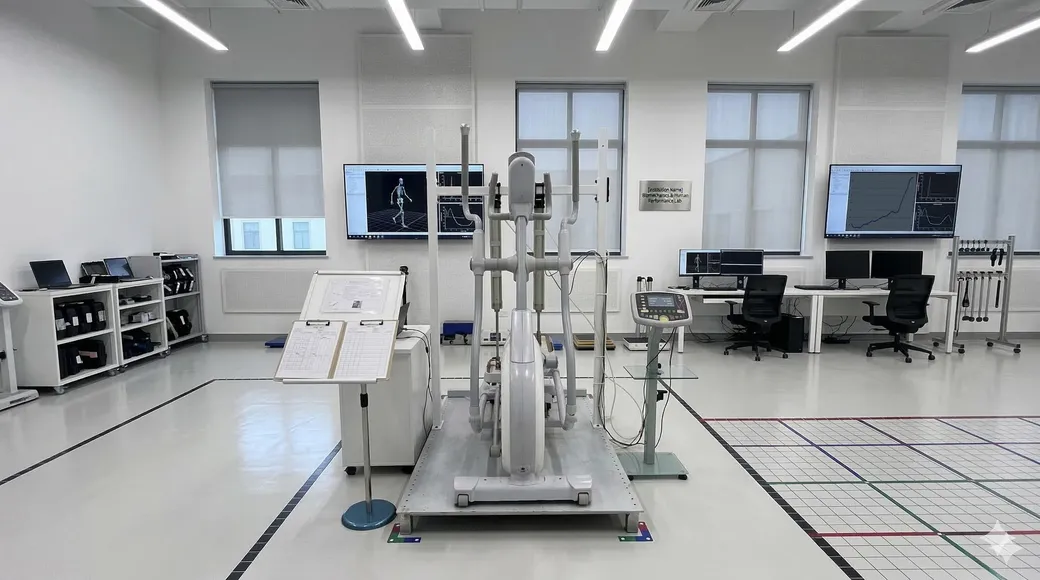
YPOO’s about page lists manufacturing areas such as motor and electronic control, metalworking, injection molding, spray painting, assembly line, national-level laboratory, CNAS laboratory, and high-standard quality inspections. Importers can use these areas as audit checkpoints when checking any China treadmill manufacturer.
3. Product Line Fit
Do not ask a factory for “a treadmill” without defining the channel. A walking pad, home treadmill, incline treadmill, semi-commercial treadmill, and commercial treadmill have different expectations for motor, belt size, speed, incline, frame weight, carton, warranty, and spare parts.
YPOO’s treadmill OEM manufacturer page covers treadmills, walking pads, inclined treadmills, home-use treadmills, and semi-commercial treadmill models. Importers should ask the manufacturer to recommend models based on target market, retail price band, sales channel, destination country, order quantity, certificate needs, and warranty policy.
4. Motor Type and Real Power
Motor claims are easy to misunderstand. Ask whether the treadmill uses DC, AC, or BLDC motor, and whether the quoted number is CHP, HP peak, or another value. Importers should also ask about controller match, heat performance, noise, speed stability, and warranty coverage for motor and controller.
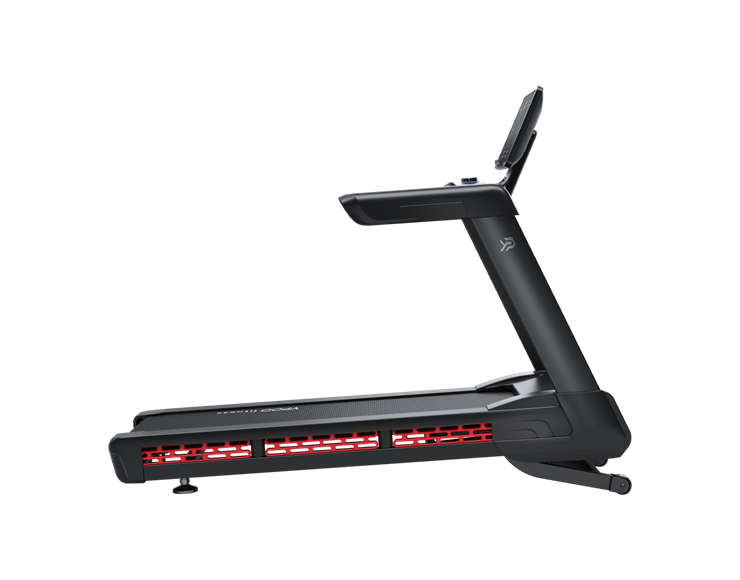
YPOO’s current treadmill category includes BLDC, DC, and AC motor options across different models. For example, YP-M7 Ultra lists BLDC 1.5/1.75 CHP, YP-M8 lists DC 2.0 CHP or AC 2.0 CHP, and YP-M8 Pro lists AC 3.0 CHP. Importers should compare motor type together with running belt size, user weight, speed, and channel positioning.
5. Running Belt Size
Running belt size affects user comfort, product positioning, carton size, and freight cost. A compact walking pad may use a smaller belt, while semi-commercial models often need wider and longer running surfaces. Ask for running belt size, running deck structure, belt material, roller size, lubrication requirement, and replacement belt availability.
If the factory only provides product photos, ask for a specification sheet and measuring video. Importers should not approve marketing photos until the belt size and final product dimensions are confirmed.
6. Speed, Incline, and Use Case
Speed range and incline should match the target channel. A walking pad may focus on lower speed and compact storage. A home treadmill may need enough speed for general running. A semi-commercial treadmill may need stronger speed stability, incline structure, deck support, and frame weight.
Importers often miss whether incline is manual or auto, how many levels are supported, and whether incline parts can be supplied as spare parts. Ask how incline is tested and whether the incline system affects packing, assembly, or warranty.
YPOO Treadmill Spec Examples for Importers
A serious China treadmill manufacturer should provide model-specific specifications. Below are examples from YPOO’s current treadmill category:
| Model | Motor | Speed / Incline | Running Belt | Max User |
|---|---|---|---|---|
| YP-M7 Ultra | BLDC 1.5/1.75 CHP | 1.0-18.8 km/h, auto 0-36 levels | 520*1410 mm | 150 kg |
| YP-M8 | DC 2.0 CHP / AC 2.0 CHP | 1.0-20.8 km/h, 0-18 levels | 580*1600 mm | 150 kg |
| YP-M8 Pro | AC 3.0 CHP | 1.0-25.0 km/h, auto 0-25 levels | 580*1600 mm | 180 kg |
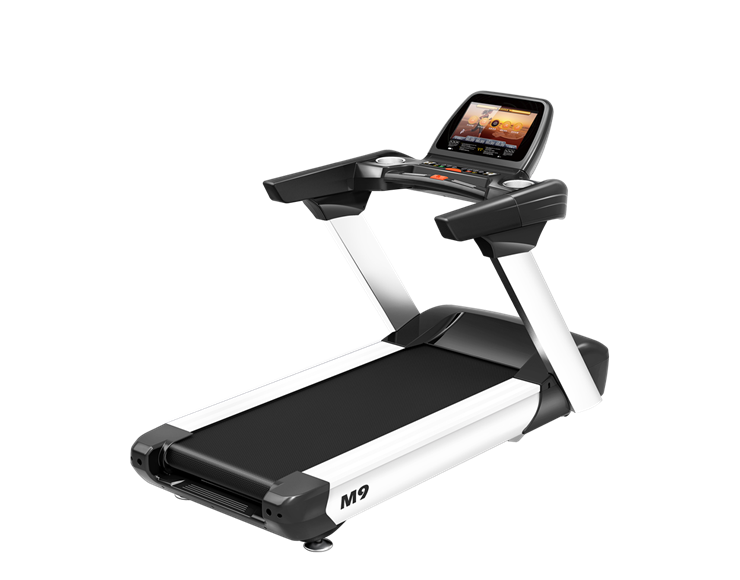
| YP-M9 | AC 7.0 HP peak | 1.0-25.0 km/h, 0-18 levels | 600*1650 mm | 200 kg |
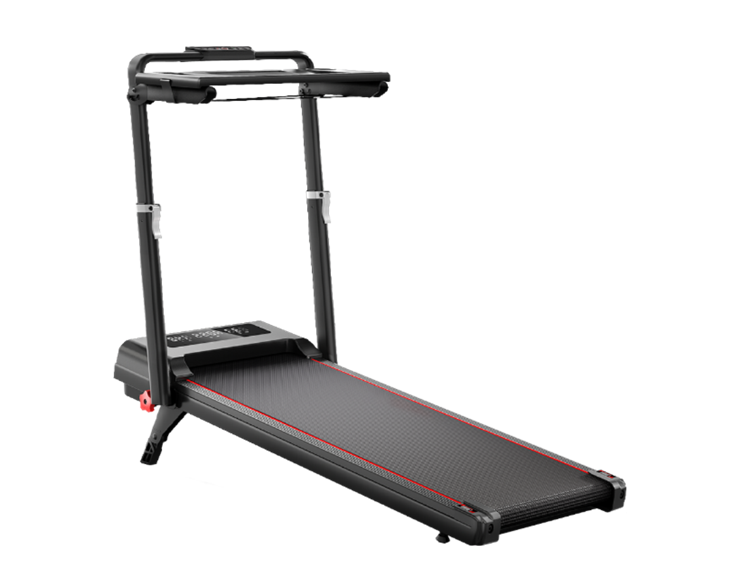
| YP-Mini Change | BLDC 1.0 CHP | 1.0-6/12 km/h, auto 15 levels | 450*1200 mm | 120 kg |
| YP-MX | BLDC 2.5 CHP / AC 2.0 CHP | 1.0-20.0 km/h, auto 0-18 levels | 560*1550 mm | 150 kg |
Use this level of detail as the minimum standard for quote comparison. If a supplier cannot provide motor, speed, incline, belt size, weight, user weight, carton, certificate, and spare-part details, the quote is incomplete.
7. Net Weight, Gross Weight, and Frame Strength
Importers sometimes compare two treadmills with similar photos and ignore weight. Net weight and gross weight help reveal whether the product is a compact home model, a stronger semi-commercial model, or a heavier commercial platform. Weight is not the only sign of quality, but it should match the intended use and max user rating.
Ask for frame material, tube size, welding process, deck structure, roller size, belt tension adjustment, transport wheels, folding structure, and max user weight test basis. If the model is for hotel, gym, or studio use, do not treat a light home-use treadmill as a commercial unit.
8. Console, Screen, App, and Language
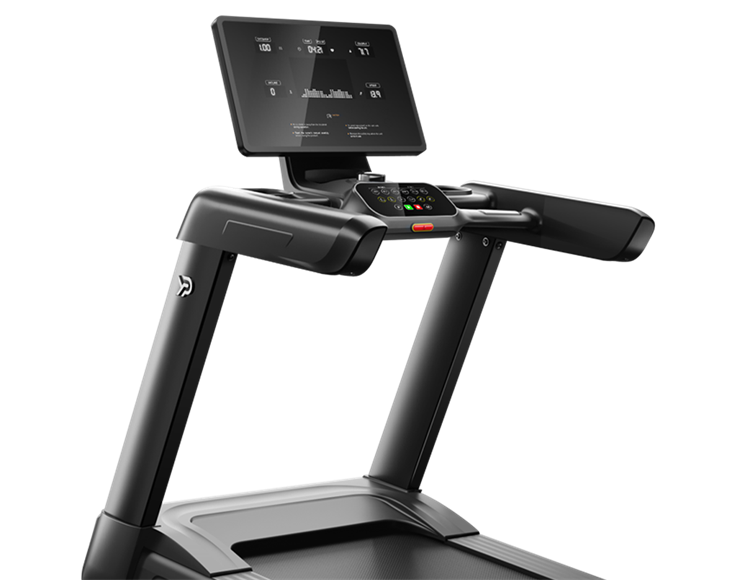
Console options can change cost, lead time, certificate requirements, and after-sales parts. Ask whether the display is LED, LCD, TFT, touchscreen, or app-connected. Confirm language, units, program settings, Bluetooth, heart rate, safety key, emergency stop, speaker, tablet holder, and spare electronics.
If the importer changes the display size or console board after sample approval, certificate and wiring review may be needed again. The final console must match the approved sample and the user manual.
9. OEM and ODM Customization Scope
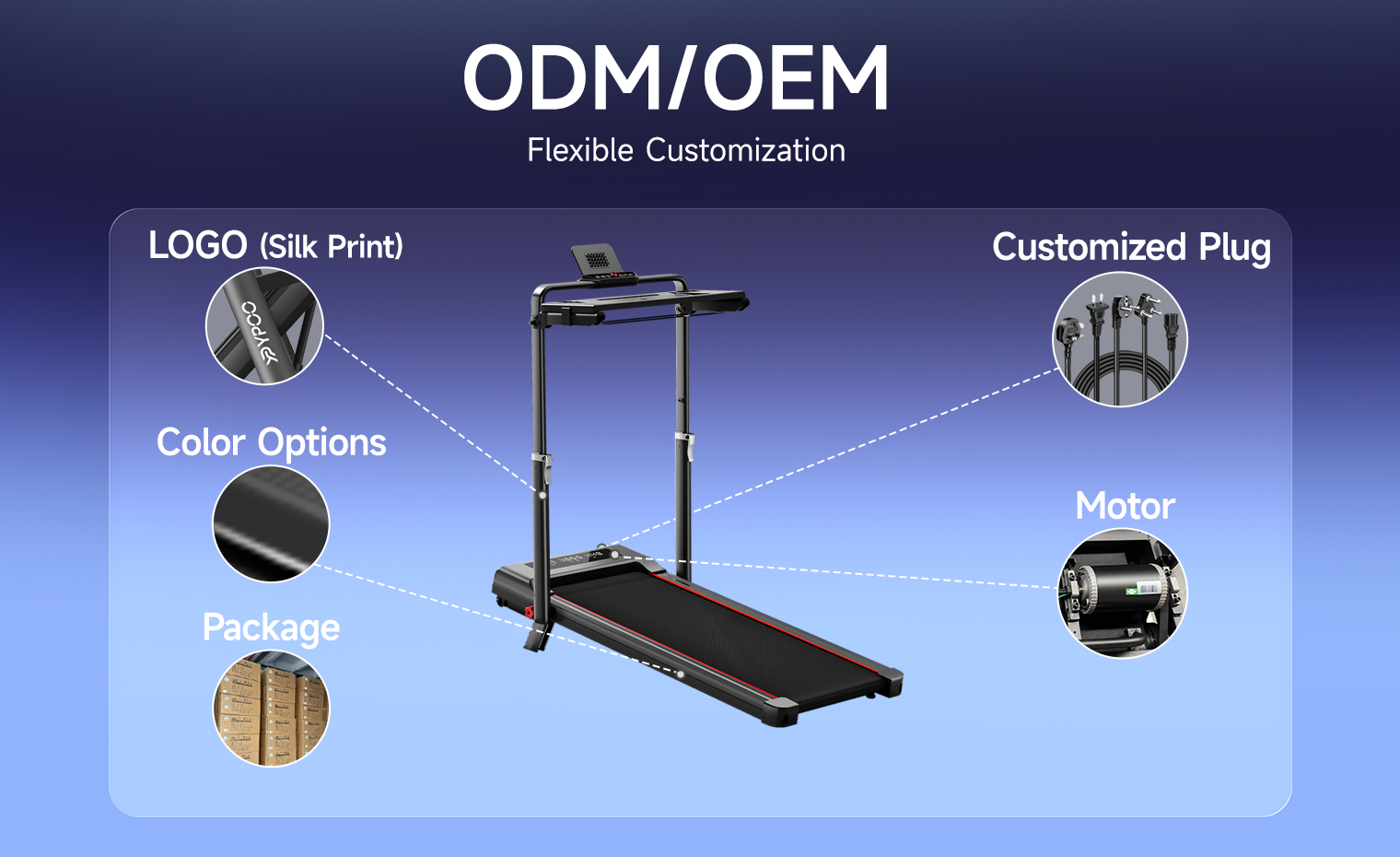
Many importers ask for logo and packaging, but they forget to separate easy OEM changes from deeper ODM changes. Common treadmill OEM changes include logo, color, manual, carton, labels, plug, voltage, app setting, console sticker, accessory list, and sales photos. ODM changes may affect structure, console, motor, controller, incline, folding design, or app experience.
YPOO’s treadmill page highlights factory-direct OEM/ODM support, in-house core parts, ongoing product development, and stable supply chain support. Importers should ask which customization items are standard, which require MOQ, which affect lead time, and which require new testing.
10. Certificate Match
Certificate files must match the exact treadmill model. Ask for CE, RoHS, FCC, UKCA, or other documents required by the destination market and sales channel. Check model number, certificate holder, product photo, technical file, plug, voltage, electronics, console, and issue date.
Do not assume a factory’s general certificate covers every treadmill. If the importer changes motor, controller, console, plug, safety key, app module, or structure, compliance review may be needed before mass production.
11. Packaging and Carton Risk
Treadmills are heavy and costly to ship back. Packaging should be checked before bulk order, especially for e-commerce, dealer networks, and long-distance ocean freight. Ask for carton size, gross weight, foam structure, accessory layout, manual position, barcode, shipping marks, drop-test method, pallet plan, loading quantity, and photos from previous shipments.
Importers often miss carton strength because packaging does not look exciting in a product catalog. In real importing, weak cartons can damage margin faster than a small motor upgrade.
12. QC Records and Pre-Shipment Inspection
Quality control should be visible and model-specific. Ask for incoming material checks, motor and controller testing, running belt tracking checks, speed accuracy, incline testing, noise, vibration, folding structure, safety key, console function, appearance, labels, accessories, carton marks, and outgoing inspection records.
For the first order, arrange a third-party inspection or live video inspection before balance payment. The inspection should include random carton opening, function testing, accessory check, spare-part check, label review, and loading photos.
13. Spare Parts and Warranty Workflow
Importers should prepare spare parts before complaints begin. Ask for a spare-part list, exploded diagram, part codes, recommended spare ratio, warranty policy, troubleshooting guide, repair videos, and response time. Key treadmill parts include motor, controller, belt, deck, rollers, console, safety key, side rails, folding parts, incline motor, screws, and power cord.
If the supplier cannot provide spare parts for repeat orders, the importer may be forced to replace whole units instead of solving simple repairs.
14. Shipment, Incoterms, and Documents
Before confirming a China treadmill manufacturer, clarify Incoterms, loading port, lead time, production schedule, inspection date, balance payment condition, packing list, commercial invoice, bill of lading, certificate files, insurance responsibility, and who handles document corrections. Importers should work with their freight forwarder or customs broker for country-specific import requirements.
Do not wait until goods are ready to discuss documents. Document problems can delay shipment or customs clearance even when the treadmills themselves are finished.
Importer Checklist
| Area | What Importers Should Verify | Common Miss |
|---|---|---|
| Factory identity | Business license, address, payment beneficiary, factory role | Paying a sales entity without knowing the real factory |
| Specs | Motor, belt, speed, incline, max user, weight, console | Comparing photos instead of real model data |
| Certificates | Model-specific CE, RoHS, FCC, UKCA, or market files | Assuming one certificate covers all variants |
| Packaging | Carton, foam, gross weight, loading quantity, drop test | Ignoring carton damage risk |
| QC | Pre-shipment inspection checklist and test records | Inspecting appearance but not motor, belt, incline, and console |
| After-sales | Spare parts, exploded diagram, warranty workflow | Ordering no spare parts for the first shipment |
| Documents | Invoice, packing list, B/L, labels, manuals, certificate files | Leaving import documents until shipment week |
Red Flags
- The supplier cannot explain whether it is a manufacturer, trading company, or sales office.
- The same treadmill photo is quoted with different motor or belt specifications.
- The business license, payment beneficiary, factory name, and certificate holder do not match and are not explained.
- The quote does not include running belt size, max user weight, carton details, certificate status, or spare parts.
- The factory refuses a live video walkthrough or third-party inspection.
- The sample has a different console, motor, plug, label, or carton from the bulk order promise.
- The supplier offers a very low price but cannot provide warranty workflow or spare-part codes.
When to Contact YPOO
Contact YPOO when you need help comparing China treadmill manufacturer options for import, wholesale, dealer networks, e-commerce, gyms, hotels, private-label brands, or OEM/ODM projects. YPOO supports treadmill model selection, walking pad and semi-commercial treadmill sourcing, customization discussion, sample planning, packaging review, QC communication, and export order coordination.
You can review the YPOO treadmill OEM manufacturer page, browse YPOO treadmill products, read how to choose a treadmill manufacturer, or contact YPOO to discuss specs, MOQ, samples, packaging, and shipment planning.
FAQ
What should importers check before choosing a China treadmill manufacturer?
Importers should verify legal company name, factory address, production role, payment beneficiary, model specifications, motor type, running belt size, console, certificates, packaging, QC records, spare parts, warranty terms, and export documents.
How can importers compare treadmill quotes from China?
Compare the full specification and landed risk, not only FOB unit price. Review motor, controller, speed, incline, running belt, max user weight, net weight, gross weight, carton, loading quantity, certificates, spare parts, warranty, inspection cost, payment terms, and freight impact.
Why do treadmill certificates need model-level checking?
Certificates should match the exact treadmill model, electronics, plug, voltage, console, product photo, and technical file. If the importer changes motor, controller, console, app module, or structure, certificate review may be needed before production.
Can YPOO support treadmill importers with OEM or ODM projects?
Yes. YPOO supports treadmill OEM and ODM projects for importers, distributors, gyms, hotels, e-commerce sellers, and private-label fitness equipment brands, including model selection, customization, samples, packaging, QC, and shipment planning.
Final Recommendation
The right China treadmill manufacturer should be selected by factory proof, model fit, specification clarity, sample testing, packaging strength, certificate accuracy, spare parts, QC workflow, and export support. Importers that check these details before paying a deposit reduce shipment delays, carton damage, compliance problems, and after-sales claims.
To compare treadmill models, visit the YPOO treadmill page, explore YPOO treadmill products, or contact YPOO for China treadmill manufacturer support.