
Quick answer: Buyers should verify CE fitness equipment documents by checking the EU Declaration of Conformity, applicable EU legislation, harmonised standards, technical documentation availability, test reports, CE label, rating label, warnings, user manual, importer details, and model-specific change records. “CE certified fitness equipment” is often used as a buying phrase, but the real requirement is not a generic certificate. Buyers need proof that the exact product, configuration, voltage, plug, console, wireless module, manual, and label package are covered before production and shipment.
CE documents are easy to request and easy to misunderstand. A supplier may send a PDF with a CE logo, but that does not automatically prove the treadmill, rowing machine, spin bike, elliptical trainer, or commercial gym equipment you are buying is ready for the European market. Importers should read the document package, compare it against the exact model, and confirm who is responsible for the compliance file.
This guide explains what CE documents prove, what they do not prove, and how importers should verify compliance before ordering fitness equipment from a China manufacturer. It is practical sourcing guidance, not legal advice. For final import decisions, buyers should confirm destination-market requirements with a qualified compliance partner, customs broker, or notified body where needed.
What CE Marking Means
CE marking is the manufacturer’s declaration that the product conforms to applicable EU requirements. It is not a general quality mark, not a marketing badge, and not proof that every future variant from the same supplier is compliant. The product still needs the right conformity assessment, technical documentation, Declaration of Conformity, label, manual, and production control.
For fitness equipment buyers, the word “certified” can be risky because it may hide several different document types. A CE Declaration of Conformity is not the same as a test report. A test report is not the same as the technical file. A voluntary certificate is not the same as legal manufacturer responsibility. Buyers should ask what each document proves and which exact model it covers.
Start With the Product Configuration
Before checking any document, define the exact product you plan to buy. CE verification should be linked to the final configuration, not a catalog image. A small change in motor, controller, screen, wireless function, plug, voltage, power adapter, software, warning label, structure, or user manual may affect the compliance file.
Use one model code across the proforma invoice, specification sheet, sample label, Declaration of Conformity, test reports, manual, carton mark, and shipment documents. If the sales quotation uses one model name and the test report uses another, ask for a written model relationship table before paying the deposit.
Documents Buyers Must Verify
The exact CE file depends on the product and market, but importers should normally request the following document set before approving a bulk order:
| Document | What to Check | Common Problem |
|---|---|---|
| EU Declaration of Conformity | Manufacturer name, product model, applicable EU acts, standards, signature, date, and responsible person | A generic DoC that does not list the exact model or correct legislation |
| Technical documentation availability | Supplier can confirm the technical file exists and can be provided to authorities when required | Supplier only has a certificate PDF and no technical file control |
| Test reports | Report number, lab name, model, photos, standards, sample configuration, and issue date | Report photos or model numbers do not match the ordered product |
| Applicable EU legislation | Machinery, EMC, RoHS, RED, LVD, or other applicable requirements depending on the product | Supplier lists CE only, without explaining which acts apply |
| Harmonised standards | Standard name, edition, scope, and whether it matches the equipment type and use class | Outdated or irrelevant standards copied from another product |
| Risk assessment | Mechanical, electrical, thermal, entrapment, stability, emergency stop, software, and use risks | No documented risk assessment for the final product |
| Labels and CE mark | CE mark, rating label, warning labels, serial number, manufacturer/importer details, and traceability | Label shown in the manual differs from the label on the product |
| User manual | Assembly, use, maintenance, warnings, troubleshooting, language, spare parts, and disposal information | Manual is incomplete or not translated for the target country |
| OEM/ODM change record | Logo, color, plug, voltage, console, app, packaging, or structure changes after testing | Supplier treats a customized variant as covered without review |
| Production and QC records | Incoming checks, in-line testing, final inspection, serial tracking, and shipment release records | Documents pass, but production control is not tied to the approved sample |
1. EU Declaration of Conformity
The EU Declaration of Conformity, often called the DoC, is the first document buyers should request. It should identify the manufacturer, product, model, applicable EU legislation, relevant standards, and the person signing for the manufacturer. It should also match the exact model being shipped.
Do not accept a DoC that only says “fitness equipment” or “treadmill series” without a clear model relationship. If a product family is covered, ask the supplier to show how each model in the family relates to the tested sample. The model on the product label, packaging, invoice, manual, and DoC should be consistent.
2. Applicable EU Legislation
Different fitness equipment can fall under different EU requirements. Motorized treadmills, powered consoles, adapters, Bluetooth or Wi-Fi screens, electronic control boards, and connected products may trigger different document needs. The supplier should explain which EU acts apply and why.
For example, motorized fitness equipment may require machinery-related review. Electronic products normally need electromagnetic compatibility review. Certain electrical equipment, radio modules, plugs, materials, and restricted substances may add other requirements. Buyers should not decide this from the CE logo alone. The document package should name the applicable legislation and the product configuration behind it.
3. Machinery Directive Now, Machinery Regulation Next
For machinery-related equipment, buyers should pay attention to timing. The EU Machinery Regulation (EU) 2023/1230 is scheduled to apply from 20 January 2027, replacing the old Machinery Directive framework for many products. Orders planned in 2026 may still be handled under the current framework, but importers should ask suppliers how they will manage transition timing for products that will be designed, shipped, or sold later.
The practical question is simple: which conformity route is the supplier using today, and what will change for the same product after the new regulation applies? This matters for long-life products, repeat orders, and private-label ranges that may remain on sale for several years.
4. Harmonised Standards
The DoC should list relevant harmonised standards or other technical specifications used to demonstrate conformity. For stationary training equipment, buyers may see fitness-equipment standards such as the EN ISO 20957 series where applicable, plus electrical, EMC, radio, or material standards depending on the model.
Do not only check whether a standard number appears. Check the edition, scope, and product match. A treadmill, walking pad, rowing machine, spin bike, elliptical trainer, and strength machine do not all use the same test logic. A Bluetooth console or large touchscreen may also require different supporting reports from a simple LED display.
5. Test Reports
Test reports should support the DoC, but they do not replace it. Buyers should check the lab name, report number, test date, standard, model number, product photos, sample description, voltage, plug, console, motor, controller, wireless module, and conclusion. If the report photos show a different product, ask for clarification before sample approval.
For an OEM or ODM project, the important question is whether the tested sample is still the same as the bulk order. Logo changes may be low risk. Motor, controller, frame, incline system, console board, software, power supply, or wireless module changes may require engineering and compliance review.
6. Technical Documentation
Importers normally do not receive the full technical file as a sales attachment, but they should confirm that the legal manufacturer controls it. Technical documentation can include drawings, circuit diagrams, bill of materials, risk assessment, test reports, standards list, manuals, labels, production control records, and change history.
If a supplier can only provide a marketing certificate and cannot explain the technical file, the buyer has a document-control risk. The supplier should be able to tell who holds the file, which models it covers, how revisions are controlled, and how authorities can access the documentation if requested.
7. Labels, Warnings, and Rating Plates
CE document review is incomplete without label review. Ask for photos or artwork of the product rating label, CE mark placement, serial number format, manufacturer or importer details, warning labels, carton labels, and user manual label pages. These should match the ordered product and destination market.
Labels should not be left until the shipment week. If the importer name, address, language, voltage, plug, serial number, or model number changes late, the supplier may need to update the manual, carton, production records, and DoC support documents.
8. User Manual and Language
The user manual is part of the compliance package. It should explain assembly, safe use, maintenance, warnings, troubleshooting, storage, cleaning, spare parts, electrical safety, disposal, and service contact information where required. The manual should match the final console, buttons, app function, emergency stop, incline, resistance system, or folding structure.
For EU markets, buyers should plan translations early. A manual in the wrong language can become a customs, distributor, or after-sales issue even if the product itself passes testing.
9. Importer and Traceability Information
Importers are not passive document collectors. Depending on the product and role, the EU importer may need to verify that the manufacturer completed conformity assessment, drew up technical documentation, affixed CE marking, supplied the required documents, and included proper traceability information.
That means importers should keep a document file for each model and shipment. Store the signed DoC, test reports, label artwork, manual, sample photos, specification sheet, order confirmation, inspection report, and any supplier change approvals in one folder before goods leave the factory.
10. Notified Body Claims
Some products require involvement from a notified body, while many CE-marked products are handled through manufacturer self-assessment depending on the applicable legislation and product risk. If a supplier claims notified body involvement, buyers should check the notified body number, certificate scope, product model, standard, date, and whether the body is approved for that category.
Be careful with PDFs that display a four-digit number without a matching scope. A number on a certificate does not automatically prove that the ordered product is covered. Buyers can cross-check official EU notified body listings when the conformity route requires it.
11. RoHS, EMC, RED, and Electrical Details
Fitness equipment is often a mix of mechanical structure and electronics. A motorized treadmill may include motor control, console board, sensors, speaker, Bluetooth, Wi-Fi, app connection, USB charging, adapter, or power cord. These details affect the document package.
Ask whether the product has wireless functions. If it does, radio-related requirements may apply. Ask whether electronic components, cables, solder, plastic parts, and packaging support restricted-substance requirements. Ask whether the plug, voltage, frequency, power rating, and adapter match the destination market. These details should be visible in test reports, labels, manuals, and the product specification.
12. OEM and ODM Change Control
CE risk often appears after the sample is approved. The importer requests a different console, the distributor asks for another plug, the brand changes the app module, or the factory swaps a controller because of supply-chain pressure. Each change should be reviewed against the compliance file before production.
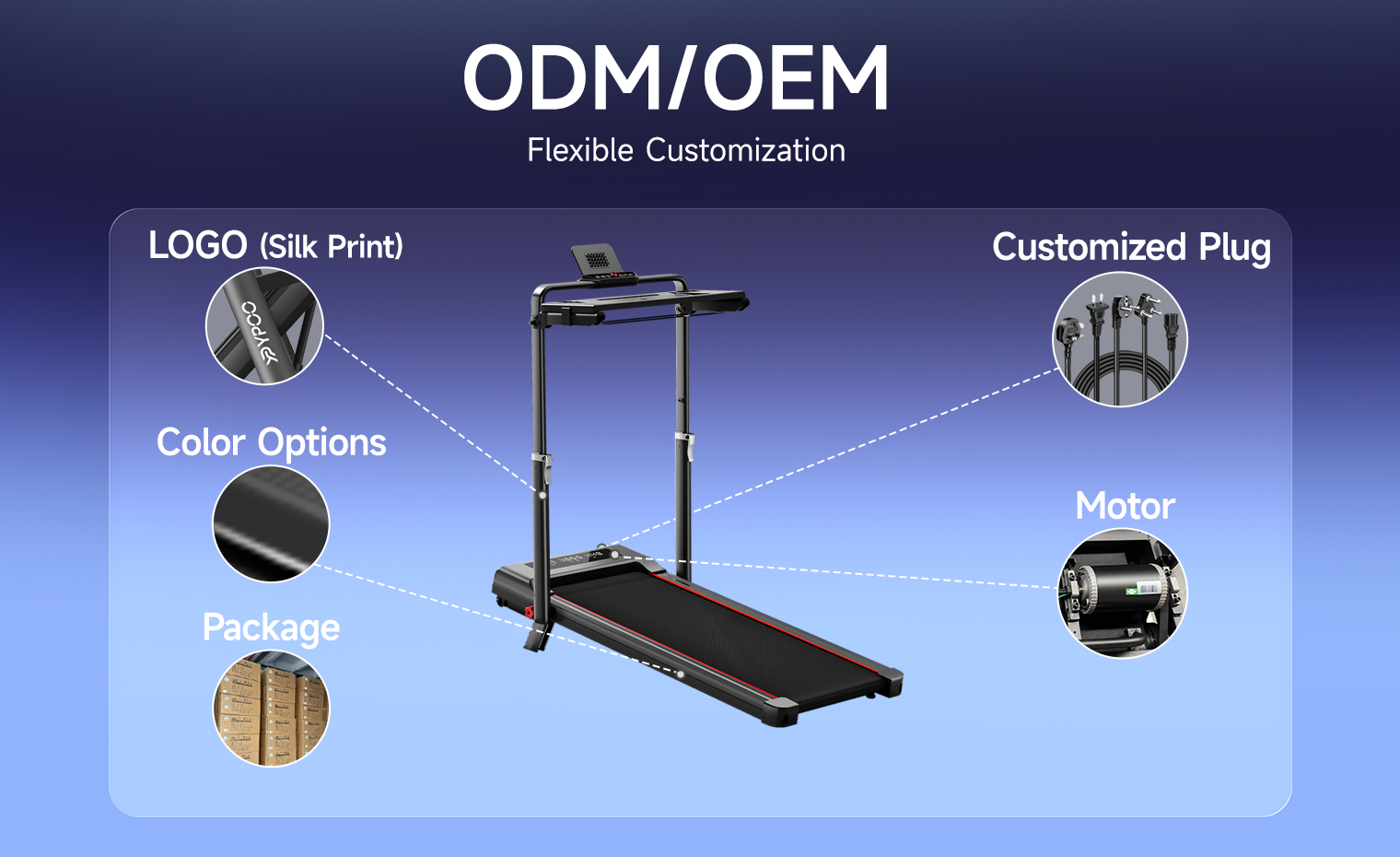
YPOO supports OEM and ODM fitness equipment projects, including customization areas such as logo, color options, plug, packaging, product range selection, and model planning. For buyers, the key is to separate low-risk branding changes from changes that affect electrical, mechanical, software, radio, safety, or user-instruction requirements.
13. QC Records and Production Consistency
CE documents should connect to production quality control. Ask how the factory ensures the bulk product stays consistent with the approved sample and compliance file. Useful records include incoming material inspection, motor and controller test, electrical safety checks, function testing, load testing, noise and vibration review, label inspection, manual check, carton check, and final outgoing inspection.
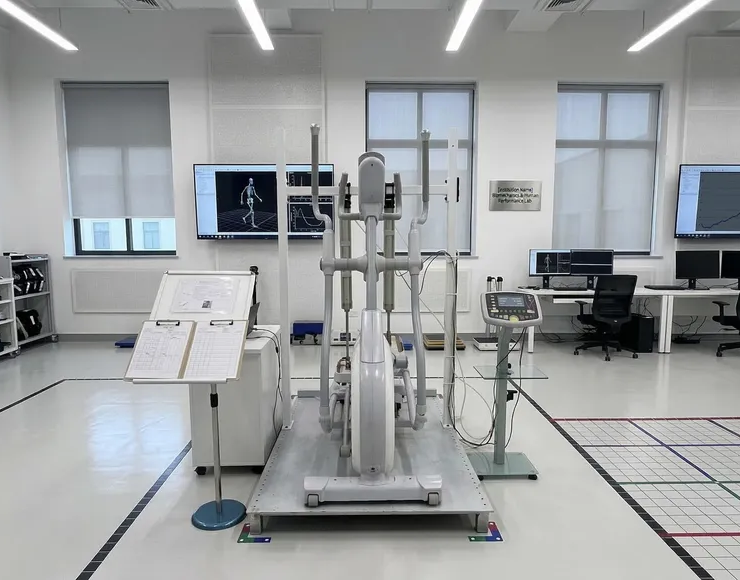
YPOO’s about page describes manufacturing areas such as motor and electronic control, metalworking, injection molding, spray painting, assembly line, national-level laboratory, CNAS laboratory, product development, and high-standard quality inspections. Buyers can use those areas as audit checkpoints when checking a fitness equipment manufacturer.
14. Shipment Documents
CE compliance documents are different from commercial shipping documents, but both need to align. The commercial invoice, packing list, bill of lading, product label, carton mark, serial number, manual, and DoC should not create model-name conflicts. If customs, distributors, or marketplaces ask for documents, inconsistent names can slow review.
Before balance payment, ask the supplier to send a shipment document preview. Confirm model names, product descriptions, quantities, carton count, gross weight, importer data, and any market-required documentation before the container leaves the factory.
CE Document Red Flags
- The supplier sends a CE logo image instead of a signed Declaration of Conformity.
- The DoC does not list the exact model, manufacturer, applicable EU acts, standards, date, and signature.
- The test report photos show another product, console, plug, voltage, motor, controller, or model name.
- The supplier says one certificate covers every treadmill, bike, rower, elliptical, and strength product.
- The document holder, factory name, invoice company, and payment beneficiary are different and not explained.
- The product has Bluetooth or Wi-Fi, but the document set does not mention radio-related review.
- The manual, product label, carton label, and DoC use different model names.
- The supplier refuses third-party inspection, live audit, sample label review, or document questions.
- The factory changes a controller, console, software, motor, plug, or adapter after testing without written review.
Importer Verification Workflow
A practical CE document workflow should happen before mass production, not after the goods are packed. Use this sequence for new fitness equipment orders:
- Define the final product configuration, including model, voltage, plug, console, wireless functions, packaging, and manual language.
- Request the DoC, standards list, test reports, label artwork, user manual, and confirmation of technical file control.
- Compare model names, product photos, voltage, plug, console, and report details against the sample and quotation.
- Ask a compliance specialist to review uncertain directives, regulations, standards, or notified body claims.
- Lock the approved sample and create a written change-control rule for OEM or ODM revisions.
- Inspect the product, labels, manuals, accessories, carton marks, and serial numbers before balance payment.
- Store the final document file with shipment records for the importer, distributor, marketplace, and customs team.
Example Document Questions for Suppliers
| Question | Why It Matters |
|---|---|
| Which exact model numbers are covered by this DoC? | Prevents one generic document from being used for unrelated products |
| Which EU legislation and standards did you apply? | Shows whether the supplier understands the product’s compliance route |
| Do the test report photos match the production sample? | Finds product, plug, console, or electronics mismatch early |
| Who holds the technical documentation? | Clarifies legal manufacturer responsibility and file control |
| What changes require new review? | Controls OEM/ODM risk after sample approval |
| Can we review labels and manuals before production? | Reduces late-stage market and customs problems |
| Can QC records be tied to serial numbers or batch numbers? | Improves traceability and after-sales handling |
Official EU References Buyers Should Know
Buyers can use official EU pages as reference points when discussing CE documentation with suppliers. The European Union’s CE marking guidance explains the role of CE marking, technical documentation, and declarations of conformity. EUR-Lex also provides the text of Regulation (EU) 2023/1230 for machinery-related products.
- EU guidance on CE marking
- EU guidance on technical documentation
- EU guidance on the Declaration of Conformity
- Regulation (EU) 2023/1230 on machinery
When to Contact YPOO
Contact YPOO when you need commercial fitness equipment sourcing support with model selection, OEM/ODM planning, sample confirmation, customization review, packaging, quality control, and export coordination. YPOO manufactures products across treadmills, elliptical trainers, spinning bikes, rowers, and related fitness equipment categories for domestic and overseas markets.
You can browse YPOO products, review YPOO factory and laboratory information, read the China treadmill manufacturer checklist, or contact YPOO to discuss model selection, documents, samples, and shipment planning.
FAQ
What documents should buyers check for CE fitness equipment?
Buyers should check the EU Declaration of Conformity, applicable EU legislation, harmonised standards, test reports, technical documentation availability, risk assessment support, labels, CE mark placement, rating label, user manual, importer details, and OEM/ODM change records.
Is a CE certificate enough for importing fitness equipment?
No. A certificate PDF alone is not enough. Buyers should verify the signed Declaration of Conformity, technical file control, product-specific test reports, labels, manual, and whether the exact model and configuration are covered.
Can one CE document cover several fitness equipment models?
Sometimes a product family may be covered when the models are technically related, but buyers should request a model relationship table and confirm that the tested sample, risk assessment, standards, labels, and manual match every ordered model.
Do OEM changes affect CE compliance?
They can. Logo, color, and packaging changes may be lower risk, but changes to motor, controller, console, software, plug, voltage, wireless module, structure, safety parts, labels, or manuals may require compliance review before production.
How should importers store CE documents?
Importers should keep a model-level document folder with the DoC, test reports, standards list, label artwork, manual, sample photos, specification sheet, order confirmation, inspection report, shipment documents, and approved change records.
Final Recommendation
CE fitness equipment verification is not a one-file task. Importers should confirm the exact product configuration, read the DoC, compare test reports against the sample, check labels and manuals, review OEM changes, and keep a shipment-level document folder. The buyer who checks documents before production reduces customs risk, marketplace review problems, distributor disputes, and after-sales confusion.
To discuss commercial gym equipment sourcing, OEM/ODM customization, sample planning, and document review preparation, visit YPOO products or contact YPOO.