
If you’re sourcing or developing a treadmill line, the motor sitting inside each unit will shape your profit margins, return rates, and brand reputation more than almost any other component. The treadmill AC vs DC motor question isn’t really about which is “better.” It’s about which one belongs in which product tier. Get that match wrong, and it costs real money.
AC vs DC Treadmill Motor: What’s the Actual Difference?
Both motor types convert electrical energy into the mechanical force that drives a treadmill belt. But they do it differently, and those differences matter once the unit lands in an end user’s home or gym.
- DC (Direct Current) motors receive power from a wall outlet, then convert it internally from AC to DC. Most use carbon brushes and a commutator to spin the rotor. They’re lighter, quieter, and cheaper to produce.
- AC (Alternating Current) motors run directly on alternating current and create a rotating magnetic field to turn the belt. They’re heavier, louder, and more expensive, but they handle heat and continuous load far better.
For a B2B buyer, the choice comes down to this: what will your customers do with the machine?
DC Motors: The Standard for Home Treadmill Lines
Most residential treadmills run on DC motors, and for good reason. A 2.0–4.0 HP DC motor delivers smooth speed adjustments, runs at roughly 50–60 dB, and keeps your per-unit BOM cost lower. DC motors are also generally more energy-efficient than AC equivalents in home settings.
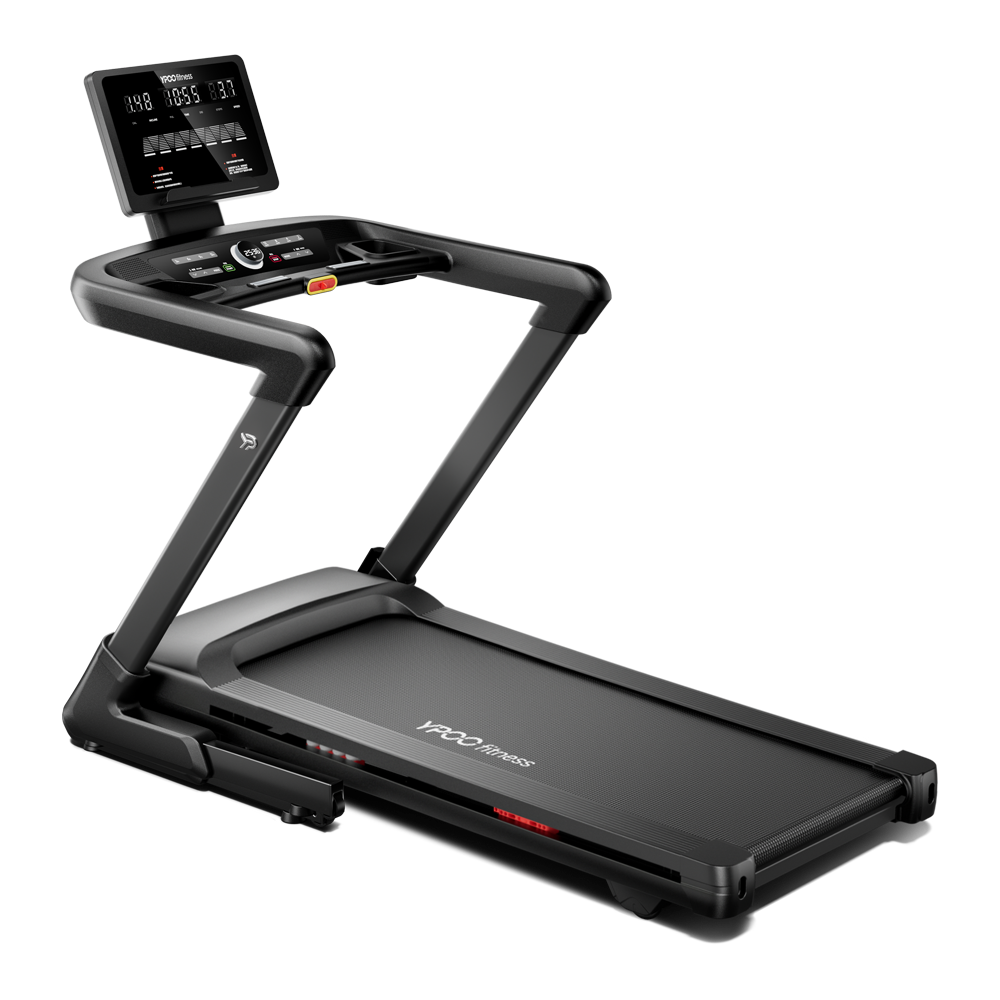
If your product line targets home users who walk or jog 30–60 minutes a day, DC is the right call. Models like the YP-M5945 show what a well-tuned DC motor setup looks like in practice: compact frame, foldable design, quiet operation, and a price point that moves volume in price-sensitive markets across Southeast Asia and South America.
AC Motors: The Pick for Commercial and Heavy-Use Lines
Walk into any busy gym, and the treadmills running 8–12 hours a day almost always have AC motors inside. These motors run cooler under sustained load, rarely need brush replacements (many are brushless by design), and typically deliver more service hours than DC motors in commercial environments.
The typical AC treadmill motor sits in the 3.0–5.0 HP continuous range. It handles heavier users, steeper inclines, and longer sessions without the overheating issues that would shorten a DC motor’s life in the same scenario.
If you’re building a commercial or semi-commercial line for hotel gyms, apartment fitness rooms, or boutique studios, AC motors will protect your after-sales budget. Fewer warranty claims, fewer motor replacements, fewer angry distributors.
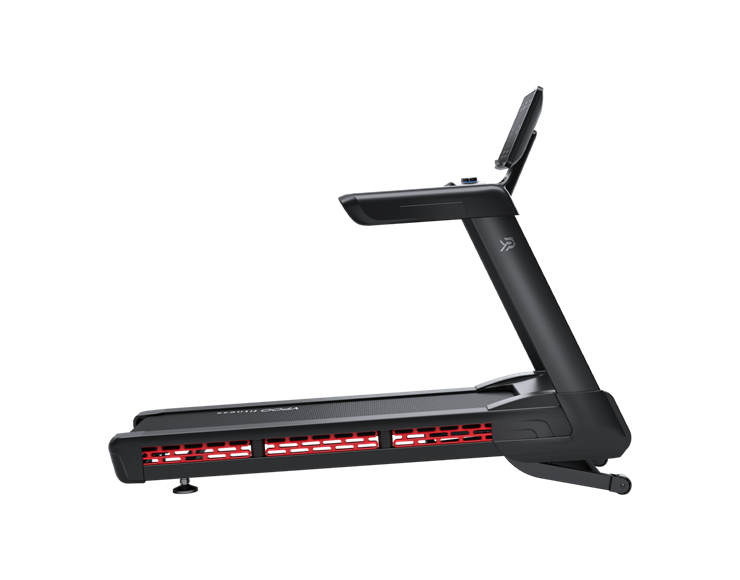
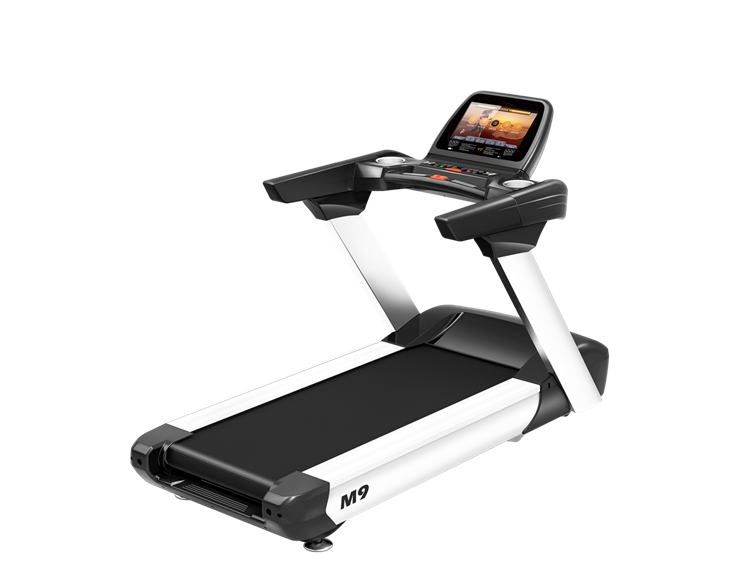
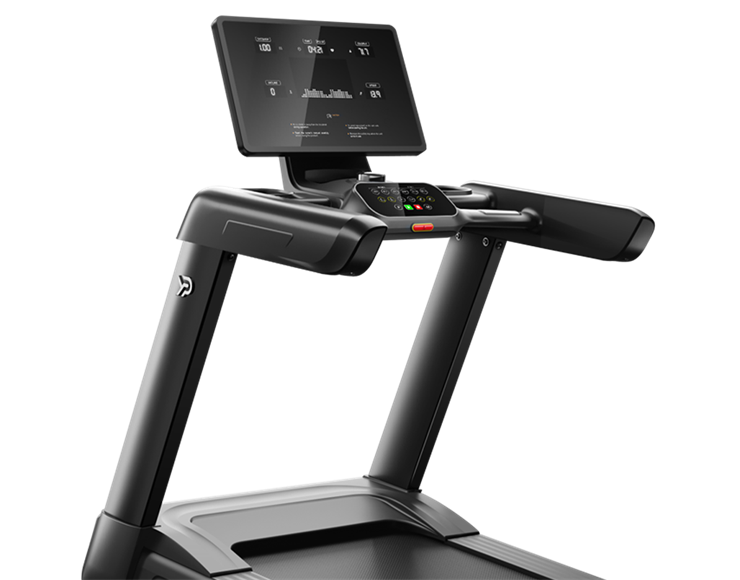
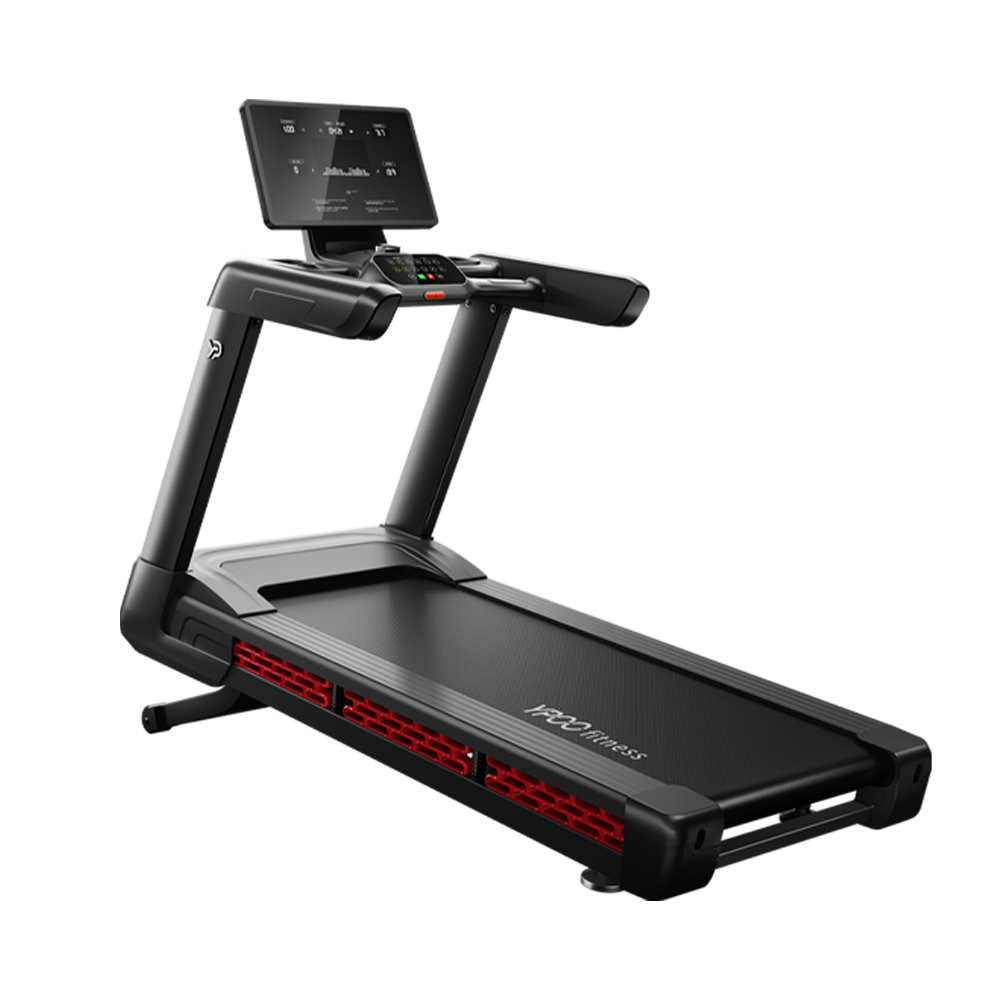
Our YP-M8 PRO is a good example of how we pair a stronger motor with a commercial-grade frame and wider running deck to handle high-traffic environments.
AC vs DC Treadmill Motor: Quick Comparison
| Feature | DC Motor | AC Motor |
| Typical HP Range | 2.0–4.0 HP | 3.0–5.0 HP |
| Best For | Home / light commercial | Commercial/heavy use |
| Noise Level | Generally quieter | Generally louder |
| Energy Efficiency | Higher | Lower |
| Maintenance | Brush replacement every 2–3 yrs | Minimal (often brushless) |
| Unit Cost Impact | $200–500 lower | Higher upfront |
| Speed Response | Faster adjustments | Slower, more stable ramp |
How to Match Motor Type to Your Product Tiers
Here’s the thing. Most successful treadmill brands don’t pick one motor type and call it a day. They map the motor to the product category.
- Home / Entry-Level: DC motors, 2.0–2.5 CHP. Keep the price competitive, the noise low, and the shipping weight manageable. This is where volume lives, especially in markets like Central Asia and parts of South America where home fitness is growing fast.
- Semi-Commercial: DC motors at 3.0+ CHP, or entry-level AC. These units land in small studio gyms or corporate wellness rooms, where daily use typically runs 3–5 hours.
- Full Commercial: AC motors, 3.5 CHP and up. Non-negotiable for gym chains and hospitality. The motor needs to run cool for hours without performance drop-off.
Why This Decision Hits Your Bottom Line
Picking the wrong motor type doesn’t just affect end-user satisfaction. It creates a chain reaction:
- Too much motor for the product tier= inflated unit cost, harder to sell against competitors.
- Too little motor for the use case= overheating, early failures, warranty claims stacking up.
Match the Right Motor to Your Next Order
Whether you’re launching a new home treadmill line or moving into semi-commercial and commercial tiers, motor selection is one of the first conversations we have with our OEM/ODM partners.
Got a product brief or a lineup you’d like us to review? Reach out to our team, and we’ll help you spec the right motor for every SKU.
FAQs
Can a DC motor treadmill be used in a commercial gym?
It’s technically possible, but we don’t recommend it. DC motors generate more heat under sustained load. In a gym running 6+ hours daily, you’ll likely see motor degradation within months. AC motors are built for that kind of duty cycle.
Is an AC motor treadmill always more expensive to produce?
Yes, AC motors and their controllers add to the BOM cost, usually by $200–500 per unit. But the lower warranty and service costs over the product’s lifetime often make up for that difference, especially in commercial lines.
What does CHP mean, and why does it matter more than peak HP?
CHP stands for Continuous Horsepower. It’s the power a motor can deliver consistently without overheating. Peak HP is a short burst figure often used in marketing. For B2B sourcing, always compare CHP. It tells you what the motor actually does during a real workout, not a 2-second spike.
Which motor type is more popular in Southeast Asian markets?
DC motor treadmills dominate home sales across Southeast Asia because of their lower price point and quiet operation. But demand for AC-powered commercial units is growing as more gyms, hotels, and co-working spaces add fitness areas.
Can YPOO supply both AC and DC motor treadmills?
Absolutely. We manufacture treadmill lines spanning home, semi-commercial, and commercial categories. Our OEM/ODM service lets you choose the motor type, frame spec, and feature set that fits your target market.