

How does a hand bike machine differ from a standard spin bike? It comes down to which muscles you are targeting and how accessible you need the equipment to be.
A hand bike uses arm cranks for upper body cardio, making it ideal for adaptive fitness, wheelchair access, and rehab programs. A spin bike relies on leg pedals for high-intensity cycling and group studio classes. Since they target totally different training goals and mobility needs, choosing the right one comes down to who your users are and how they train.
Hand Bike vs Spin Bike: Quick Comparison
| Feature | Hand Bike Machine | Spin Bike |
|---|---|---|
| Primary drive | Hands and arms turn upper-body cranks | Legs turn foot pedals |
| Main emphasis | Upper body and upper-body cardio | Lower body and cycling cardio |
| Position | Seated, standing, or wheelchair-accessible on selected models | Upright cycling posture with saddle and handlebars |
| Typical resistance | Magnetic, electromagnetic, friction, or belt-brake systems | Magnetic, electronic magnetic, or friction brake systems |
| Common settings | Adaptive fitness, clinics, senior fitness, commercial gyms, homes | Studios, gyms, hotels, home fitness, cycling programs |
| Key adjustment | Crank height, reach, tilt, crank length, and seat access | Saddle and handlebar height/reach plus pedal setup |
| Space | Compact tabletop to large freestanding designs | Usually one stable freestanding footprint |
What Is a Hand Bike Machine?
A stationary hand bike, also called an arm bike or upper-body ergometer, uses hand cranks to create resistance-based exercise. Depending on the model, the user may sit, stand, or approach in a wheelchair. Some total-body exercisers combine upper cranks with lower pedals.
The user rotates handles around a crank axis while resistance changes by level, workload, speed, or program. “Hand bike” can also refer to an outdoor handcycle. This article compares stationary indoor equipment with a stationary spin bike.
What Is a Spin Bike?
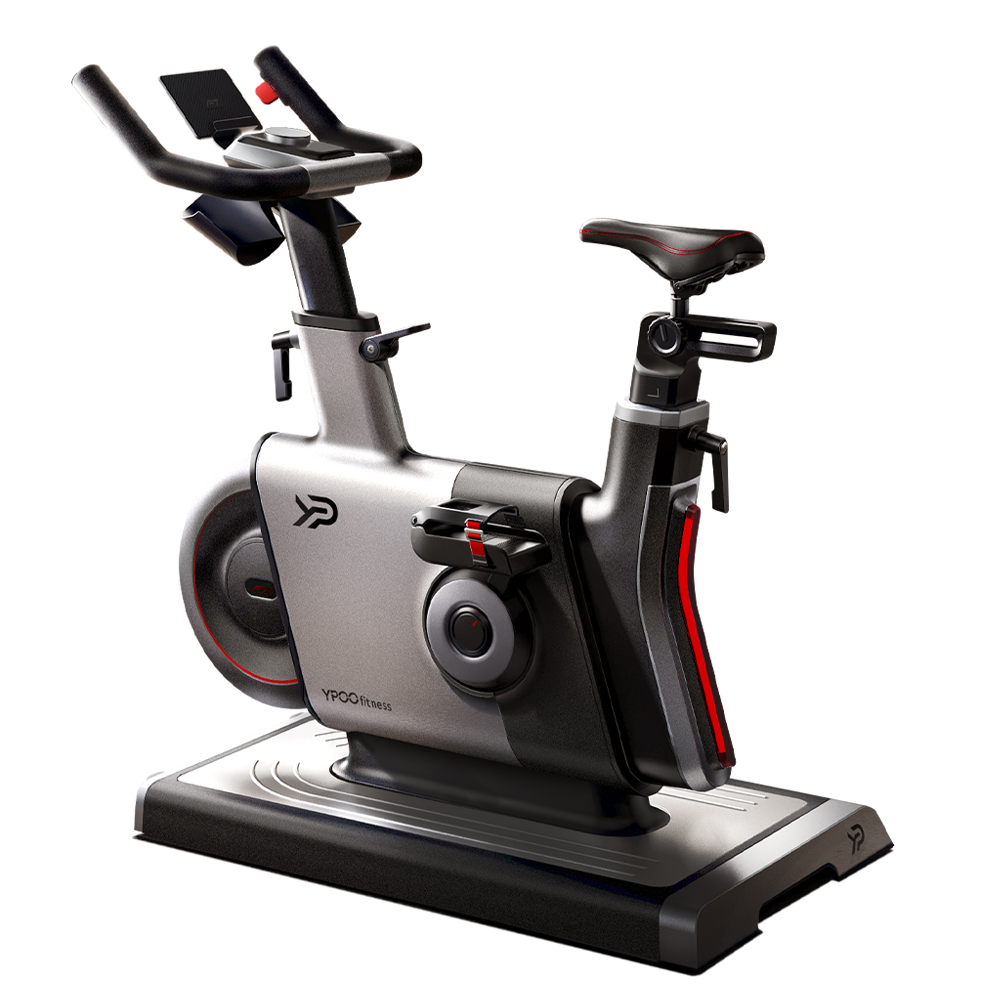
A spin bike is an indoor exercise bicycle with a flywheel, pedals, saddle, handlebars, and adjustable resistance. The legs provide most of the power while the upper body stabilizes posture.
Friction systems press a pad against the flywheel and require wear inspection. Magnetic systems avoid pad contact and can reduce routine wear and noise. YPOO’s YP-F7 commercial spin bike, for example, lists electronic resistance adjustment, a 10 kg flywheel, and multiple console options.
Hand Bike vs Spin Bike: 5 Key Differences for Buyers
Muscles and Movement Pattern
The clearest difference is where the movement originates. A hand bike emphasizes the shoulders, arms, upper back, chest, and trunk stabilization according to posture and technique. A spin bike emphasizes the quadriceps, hamstrings, glutes, calves, and lower-body cycling pattern.
Users should not assume that the same RPM or resistance level represents the same effort on both machines. Arm exercise involves less total active muscle mass than leg cycling for most users, and the workload labels may be calculated differently. Compare perceived exertion, heart rate, watts when reliably measured, and professional guidance rather than transferring a spin-bike session directly to a hand bike.
Posture and Equipment Adjustment
Spin-bike fitting centers on saddle height, saddle fore-aft position, handlebar position, pedal connection, and riding posture. Hand-bike fitting centers on crank height, horizontal reach, crank length, handle angle, grip, seat position, and shoulder alignment.
- Why Hand-Crank Position Matters: If the crank is too high, far away, or close, shoulder and trunk movement may be compromised. Record the full adjustment range, test different users, and require repeatable markings and secure locks.
- Why Spin-Bike Fit Matters: A spin bike needs adequate saddle and handlebar adjustment. Check dimensions, increments, post security, pedal type, Q-factor if available, and maximum user weight. Use the exercise bike manufacturer specification guide to compare models consistently.
Accessibility and User Suitability
A hand bike may suit users who cannot comfortably use foot pedals, but accessibility is model-specific. Removable seats, open bases, adjustable crank heads, and wheelchair platforms can improve access. A tabletop unit may still slide or sit at the wrong height.
When a Hand Bike May Be the Better Choice
- The goal is upper-body cardiovascular or endurance exercise.
- The user needs a seated, standing, or wheelchair-compatible setup.
- A facility wants an adaptive cardio option beyond leg-driven machines.
- A qualified professional has selected upper-body cranking for a supervised program.
When a Spin Bike May Be the Better Choice
- The goal is indoor cycling or lower-body endurance training.
- The facility runs group cycling classes.
- Users want higher-cadence rides and cycling-specific posture.
- The buyer needs a widely recognized home, hotel, studio, or gym category.
Resistance, Programs, and Workout Data
Both machines may offer manual levels, constant workload, heart-rate programs, intervals, and connectivity, but their lowest useful resistance is particularly important. A hand bike intended for adaptive or rehabilitation settings may need very low starting resistance and small increments. A studio spin bike may prioritize fast adjustment, high resistance, cadence, and class visibility.
- Compare Watts, Not Just Resistance Levels: Level 10 on one machine has no universal relationship to level 10 on another. Ask whether watts are measured, calculated, or estimated; at which cadence accuracy is specified; and how the system is calibrated. If repeatable workload matters, request documentation and test several units rather than judging only the display.
- Check Forward and Reverse Operation: Many upper-body ergometers permit forward and reverse cranking. Confirm whether resistance and metrics work both ways. Use a spin bike only according to its approved drive, braking, and stopping design.
Commercial Use, Maintenance, and Cost
Spin bikes are available across home, light-commercial, and full-commercial tiers. Hand bikes are a narrower category, and advanced accessibility features can increase cost. Compare duty rating, stability, console, adjustment system, parts, warranty, and local support.
- Hand Bike Maintenance Priorities: Inspect crank bearings, handles, straps, adjustment locks, seat mechanisms, resistance calibration, and the base. Ask for wear-part prices and service manuals.
- Spin Bike Maintenance Priorities: Inspect pedals, crank arms, drive, flywheel, brake, adjustment posts, stabilizers, and console. Friction pads need scheduled replacement, while studios also need effective sweat and corrosion management.
Can You Use Both Machines in One Fitness Program?
Yes, when the user can safely use both. A hand bike adds upper-body cardio variety, while a spin bike supplies leg-driven cycling. Do not copy duration, resistance, or heart-rate expectations automatically between modes. Obtain professional guidance when needed.
How B2B Buyers Should Choose Between Them
| Buying Question | Choose a Hand Bike When | Choose a Spin Bike When |
|---|---|---|
| Primary users | Upper-body or adaptive exercise is required | General cycling and lower-body cardio dominate |
| Facility | Adaptive gym, clinic, senior fitness, inclusive cardio zone | Studio, hotel, commercial gym, home fitness |
| Key specification | Crank fit, access, low resistance, bidirectional use | Bike fit, flywheel, brake, pedals, stability |
| Service focus | Cranks, handles, seat/access system, calibration | Drive, pedals, brake, adjustment posts, corrosion |
| Purchase risk | Access claims not matching real users | Home-duty bike placed in high-use facilities |
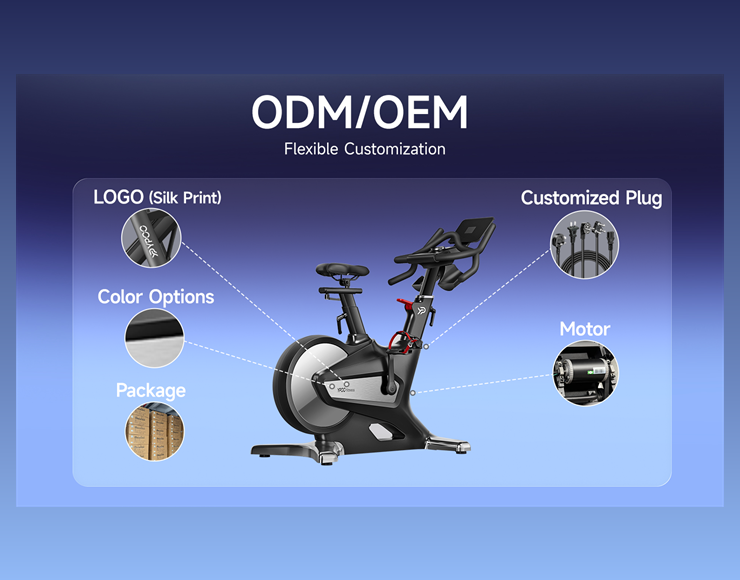
For either category, define user scenario, duty cycle, specification, market, quantity, documents, packaging, and parts before requesting a quote. The wholesale fitness equipment supplier checklist provides a broader factory and order review.
Choose the Right Cardio Machine for Your Users
The central difference is simple: a hand bike machine is driven with the arms, while a spin bike is driven with the legs. The purchasing decision becomes more detailed when fit, accessibility, resistance accuracy, duty rating, service, and compliance are included.
YPOO manufactures spin bikes and broader cardio equipment for distributors, gyms, hotels, and private-label buyers. Explore YPOO’s fitness equipment range or contact YPOO with your market, users, quantity, specifications, and documentation needs.
This article provides general equipment information and is not medical advice or an exercise prescription. Consult qualified healthcare, accessibility, testing, and regulatory professionals when required.
FAQ
Is a hand bike machine better than a spin bike?
Neither is universally better. A hand bike is better for upper-body cranking and some adaptive setups. A spin bike is better for cycling-specific, lower-body, and studio training. Choose according to the user and intended outcome.
Does a hand bike provide a cardio workout?
Upper-body cranking can provide cardiovascular exercise when performed at an appropriate workload and duration. The suitable intensity depends on the user, machine, and professional guidance where needed.
Can wheelchair users use a hand bike?
Some hand bikes offer direct wheelchair access, but buyers must verify base clearance, approach, crank position, wheelchair stability, controls, and real-user fit. Not every tabletop or freestanding model is wheelchair accessible.
Do hand bikes and spin bikes use the same muscles?
No. Hand bikes primarily emphasize upper-body cranking muscles, while spin bikes primarily emphasize the legs and lower-body cycling pattern. Both also require posture and trunk stabilization to different degrees.
Which machine is better for a commercial gym?
A spin bike usually serves a wider general fitness audience, while a hand bike expands upper-body and adaptive cardio options. An inclusive commercial facility may benefit from both if it has the budget, space, demand, and service support.