

Building or updating an office fitness center? You do not need tons of specialized machines to create a great workout space for your team. A few well-chosen machines will serve the team better than a crowded room full of specialist equipment.
How to Plan Corporate Gym Equipment Before You Buy
Start with people, not products. Estimate how many employees are likely to train, when they will visit, and how long a normal session will last. A small office with flexible hours needs a different layout from a headquarters where most employees arrive at the gym between 5:00 and 6:30 p.m.
The CDC’s workplace physical activity guidance notes that employers can support activity through facilities, policies, education, and social programs. The room is only one part of the plan. Clear access rules, management support, introductory sessions, and simple booking can help employees feel comfortable using it.
Equipment grade matters too. Office gyms are shared spaces, even when daily traffic is moderate. ISO 20957-1:2024 distinguishes domestic equipment from equipment intended for supervised organizational settings. Ask each supplier to confirm the model’s intended use and warranty for your workplace.
Corporate Gym Equipment List at a Glance
| Equipment | Best use in an office gym | Space priority |
|---|---|---|
| Commercial treadmill | Walking, jogging, and familiar cardio | High |
| Elliptical trainer | Low-impact full-body cardio | Medium |
| Exercise bike | Compact seated cardio | Medium |
| Rowing machine | Cardio plus pulling movement | Medium |
| Dumbbell set | Flexible strength training | High |
| Adjustable bench | Free-weight and bodyweight work | High |
| Functional trainer | Adjustable cable exercises | High |
| Multi-station machine | Guided strength for several users | Medium |
| Functional accessories | Short workouts and group sessions | Medium |
| Mobility station | Warm-up, stretching, and recovery | High |
What Equipment Do You Actually Need for an Office Gym?
1. Commercial Treadmill
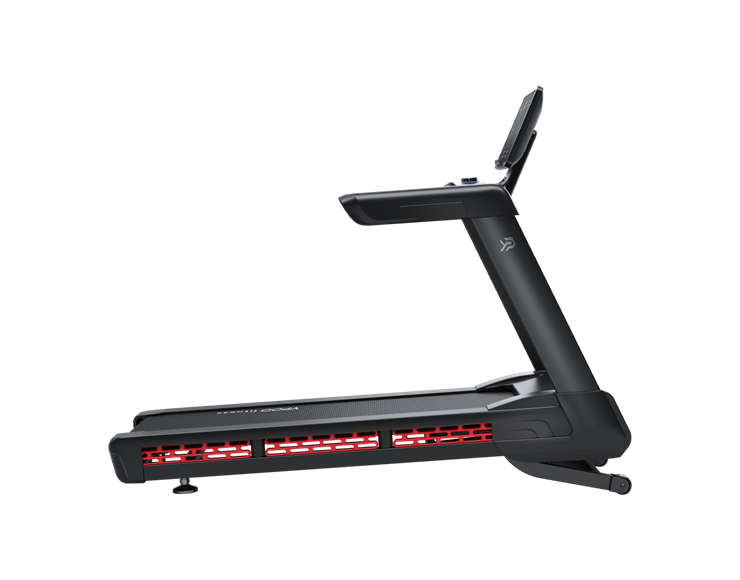
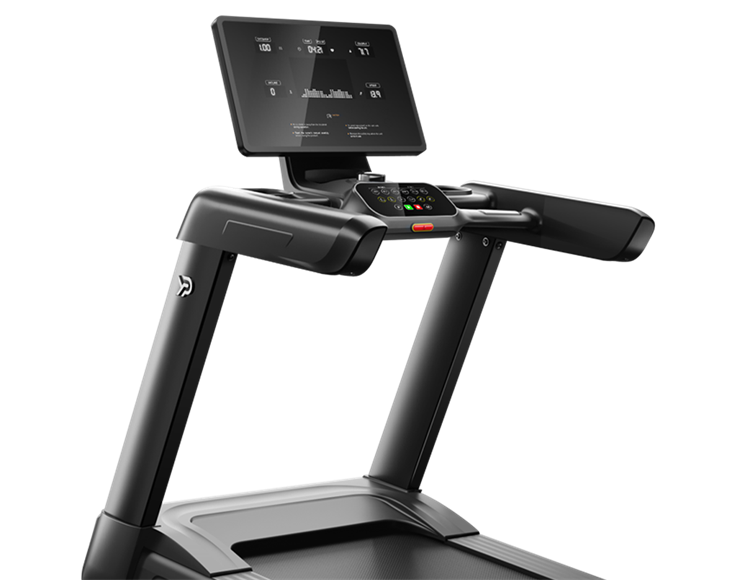
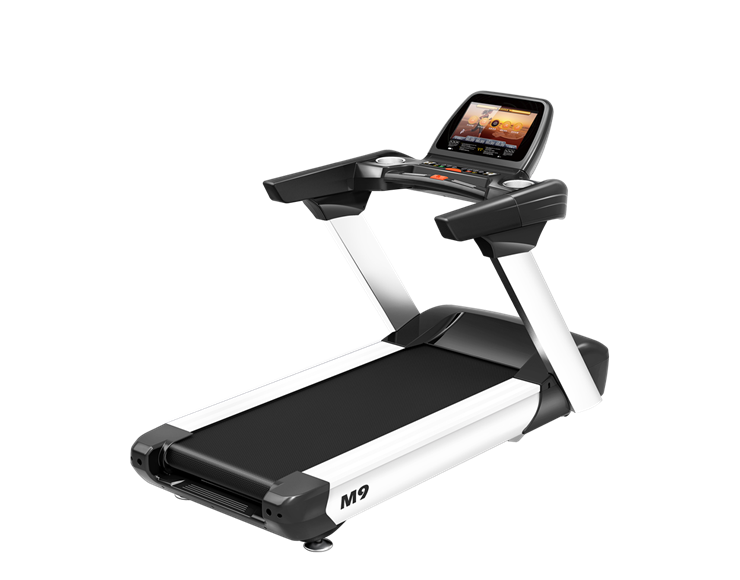
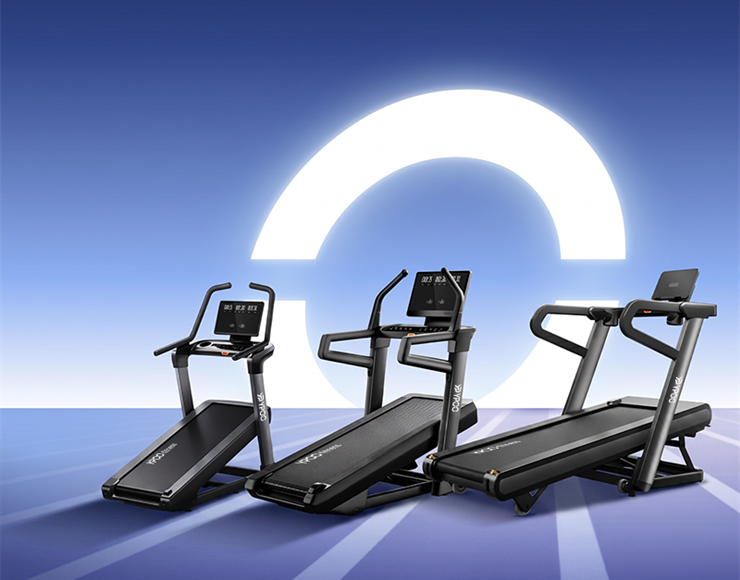
The treadmill is often the first machine employees recognize. It supports walking, light jogging, and running without a learning curve. That makes it useful in a mixed office population.
Look for an intuitive console, emergency stop, stable handrails, low step-up height, and a speed range that matches expected users. Noise and vibration matter in an office building, especially above meeting rooms or work areas. Check the floor structure, matting, and machine placement before delivery.
A lightly used office may suit a semi-commercial model. A busy headquarters needs equipment approved for heavier shared use. Our guide to semi-commercial treadmill specifications explains where that category fits.
2. Elliptical Trainer
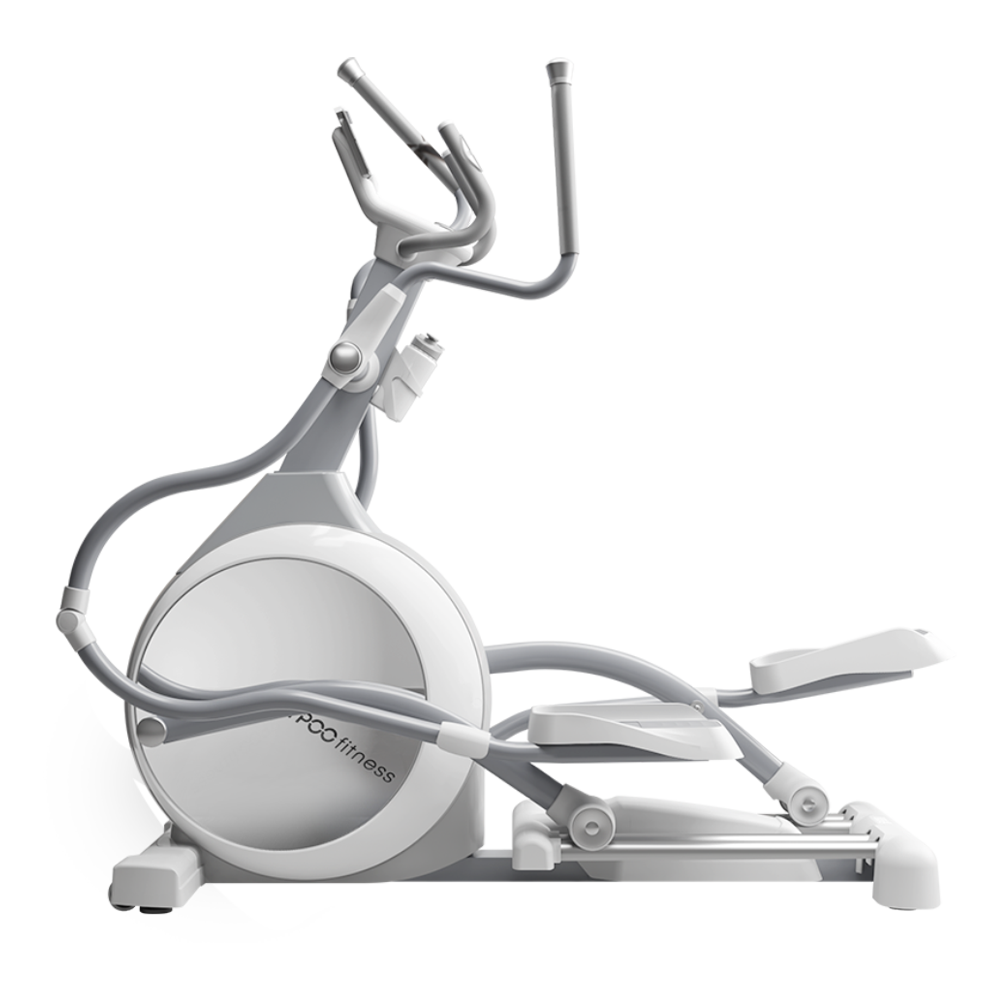
An elliptical adds low-impact cardio and involves both the upper and lower body. It also gives employees an alternative when every treadmill is busy.
Check step-up height, stride feel, pedal spacing, handle reach, resistance, and ceiling clearance. Choose simple controls over a console that needs a long setup.
3. Upright or Recumbent Exercise Bike
Exercise bikes use less floor space than many cardio machines. They are also quiet and easy to place near windows or shared screens. An upright bike suits general cardio. A recumbent bike offers a lower entry and more back support.
If the budget allows only one, choose based on employee needs and accessibility. For a busy office, prioritize clear seat adjustment, secure pedals, easy resistance control, and serviceable wear parts.
4. Rowing Machine
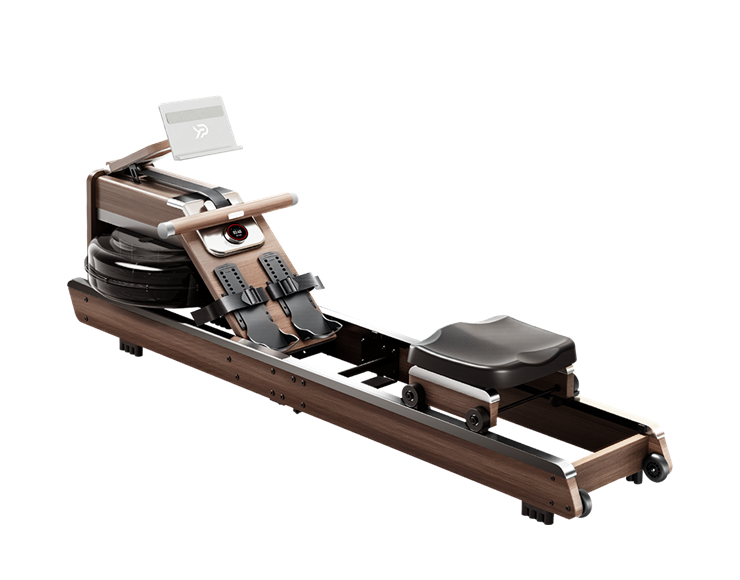
A rower combines cardio with a strong pulling movement. It can support short interval sessions and gives the equipment mix more variety than adding another similar cardio machine.
Rowers are long when in use, so measure the working footprint. Check handle comfort, foot adjustment, resistance, seat movement, and any approved storage position.
5. Dumbbell Set with Storage Rack
Dumbbells offer a large exercise range in a small area. Employees can train the upper body, lower body, and core without waiting for a fixed machine.
Choose a beginner-friendly range with room for progression. Use a labeled rack, select shapes that do not roll, and keep the lifting area out of walkways.
6. Adjustable Weight Bench
A bench turns a dumbbell area into a more useful strength zone. Flat and incline positions support presses, rows, split squats, step-ups, and seated exercises.
Check stability, pad adjustment, wheels, upholstery, and maximum load. The bench should move easily but stay planted during use.
7. Dual-Adjustable Pulley or Functional Trainer
A functional trainer gives users many cable exercises from one footprint. Height-adjustable pulleys work for presses, rows, rotations, arm exercises, and assisted movement patterns.
Look for clear pin settings, smooth cables, guarded weight stacks, useful handles, and attachment storage. Simple diagrams help new users.
8. Multi-Station Strength Machine
A selectorized multi-station works well when employees prefer guided movement. Depending on the design, one unit can cover leg extension, leg curl, chest press, lat pulldown, and seated row.
It uses more floor space, but several people may train at once. Check entry paths, moving arms, cable travel, and the exercises employees will actually use.
9. Kettlebells, Resistance Bands, and Medicine Balls
Small functional accessories support quick workouts and group sessions. They also add movement options without another powered machine.
Use a dedicated rack or closed storage. Loose bands, balls, and handles quickly become trip hazards. Select a modest range first, watch what employees use, and add more later.
10. Exercise Mats and Mobility Tools
Set aside open floor space for warm-ups, mobility, core training, and stretching. Add commercial mats, foam rollers, and a simple storage unit. This area is especially useful for employees who want a short movement break rather than a full workout.
Open space is equipment too. Do not fill every meter with machines. Employees need room to get on and off equipment, adjust benches, and move without crossing another person’s exercise area.
How Much Equipment Does an Office Gym Need?
Base quantity on expected peak users, not total employee count. A company with 500 employees may have only ten people training at once. A smaller office may see a sharp lunch-hour rush.
| Expected peak use | Practical starting mix |
|---|---|
| Up to 6 people | Three cardio units, dumbbells, one bench, one cable or multi-station, and a mobility area |
| 7–12 people | Five to seven cardio units, two benches, dumbbells, two strength stations, and open floor space |
| More than 12 people | Use a traffic study and scaled layout; duplicate the most popular cardio and strength stations |
These are starting points, not fixed rules. Review badge access, booking data, or manual counts after opening. Add equipment when regular waiting appears. This is cheaper than filling the room based on guesses.
Corporate Gym Equipment Buying Checklist
- Confirm room dimensions, ceiling height, doors, elevators, floor loading, power, ventilation, and internet.
- Choose equipment approved for the expected shared-use level.
- Keep controls simple for employees who train without an instructor.
- Check noise, vibration, cleaning access, and safe circulation around every machine.
- Ask for model-specific certificates, manuals, maintenance schedules, and warranty terms.
- Plan spare parts, service contacts, and a process for removing faulty equipment from use.
- Compare delivered and installed cost, not only the equipment price.
For larger orders, review the sourcing steps in our commercial gym equipment wholesale guide. It covers quotations, factory checks, compliance, inspection, packaging, and after-sales planning.

Build an Office Fitness Center with YPOO
A useful office gym starts with a realistic brief. Share the available space, expected peak users, preferred equipment mix, target market, power requirements, branding needs, and budget.
YPOO can help corporate projects, distributors, and facility buyers compare treadmill, bike, rowing, elliptical, and strength options. We can also discuss layout-friendly models, customization, packaging, spare parts, and order planning.
Contact YPOO to prepare a corporate gym equipment shortlist for your office fitness center.
FAQ
What Equipment Should a Corporate Gym Have?
A balanced corporate gym should include cardio, strength, and mobility options. A practical starting mix is treadmills, an elliptical, a bike, a rower, dumbbells, an adjustable bench, a cable station, and open stretching space.
Should an Office Gym Use Commercial Equipment?
Use equipment approved for the expected shared workload and location. A quiet office gym may suit light-commercial models, while a busy headquarters may need full-commercial equipment. Confirm the intended use and warranty in writing.
How Many Treadmills Does an Office Fitness Center Need?
Start from expected peak use. One treadmill may suit a small room, while a larger site may need two or more. Track waiting after opening and add units when demand is consistent.
How Much Space Should Be Left Around Gym Equipment?
Clearance depends on the machine, local rules, access needs, and manufacturer instructions. Use each model’s working dimensions, not only its footprint, and allow room for entry, adjustment, cleaning, and circulation.