
For importers, distributors, gyms, and private-label fitness brands, the brand name on a spin bike is not the full story. Some brands design and build their own bikes. Some work with partner factories. Others choose ready-made models from different suppliers and sell them under their own name. That does not mean one type is always good or bad. But it does matter.
Before you place an order, it helps to know who is really behind the bike. Who controls the design? Who checks the quality? Who handles parts and support if something goes wrong? A good spin bike should not only look nice online. It should feel stable, ride smoothly, stay quiet, and be backed by people who can actually help you after the sale.
This guide explains how to separate a real spin bike factory from a general supplier, what proof to request, and how to compare quotes without being misled by similar photos or model names.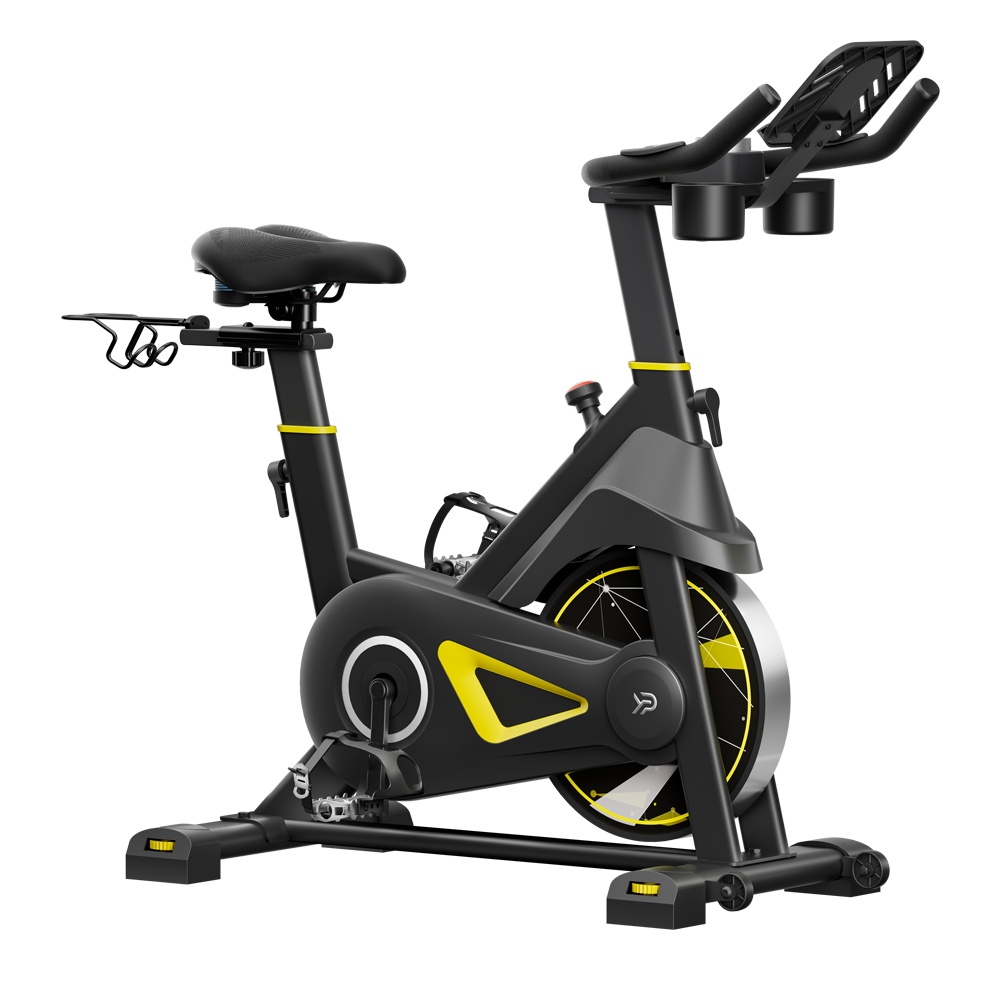
Manufacturer vs Supplier vs Trader
A manufacturer should be able to show production role, factory address, product line, workshop process, sample capability, quality control, packing workflow, and spare-part support. A supplier may be useful for sourcing, communication, or mixed-category purchasing, but may not control the frame, resistance system, electronics, packaging, or after-sales parts directly.
| Role | What They Usually Control | Main Buyer Risk |
|---|---|---|
| Spin bike manufacturer | Production process, model specs, QC, packing, spare parts, customization | Must verify capacity, testing, certificate match, and export experience |
| Assembly factory | Assembly, inspection, some component sourcing, packing | Core parts may still depend on outside suppliers |
| Supplier or distributor | Quotation, communication, product sourcing, order coordination | Less direct control over repeat-order quality and spare parts |
| Trading company | Multiple factory options, mixed categories, export service | Photos, specs, certificates, and lead time may not match the real factory |
Why the Difference Matters
Spin bikes carry sourcing risks that are not visible in product photos. A stable-looking bike can still fail because of weak welding, unstable resistance response, noisy bearings, poor crank and pedal quality, weak carton protection, mismatched certificates, or missing spare parts. If the buyer does not know who actually controls production, it becomes harder to solve problems after shipment.
For B2B buyers, the real cost is not only the unit price. Warranty claims, delayed repeat orders, carton damage, dealer complaints, and spare-part shortages can erase margin quickly. This is why factory verification should happen before sample approval and before the first bulk order.
1. Check Whether the Company Shows Factory-Direct Positioning
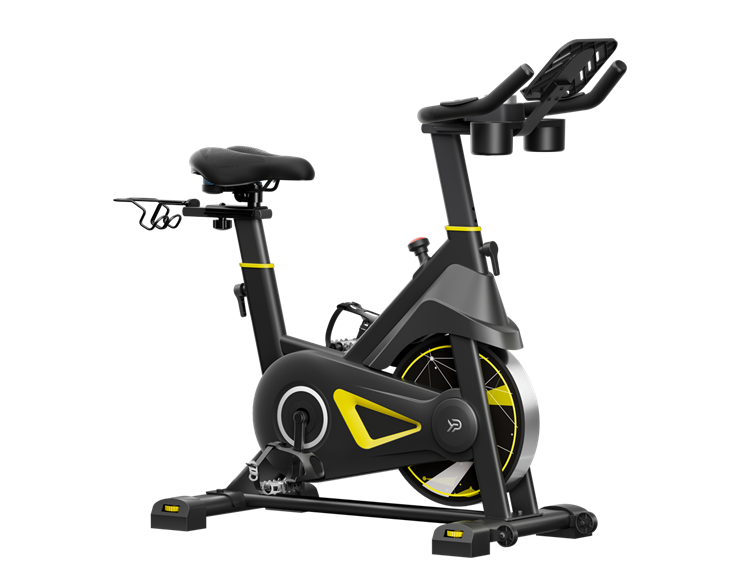
A real manufacturer should be willing to explain its role clearly. YPOO positions its spin bike line as factory-direct supply for gyms, distributors, and private-label fitness equipment brands through its spin bike OEM manufacturer page. The product category also states that YPOO spin bikes are designed for commercial cycling studios, gyms, hotels, and private-label fitness equipment brands.
Buyers should ask every potential partner to answer simple questions: Are you the factory, an assembly plant, a trading supplier, or a sales office for another factory? Which models are produced in your own facility? Which parts are self-made, purchased, or outsourced? Can you show the production process for the exact model in the quote?
2. Verify the Factory Address and Production Process
Ask for the legal company name, business license, factory address, export entity, and a live video walkthrough. The walkthrough should show the entrance sign, sample room, production line, warehouse, packing area, and QC area in one continuous session. If the supplier can only send cropped product photos, treat that as an early warning sign.
YPOO’s product pages show a production process that includes laser cutting, auto welding, injection molding, auto spraying, assembling, aging test, auto packing, quality control, and product storage. That kind of process list gives buyers a structure for the factory audit. During verification, ask the contact person to show how the quoted spin bike moves through those stages.
3. Ask for In-House Capability, Not Just Catalog Photos
Catalog photos are easy to copy. Production capability is harder to fake. A real spin bike manufacturer should be able to explain what it makes in-house, what it buys from supply-chain partners, and how it controls incoming parts. For spin bikes, important areas include frame welding, plastic covers, resistance components, console options, crank, pedals, flywheel, belts, knobs, cartons, and labels.
YPOO’s spin bike page highlights in-house core parts, including motors, controllers, rollers, and plastic parts, plus a wider raw material and auxiliary supplier base. For buyers, this matters because self-made or tightly controlled core parts can make quality and repeat orders more stable.
4. Compare Real Model Specifications
A real factory should provide a model-specific specification sheet. It should not answer with only “high quality” or “commercial grade.” Ask for flywheel weight, display type, brake system, resistance levels, max user weight, net weight, gross weight, product size, packing size, loading quantity, plug or console options, and spare-part list.
YPOO’s spin bike category gives visible model-level specs that buyers can use as a comparison baseline:
| Model | Flywheel | Display | Brake / Resistance | Max User Weight |
|---|---|---|---|---|
| YP-F5 MAX | 11.5 kg | TFT shuttle | Electronic control, 1-32 levels | 150 kg |
| YP-F2 | 11 kg | TFT shuttle / 21 inch TFT | Electronic control, 32 levels | 150 kg |
| YP-F5 Ultra | 20 kg | LED flying shuttle / 21 inch TFT | Electronic control, 36 levels | 150 kg |
| YP-X5 | 6 kg | LED | Magnetic, infinite knob | 150 kg |
If two suppliers send the same photo but different specs, ask for a video showing the model label, console, resistance adjustment, flywheel area, carton mark, and warehouse stock. A real factory should be able to connect the spec sheet to the physical product.
5. Test the Sample Like a Buyer, Not Like a Viewer
Do not approve a spin bike sample only because the finish looks good. Ride the sample at low, medium, and high resistance. Stand on the pedals, accelerate, slow down, adjust the saddle and handlebar, check knob tightness, listen for belt or bearing noise, and inspect pedal threads, crank movement, welding, paint, console response, and transport wheels.
For commercial channels, sample testing should also include user weight stability, repeated adjustment, sweat exposure points, resistance response, carton drop risk, and spare-part replacement. Ask the factory which parts are likely to be replaced during the warranty period and whether it can provide exploded diagrams or repair videos.
6. Confirm OEM and ODM Control
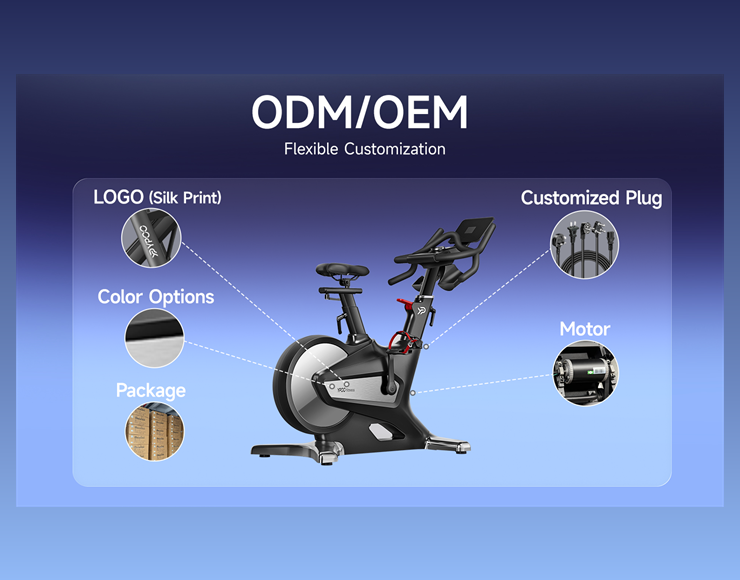
Many suppliers claim OEM support, but real OEM control requires more than adding a logo. For spin bike projects, buyers may need logo printing, color options, console choice, display language, resistance configuration, plug or adapter, carton artwork, barcode, manual, warning labels, spare-part kit, and sales photos.
Ask which customization items are standard, which require MOQ, which affect lead time, and which affect certificates. A real factory should separate simple OEM changes from deeper ODM changes. If the supplier says every change is easy, ask for written lead time, sample cost, tooling cost, and test requirements.
7. Check the QC System Before Shipment
Quality control should be visible before the order leaves the factory. Ask for incoming material checks, process inspection, final inspection, outgoing inspection, aging test, packing inspection, and loading photos. YPOO describes a QC flow that includes incoming quality control, process quality control, final quality control, and outgoing quality control for its spin bike supply.
For higher-risk orders, buyers should arrange third-party inspection or a live video inspection before balance payment. The checklist should include appearance, welding, paint, assembly, resistance function, console, crank, pedals, saddle and handlebar adjustment, noise, vibration, labels, manual, accessories, carton marks, foam protection, spare parts, and loading quantity.
8. Review Testing and Certificate Evidence
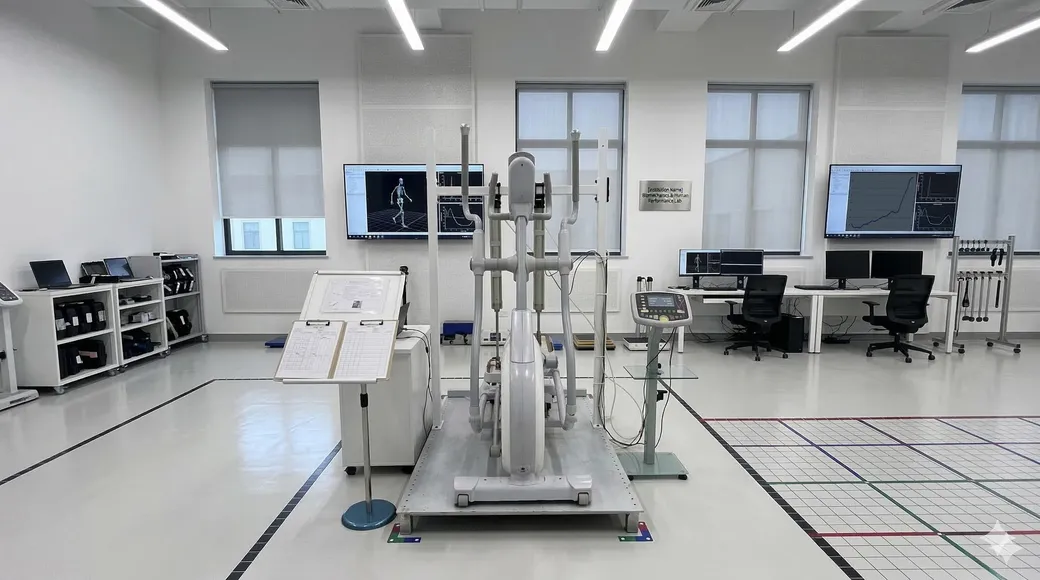
Testing evidence helps separate a real factory from a catalog-only supplier. YPOO’s spin bike page references 3A drop testing, durability testing every 200 hours and 500,000 cycles, and salt spray testing. These are useful categories for buyer questions because they connect product performance, corrosion resistance, carton strength, and repeat-use durability.
Certificates should match the exact product and market. Ask whether the quoted spin bike model has CE, RoHS, FCC, UKCA, or other documents required for your destination. Check model number, product photo, certificate holder, test standard, issue date, and whether console, electronics, plug, or structural changes require review.
Red Flags That Suggest You Are Not Talking to the Factory
- The supplier cannot show a live factory walkthrough for the quoted model.
- The same product photo appears with several different model names and specs.
- The business license, payment beneficiary, and factory name do not match.
- The contact person avoids questions about production process, QC, or spare parts.
- The quote gives a low unit price but no packing size, carton structure, or loading quantity.
- The supplier claims certificates exist but cannot show model-specific documents.
- The sample is different from the spec sheet or from the mass-production promise.
- The company sells many unrelated categories but cannot explain which factory makes the bike.
Factory Verification Checklist
| Checkpoint | What to Request | Why It Matters |
|---|---|---|
| Identity | Business license, legal name, address, export entity | Confirms who you are paying and contracting with |
| Production role | Live walkthrough, workshop photos, process video | Shows whether the company actually controls production |
| Model specs | Spec sheet, model label, carton mark, sample video | Prevents photo and specification mismatch |
| QC | Inspection checklist, test records, outgoing QC photos | Reduces shipment and warranty risk |
| Certificates | Model-specific certificates and technical files | Protects import and sales compliance |
| Packaging | Carton size, foam, drop test, loading quantity | Reduces freight damage and margin loss |
| After-sales | Spare-part list, exploded diagram, warranty workflow | Supports dealers, gyms, and repeat orders |
How to Compare Quotes Fairly
When comparing spin bike manufacturers, do not compare only the FOB unit price. Compare the full model specification, frame and flywheel, resistance system, display, max user weight, net and gross weight, product size, packing size, customization, sample cost, MOQ, lead time, certificate scope, QC standard, spare parts, warranty terms, and loading quantity.
A lower price can be reasonable if the model is simpler. It becomes risky when the supplier removes details, changes materials, weakens packaging, or cannot explain after-sales support. The best quote is the one where cost, specification, QC, and responsibility are clear before production starts.
When a Supplier Can Still Be Useful
A supplier or trading company can still help if it is transparent about its role. Some buyers need mixed product categories, small trial orders, language support, or sourcing coordination. The problem is not the word “supplier.” The problem is when a supplier presents itself as a factory but cannot prove production control.
If you work with a supplier, ask them to disclose the real factory role, arrange a factory visit or live audit, provide model-specific documents, and define who handles spare parts and warranty claims after shipment.
When to Contact YPOO
Contact YPOO when you need factory-direct spin bike support for distributors, gyms, hotels, private-label brands, and wholesale fitness equipment projects. YPOO supports spin bike OEM/ODM projects, model selection, sample planning, logo and packaging discussion, specification comparison, quality checks, and export order coordination.
You can review the YPOO spin bike OEM manufacturer page, browse the YPOO spin bike category, compare models such as YP-F5 MAX and YP-F5 Ultra, or contact YPOO to discuss your target market, specs, MOQ, sample needs, and shipment plan.
FAQ
What is the difference between a spin bike manufacturer and a supplier?
A spin bike manufacturer controls production, model specifications, QC, packing, spare parts, and customization. A supplier may coordinate sourcing or export service, but may not directly control the factory that makes the bike.
How can buyers verify a real spin bike factory?
Verify business license, legal company name, factory address, payment beneficiary, product line, live workshop video, sample room, production process, QC records, warehouse, certificates, and whether the model specs match a real physical sample.
What documents should buyers request before ordering spin bikes?
Ask for model-specific spec sheet, quotation, packing size, loading quantity, certificate files, warranty terms, spare-part list, user manual, carton artwork requirements, inspection checklist, and sample approval records.
Can YPOO support private-label spin bike projects?
Yes. YPOO supports spin bike OEM and ODM projects for distributors, gyms, hotels, and private-label fitness equipment buyers, including model selection, logo, color, console, resistance system, packaging, samples, QC, and shipment planning.
Final Recommendation
The safest way to choose among spin bike manufacturers is to verify the factory role before negotiating only on price. A real factory should connect its product photos to model-specific specs, production evidence, QC records, packaging details, certificates, spare parts, and after-sales support. If a supplier cannot prove those basics, treat the quote as incomplete until the real factory is visible.
To compare factory-direct spin bike options, visit the YPOO spin bike page, review the spin bike product category, or contact YPOO for OEM/ODM sourcing support.