

Stationary Bike Companies are not all equal when you are building a private-label fitness brand. A consumer buyer may care most about app features, display size, or online reviews. A private-label buyer has a bigger question: can this company help me launch a bike that looks like my brand, passes my market requirements, ships consistently, and can be reordered without quality drift?
This guide lists 10 stationary bike companies that B2B buyers often research when comparing OEM, ODM, wholesale, and private-label options. It is not a paid ranking or a guarantee that every company will fit every brand. Instead, use it as a shortlist and verification framework before you request samples, confirm MOQ, or approve packaging.
10 Stationary Bike Companies for Private Labeling You Should Know
Feel free to scan the table for a quick overview, then scroll down for a closer look at each supplier.
Quick Comparison Table of Leading Suppliers
| Company | Best Private-Label Use Case | Key Check Before Ordering |
|---|---|---|
| YPOO | OEM/ODM exercise bikes and spin bikes | Model fit, customization scope, QC evidence |
| SHUA Fitness | Established China fitness brand benchmark | OEM availability and commercial-bike range |
| Impulse Fitness | Commercial gym and project buyers | Dealer policies and private-label flexibility |
| WNQ | Fitness equipment distribution channels | Bike categories, MOQ, and export support |
| DHZ Fitness | Full gym equipment sourcing | Whether bikes are core products or add-on SKUs |
| MBH Fitness | Wholesale commercial fitness projects | Customization, documentation, spare parts |
| Body Strong / Baodelong | Commercial fitness equipment supply | Exact bike models and testing documents |
| MND Fitness / Minolta | Budget-sensitive wholesale buyers | Specification stability and packaging quality |
| JUNXIA | Mass-market fitness equipment sourcing | Private-label process and repeat-order control |
| Zhejiang Rongshun / Yijian | Home-fitness and cardio equipment lines | Commercial-use limits and after-sales support |
1. YPOO
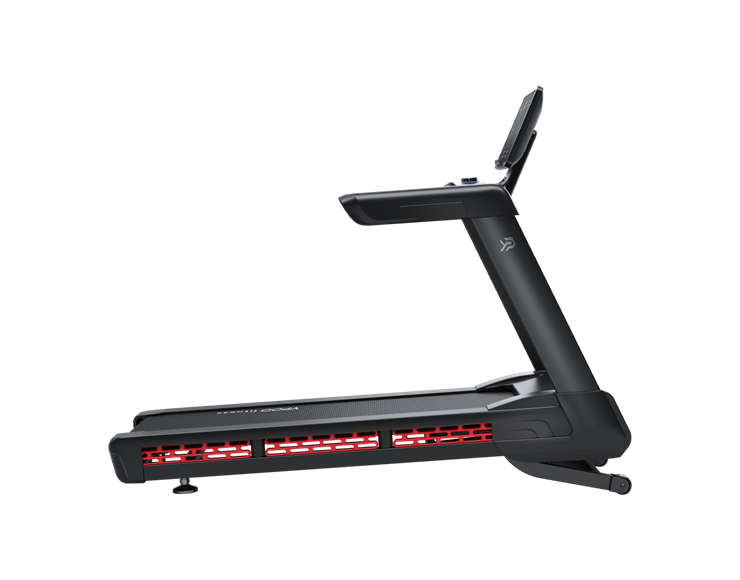
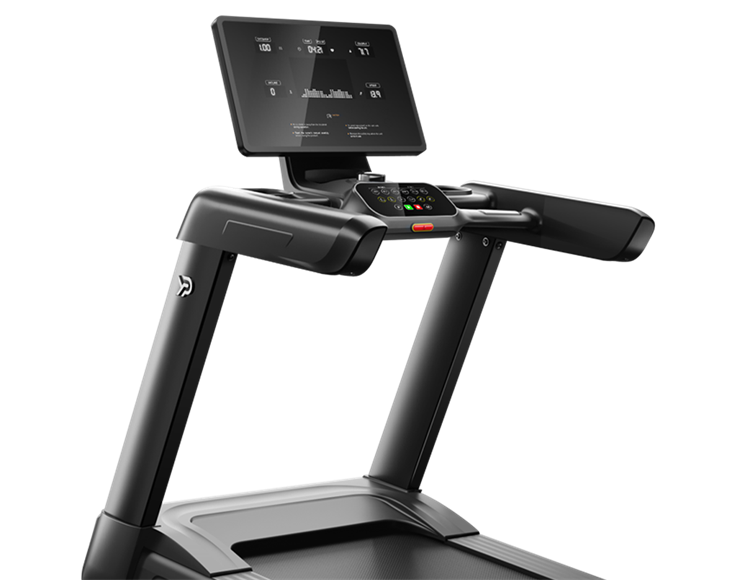
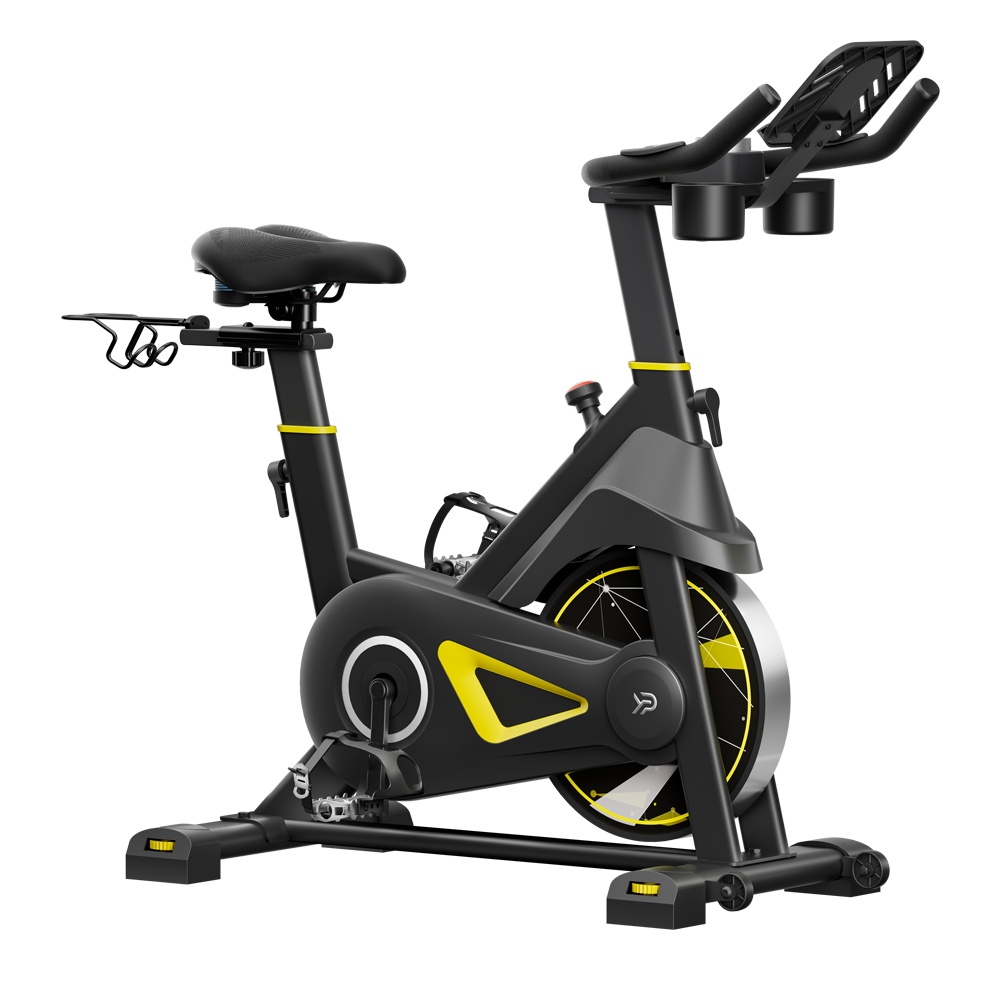
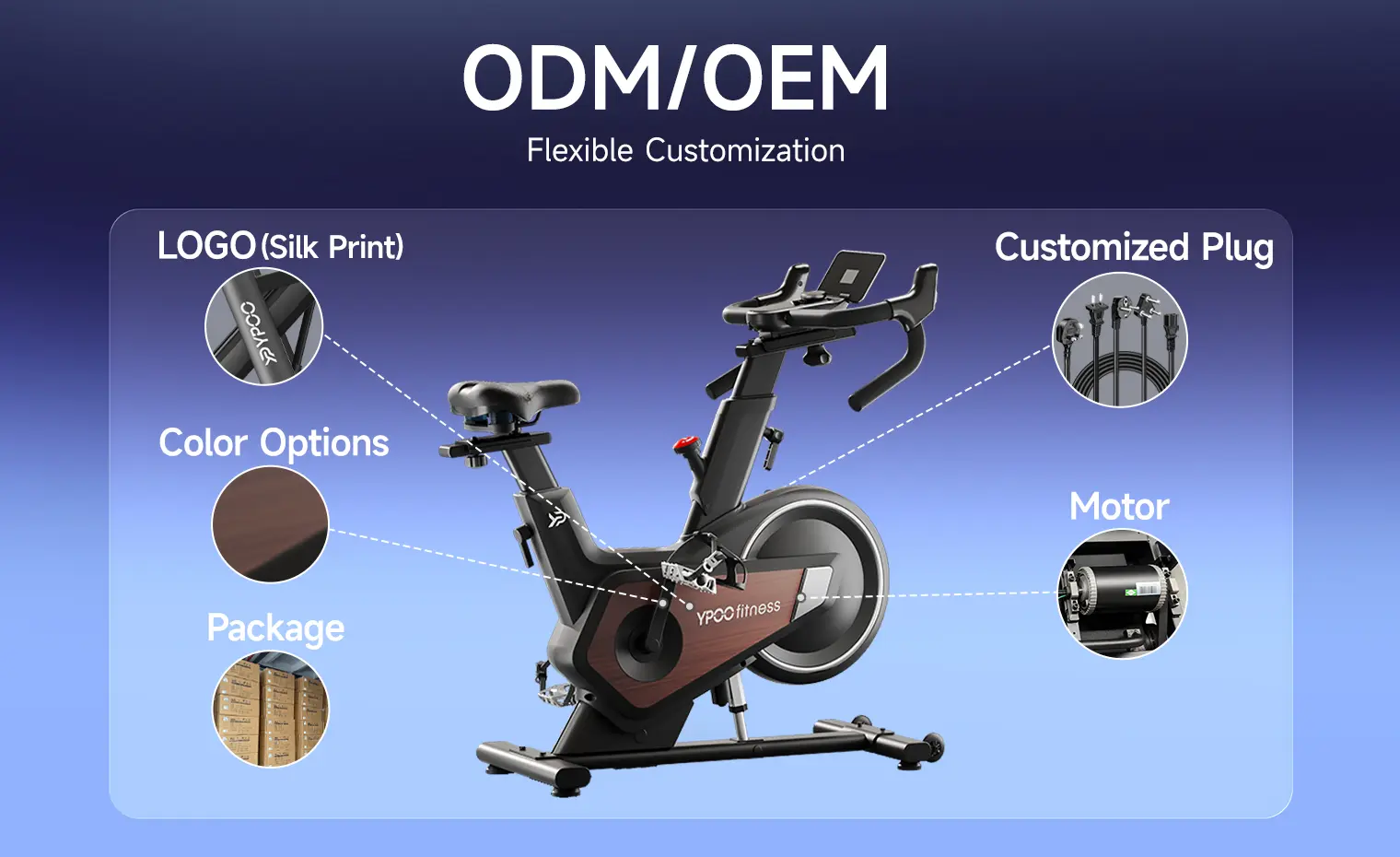
YPOO is a strong fit for private-label buyers who want a factory-direct stationary bike partner with OEM/ODM support. YPOO’s public product categories include exercise bikes and spin bikes for gyms, cycling studios, hotels, and private-label fitness equipment brands. The YP-F5 MAX page also shows concrete specs such as flywheel, display, electronic control brake system, resistance levels, user weight, and production-process steps.
Private-label buyers should ask YPOO about model selection, branding options, sample lead time, packaging, QC reports, spare parts, and repeat-order version control.
2. SHUA Fitness
SHUA is often researched as an established China fitness equipment brand. For private-label buyers, the key question is whether the project requires SHUA-branded distribution or flexible OEM/ODM support. If you are comparing SHUA, ask for the exact stationary bike models available for your market, commercial-use limits, documentation, and whether brand customization is supported.
3. Impulse Fitness
Impulse Fitness is widely known in commercial gym equipment. It may be useful for buyers benchmarking commercial quality, dealer channels, and gym-project expectations. Private-label buyers should verify whether Impulse supports the level of custom branding required, because not every well-known equipment brand is designed to be a private-label manufacturer.
4. WNQ
WNQ appears frequently in China fitness equipment sourcing research. For stationary bikes, ask whether the company’s current bike range fits your use case: home fitness, light commercial, studio cycling, or broader gym projects. Buyers should check MOQ, export documentation, spare parts, packaging strength, and model continuity before placing a branded order.
5. DHZ Fitness
DHZ Fitness is often considered by buyers sourcing full gym equipment packages. If your private-label brand focuses only on stationary bikes, confirm whether bikes are a core product category or part of a wider catalog. A broad gym supplier can be useful, but you still need model-specific QC, bike spare parts, and stable bike component sourcing.
6. MBH Fitness
MBH Fitness is another company B2B buyers compare for commercial fitness equipment supply. Private-label buyers should ask for bike-specific branding options, sample terms, carton artwork support, certificates, and after-sales parts. The most important question is whether the supplier can keep the same specification across repeat orders.
7. Body Strong / Baodelong
Body Strong, also known as Baodelong, is commonly included in China commercial fitness equipment discussions. For stationary bike private labeling, ask for the exact bike line, production role, inspection checklist, and export experience. Do not assume that strength equipment capability automatically proves spin bike or exercise bike depth.
8. MND Fitness / Minolta
MND Fitness, also known as Minolta, can be relevant for budget-sensitive wholesale sourcing. When price is attractive, buyers should spend extra time checking frame stability, flywheel feel, resistance system, console quality, packaging, and warranty handling. A low quote is only useful if the branded product can survive real customer use.
9. JUNXIA
JUNXIA is known in mass-market fitness equipment sourcing. For private-label stationary bikes, confirm whether the company can support the branding level you need: logo placement, color accents, manual changes, carton artwork, and repeatable production records. Sample testing is important before committing to a larger private-label order.
10. Zhejiang Rongshun / Yijian
Zhejiang Rongshun / Yijian is often associated with home-fitness and cardio equipment. Private-label buyers should check whether the selected stationary bike is intended for home use, light commercial use, or heavier shared-use environments. Clarify warranty terms, spare parts, packaging, and whether the model can be customized without changing reliability.
How to Compare Stationary Bike Companies for Private Labeling
The best stationary bike companies for private labeling should prove five things before you place a bulk order: suitable models, practical branding options, realistic MOQ, repeatable production, and after-sales support. A supplier that only sends a low price and a product photo is not enough for a branded launch.
Check OEM and ODM capability first
Private labeling usually starts with logo, color, manual, and carton changes. ODM goes deeper into model development, component changes, console options, and structural decisions. Ask each supplier which changes are standard, which require MOQ, and which require new testing.
Match the bike to your sales channel
A light home-use stationary bike, a studio spin bike, and a hotel-gym exercise bike have different durability expectations. Before comparing quotes, define your target users, daily use level, retail price, warranty promise, and shipping destination.
Best Stationary Bike Companies: Private-Label Buyer Checklist
Ask for model-specific proof
Do not accept only general factory claims. Request the exact specification sheet, product photos, packing details, test information, and spare-parts list for the bike you plan to brand.
Confirm MOQ and branding cost
MOQ may change by logo, color, console, manual, or carton artwork. Ask for a sample order path, trial order path, and repeat-order path so your brand does not overcommit too early.
Protect repeat-order consistency
For private labeling, the second order matters as much as the first. Lock the model number, approved sample, component list, color code, label placement, manual version, and packaging version before mass production.
FAQ
What are the best stationary bike companies for private labeling?
The best stationary bike companies for private labeling are suppliers that can support OEM/ODM customization, stable production, realistic MOQ, QC documentation, packaging control, spare parts, and repeat-order consistency. The right choice depends on your sales channel and target use case.
Should private-label brands choose a factory or a trading company?
A factory usually gives better production visibility and component control. A trading company may help if you need many product categories. For stationary bikes, private-label buyers should prioritize the supplier that can prove responsibility for the exact model.
How many samples should I test before ordering stationary bikes?
At minimum, test one approved sample of each model you plan to sell. For larger private-label launches, test packaging, assembly, resistance feel, console function, saddle adjustment, noise, and spare-parts replacement before mass production.
Is YPOO a stationary bike company for private labeling?
Yes. YPOO publicly lists exercise bike and spin bike categories with OEM/ODM customization, wholesale supply, and factory-direct manufacturing support. Buyers should still confirm the exact model, MOQ, branding scope, QC evidence, and documentation for their destination market.