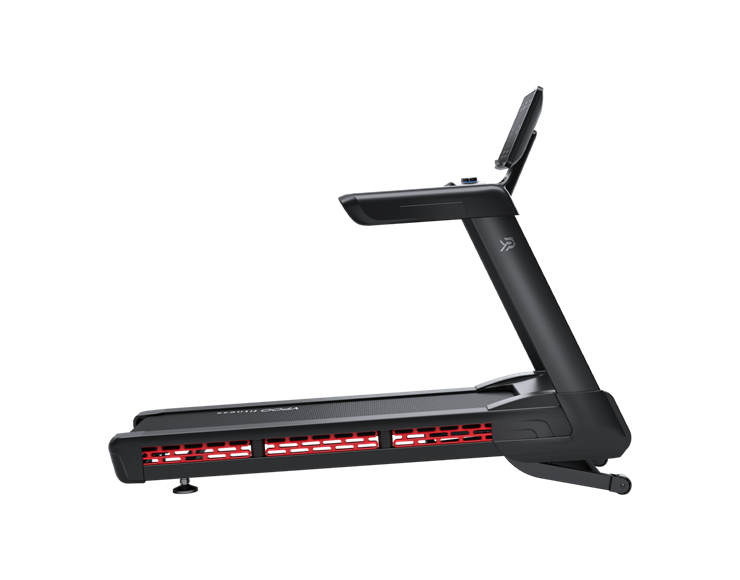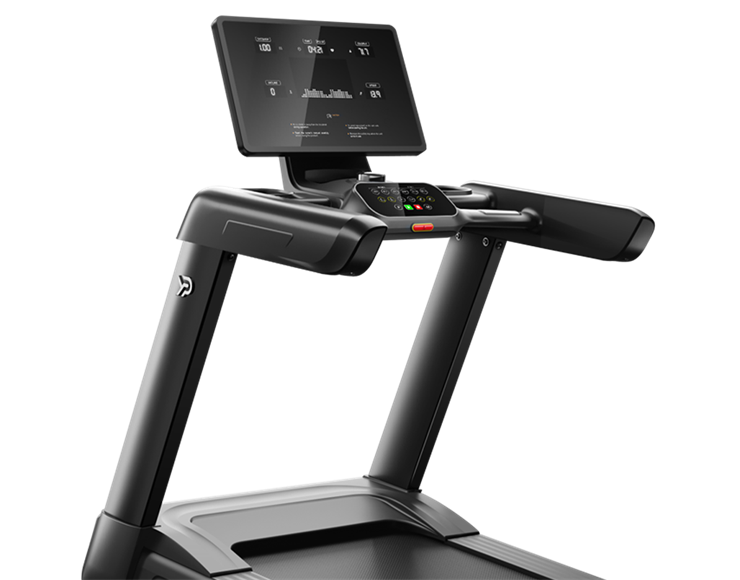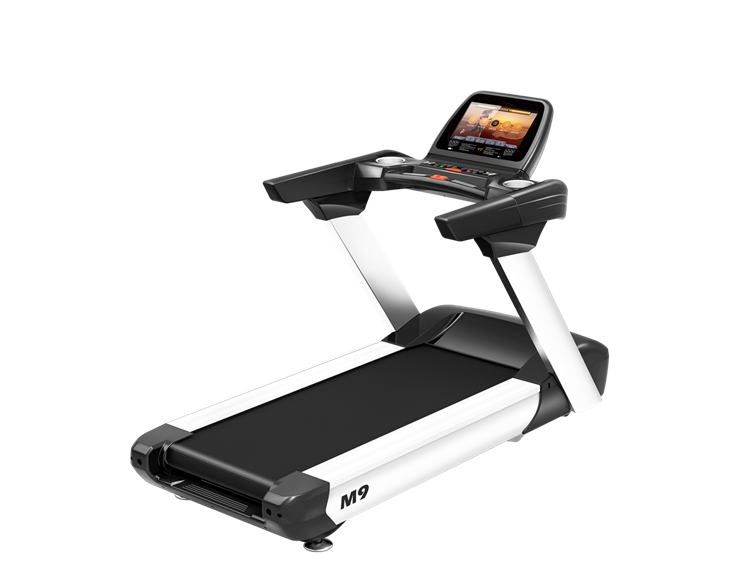

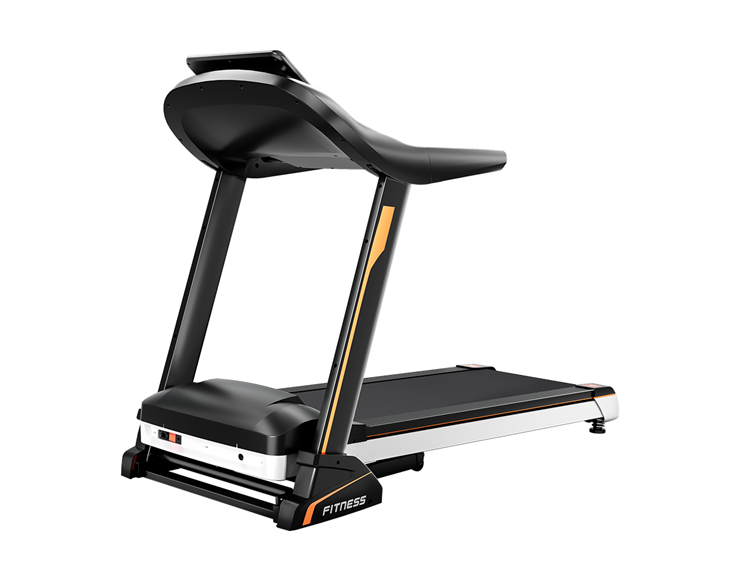
Remember when comparing treadmills meant checking motor power, belt size, and price? That was easy.
In 2026, those specs still matter. But they no longer tell you whether a treadmill will actually sell. Customers walk in with specific expectations. They ask about wearable data, steep incline, and where to store it. Facilities ask about uptime. Distributors ask for clear price bands without a parts headache.
So which treadmill trends should B2B buyers actually act on? Here are seven shifts worth watching, and the questions to ask before you update your range.
Why Treadmill Trends Matter to B2B Buyers in 2026
A trend is useful only when it changes a purchase decision. A flashy feature can attract attention and still be wrong for your channel. Meanwhile, a less visible change, such as easier service access, can protect margin for years.
This guide is written for importers, distributors, retailers, private-label brands, hotels, property projects, and gym buyers. It draws on current fitness-industry research, official product information, and YPOO’s 2026 market observations. It is not a market-share forecast, and not every trend fits every buyer.

1. Wearable and App Connectivity Moves From Extra to Expected
Connected training is no longer limited to premium studio products. The American College of Sports Medicine ranked wearable technology as its number-one fitness trend for 2026. Mobile exercise apps and data-driven technology also appeared in its top ten.
That matters for treadmills because users increasingly expect their workout data to move with them. Heart-rate devices, watches, phones, and training platforms are part of the experience. For B2B buyers, however, a Bluetooth logo is not enough.
Ask which devices and apps are supported. Confirm whether the treadmill sends data, receives control commands, or simply plays audio. Check account requirements, subscription costs, regional availability, privacy notices, firmware support, and what still works offline.
Offer a connected model for app-focused customers and a simpler console for buyers who value quick starts. See the ACSM 2026 trends report for the broader context.
2. Incline Training Becomes a Clear Product Category
Incline is shifting from a small specification line to a main buying reason. Walking at an incline offers a way to raise training intensity without requiring high running speed. At the upper end, large incline ranges create a product category closer to hill training than a standard treadmill.
For distributors, that creates clearer merchandising. You can offer a conventional home treadmill, an incline-focused step-up, and a high-incline model for a more specialized audience. The important part is to describe the feature accurately.
Incline levels are not automatically percentage grades. Ask for the measured range, incline motor specification, calibration method, repeated-cycle test, and reset behavior. Check how the machine performs under load and whether service parts are available.
YPOO’s M5 Max and M3 Max illustrate this direction with wide listed incline ranges in the company’s treadmill catalog. Buyers should confirm the exact configuration and grade for their order. Our guide to incline treadmills for business covers the commercial questions in more depth.
3. One Treadmill Range Splits Into More Specific Use Cases
The middle of the market is becoming less generic. A household walking pad, a folding running treadmill, a hotel model, and a high-use gym treadmill may all have moving belts, but they solve different problems.
Segmentation creates clearer offers. It also creates risk when marketing runs ahead of engineering. Terms such as “commercial” should be backed by intended-use documentation, testing, and warranty terms.
Build the range around customer groups rather than tiny feature differences. Define the expected user, session length, daily usage, storage need, and service environment for each model. Then remove products that overlap without adding a clear reason to buy.
4. Compact Treadmills Keep Growing Up
Compact no longer has to mean walking only. Space-saving products now range from under-desk walking pads to folding treadmills designed for faster workouts. That opens more opportunities for e-commerce sellers, apartment-focused retailers, and corporate wellness programs.
Compact design creates trade-offs. Smaller cartons may improve freight efficiency, while shorter belts and folding joints can limit the user group.
Check the product in both open and stored positions. Review belt dimensions, user capacity, stability, assembly time, wheels, folded lock, and carton protection. If the model ships through a parcel network, test packaging for that route instead of assuming container-ready packaging is enough.
For private-label buyers, handrail design, console size, and storage mechanism can shape the whole customer experience.
5. Buyers Want Personalization Without Unnecessary Friction
Personalized training remains attractive. Users like recommendations, saved profiles, automatic adjustments, and progress data. Yet buyers are also becoming more aware of account setup, subscription fees, Wi-Fi dependence, and software support.
The best offer is not always the machine with the most software. A hotel may prefer quick start, while a premium home brand may want guided content.
During sample approval, test the complete journey: activation, guest use, offline mode, language, unit selection, app pairing, account recovery, and reset between users. Ask how long the software version will be supported and what happens if an app relationship ends.
Keep the hardware valuable on its own. Connected features should improve the treadmill, not make basic operation confusing.
6. Active Aging and Accessible Operation Influence Product Design
ACSM placed fitness programs for older adults second in its 2026 trends list. That does not mean every treadmill needs a medical label. It does mean B2B buyers should think beyond young runners.
Clear controls, stable handrails, a manageable step-up height, visible safety features, and smooth low-speed operation can widen a product’s appeal. These details matter for senior living, rehabilitation-adjacent wellness spaces, hotels, corporate gyms, and households with several generations.
Do not turn accessibility features into medical claims without the appropriate evidence and approvals. Instead, define the user group and evaluate ordinary operation. Can a new user start, stop, and change speed without a tutorial? Is the display readable? Are warning labels and manuals available in the required language?
For project orders, ask about emergency-stop behavior, handrail options, supervision needs, and applicable standards. Simple operation can be a serious business advantage.
7. Serviceability and Lifecycle Cost Become Sales Features
Smart screens get attention. Spare parts protect the relationship after the sale. As treadmill ranges become more connected and specialized, buyers need a clearer plan for controllers, displays, incline systems, belts, motors, and software.
Compare total lifecycle cost, not only the opening unit price. Ask which parts should be stocked locally, how faults are diagnosed, how component revisions are tracked, and who pays for warranty labor. Request service documentation for the exact model and configuration.
This trend also favors more disciplined product development. A private-label brand should avoid changing visible features if the change creates new compliance, packaging, or spare-parts risks without a clear customer benefit.
Before a bulk order, connect sample testing to production inspection and after-sales planning. Our article on treadmill wholesale purchasing explains how MOQ, configuration, packaging, and warranty fit together.
How Should B2B Buyers Respond to 2026 Treadmill Trends?
Start with your customers, not the trend list. Identify the two or three changes that matter in your market. Then translate each one into a written requirement.
- For connectivity, name the devices, apps, and offline functions you need.
- For incline, specify the measured range and testing requirements.
- For segmentation, define household, shared-use, or commercial duty.
- For compact products, confirm open, folded, and packed dimensions.
- For service, agree on parts, documents, and claim responsibilities.
Next, request a representative sample. Test the feature that supports the trend, not just basic movement. Finally, compare landed cost and support requirements. A popular feature is useful only when your business can sell and service it.

Turn Treadmill Trends Into a Better Product Range
The most useful treadmill trends are not predictions to copy. They are signals that help you ask better questions. Choose the trends that fit your channel, test them in a real sample, and build the service plan before launch.
Contact YPOO with your target market, sales channel, quantity, and feature priorities. Our team can help you compare suitable treadmill models, configurations, OEM options, and order requirements.
FAQs
What is the biggest treadmill trend in 2026?
Connectivity is one of the strongest broad trends because wearables, mobile apps, and data-driven training remain important across fitness. For treadmill buyers, incline training, compact formats, and clearer use-case segmentation are also significant.
Are smart treadmills replacing simple treadmills?
No. Smart features suit connected home users and some managed facilities. Simple consoles remain valuable where quick operation, lower support needs, and offline use matter. Many distributors benefit from offering both.
What should private-label buyers prioritize in 2026?
Prioritize a clear target user, stable configuration, verified claims, compliance, packaging, and service parts. Add connected or high-incline features only when they create a clear market difference and can be supported after launch.