
A heavy duty treadmill is not defined by one big number on a catalog page. For high-use facilities, the real question is whether the treadmill can handle repeated users, longer operating hours, less predictable running styles, and a service routine that keeps the machine available instead of constantly waiting for parts.
This heavy duty treadmill buying guide gives gym owners, hotel operators, corporate wellness teams, apartment developers, and distributors a practical way to compare models. Use the 10 specifications below to move beyond simple horsepower claims and build a shortlist around measurable performance, durability, safety, and after-sales support.
What Is a Heavy Duty Treadmill?
A heavy duty treadmill is a treadmill built for stronger structural load, longer daily use, higher stability, and easier service than a basic household model. The term is common in buying searches, but it is also a marketing phrase. It is not a single global certification band. A buyer should therefore translate “heavy duty” into a specification profile that matches the site.
In a home, one or two familiar users may run at predictable times. In a hotel, gym, corporate fitness room, or apartment amenity center, the treadmill may be used by people with different weights, stride lengths, training habits, and levels of care. That is the reason a heavy duty treadmill must be judged by use case first and catalog numbers second.
If you are still defining the category, it may help to compare this article with our guide to semi-commercial treadmills. A semi-commercial model may be enough for many shared-use spaces, while a heavier high-use facility should demand more proof around structure, motor duty, cooling, and service support.
Who Actually Needs a Heavy Duty Treadmill?
The answer depends on traffic, not only the building name. A small personal-training studio with back-to-back treadmill classes may need a tougher model than a hotel gym that sees light morning use. A residential tower with hundreds of units may put more abuse on treadmills than a boutique office gym with controlled access.
Consider a heavy duty treadmill when the site has multiple daily users, limited supervision, long operating hours, high variation in user weight, frequent speed and incline changes, or a strong need for low downtime. Typical buyers include commercial gyms, hotels, apartment gyms, schools, corporate wellness facilities, rehabilitation-adjacent fitness spaces, and dealers supplying project orders.
For sourcing teams, the practical buying question is simple: if the treadmill fails, how many users are affected and how difficult is it to repair? The higher the answer, the more attention you should pay to heavy duty construction and after-sales evidence.
Heavy Duty vs Commercial vs Semi-Commercial Treadmills
These labels often overlap. Some suppliers call a model “commercial” because it has a large console. Some call it “heavy duty” because the maximum user weight is high. Neither claim is enough by itself. A stronger comparison looks at the whole duty profile.
| Area | Semi-Commercial Treadmill | Heavy Duty Treadmill | Full Commercial Treadmill |
|---|---|---|---|
| Typical site | Hotel, apartment, office, studio, premium home | High-use shared facilities and demanding project rooms | Large clubs, institutions, intensive traffic facilities |
| Use pattern | Repeated daily use with moderate traffic | Heavier users, longer hours, higher variation, more abuse risk | Continuous professional operation with planned service teams |
| Buying focus | Balanced space, durability, and value | Load, stability, cooling, service access, and downtime control | Fleet uptime, advanced service programs, and maximum lifecycle |
| Risk of underbuying | User dissatisfaction and faster wear | Frequent service calls and poor facility reputation | High capital cost if overspecified for the site |
The strongest buying approach is to define your expected use first, then ask each supplier to confirm which model is recommended for that profile in writing.
The 10 Must-Check Specs Before Buying a Heavy Duty Treadmill
Quick Answer: 10 Specs That Matter Most
A good heavy duty treadmill for high-use facilities should be evaluated as a complete system. Motor power matters, but so do belt size, frame mass, user capacity, cooling, controls, test evidence, spare parts, and the supplier’s ability to support repeat orders.
| Spec | What to Check | Why It Matters in High-Use Facilities |
|---|---|---|
| 1. Use profile | Facility type, operating hours, users per day, session length | Defines the real duty requirement before hardware is compared |
| 2. Motor system | Motor type, CHP or peak rating, controller, cooling, power supply | Repeated starts, speed changes, and heavier users create thermal stress |
| 3. Running belt size | Usable width and length, belt material, deck support, alignment | Wider and longer decks support more users and more confident running |
| 4. Maximum user weight | Rated load, stability, frame support, handrails, test method | Capacity only means something when the structure supports it safely |
| 5. Frame and machine weight | Net weight, upright structure, weld quality, deck thickness, rollers | Heavier structures usually reduce vibration and improve long-term stability |
| 6. Speed and incline range | Top speed, incline levels, transition smoothness, calibration | Facility users need varied training without overloading the drive system |
| 7. Heat, noise, and ventilation | Motor airflow, controller placement, fan paths, room conditions | Shared rooms can run warm and expose weak cooling design quickly |
| 8. Console and safety controls | Display, quick keys, emergency stop, side rails, language options | Many first-time users need intuitive controls and visible safety functions |
| 9. Test and compliance evidence | Safety reports, ISO references, life tests, load tests, inspection records | Documentation turns supplier claims into auditable purchasing evidence |
| 10. Serviceability | Exploded views, spare parts, warranty process, technician access | Uptime depends on repair speed as much as initial build quality |
1. Use Profile and Duty Cycle
The first specification is the one many RFQs forget: the use profile. A heavy duty treadmill should be selected against the number of expected users per day, peak traffic windows, session length, speed range, incline use, cleaning frequency, ventilation, and supervision level.
For example, a hotel fitness room may have short bursts before breakfast and after work. An apartment gym may see heavy weekend use and less careful behavior. A corporate wellness room may have predictable office-hour traffic but limited maintenance attention. These details affect whether a treadmill needs maximum club-grade durability or a strong semi-commercial design with better cost control.
Ask suppliers to respond to a written scenario, not just a quantity request. Include daily operating hours, user weight range, average session length, and whether the treadmill will be placed in an air-conditioned space. A good supplier can map that scenario to a suitable motor, deck, belt, and service plan.
2. Motor System: CHP, Peak Power, and Cooling
Motor claims are easy to misunderstand. Peak horsepower can describe short maximum output, while continuous horsepower is more useful when comparing sustained performance. AC, DC, and BLDC systems can all be appropriate in different product positions, but the buyer should understand the intended duty, controller quality, cooling path, and power supply requirement.
A high-use facility should ask how the motor behaves during repeated starts, incline changes, interval sessions, and heavier users at lower speeds. Low-speed high-load use can be demanding because the motor and controller may generate heat without the same airflow as faster running.
Do not evaluate the motor alone. The drive belt, rollers, controller, deck friction, lubrication design, and ventilation all affect how hard the motor must work. A heavy duty treadmill is a system, not a horsepower sticker.
3. Running Belt Width and Length
The running surface is one of the clearest user-facing signs of a heavy duty treadmill. Wider belts give users more confidence, especially in shared facilities where people have different body sizes and running styles. Longer decks support taller users and faster running without forcing the user to shorten stride.
For facility buying, record the usable running belt dimensions, not only the total machine size. Also check belt texture, deck support, belt thickness, roller diameter, lubrication routine, and alignment method. A generous belt paired with a weak deck is not enough for a high-use site.
Installation space matters too. A larger treadmill needs clearance around the machine for safe access, cleaning, and service. Measure doors, elevators, floor loading concerns, room layout, and emergency access before confirming the final model mix.
4. Maximum User Weight and Real Stability
Maximum user weight is an important buying filter, but it should never be read in isolation. A heavy duty treadmill needs structural stability, handrail strength, deck support, and reliable stopping behavior across the rated load range.
Ask what test method supports the load rating. Then inspect the frame, uprights, side rails, running deck, rollers, and incline structure. A treadmill that feels stable at walking speed may still vibrate during faster running or during incline transitions. For project orders, request sample testing before bulk production.
In high-use facilities, a higher weight rating can also protect reputation. Users may not read the small print, and staff may not supervise every session. Selecting a treadmill with a comfortable rating margin reduces avoidable stress on the product.
5. Frame Mass, Deck, Rollers, and Vibration Control
Machine weight is not a perfect quality measure, but it is a useful clue. Heavier treadmills often have stronger frames, larger structural members, and better resistance to vibration. That said, weight must be supported by good engineering, weld quality, deck design, and service access.
For a heavy duty treadmill, inspect the upright connection points, front roller area, rear roller adjustment, deck support, base frame, and side rail assembly. These are the areas that absorb repeated impact and misalignment stress. Ask for close-up photos, production videos, or inspection reports if you cannot visit the factory.
Vibration is both a comfort issue and a maintenance issue. Excess vibration can loosen hardware, increase noise, and make the machine feel cheaper than its specification sheet suggests.
6. Speed Range and Incline System
A high top speed is useful only when the treadmill remains stable and smooth across the full range. For many facilities, the more important questions are whether the treadmill transitions smoothly, holds speed under load, and changes incline without sudden movement or excessive noise.
Incline adds mechanical stress. Check the maximum incline level, adjustment method, calibration, lift motor quality, and how the deck behaves when a heavier user runs or walks uphill. If the site expects interval training or hill programs, test the machine through repeated speed and incline changes.
For safety, verify emergency stop behavior, quick speed keys, clear display feedback, and whether the console is intuitive for first-time users.
7. Heat, Noise, and Room Ventilation
High-use facilities expose heat problems quickly. A treadmill may run well in a short showroom demo, then struggle after multiple users in a warm room with poor airflow. Cooling design should cover the motor, controller, and the space around heat-generating components.
Ask the supplier about recommended operating temperature, ventilation clearance, cleaning of air paths, and any duty limitations. If the facility is a hotel, apartment gym, or office wellness room, noise also matters. Loud operation can create complaints even when the treadmill technically works.
Noise should be checked during walking, running, incline movement, and cool-down. Pay attention to belt slap, roller sound, motor whine, and frame vibration.
8. Console, Controls, and Safety Experience
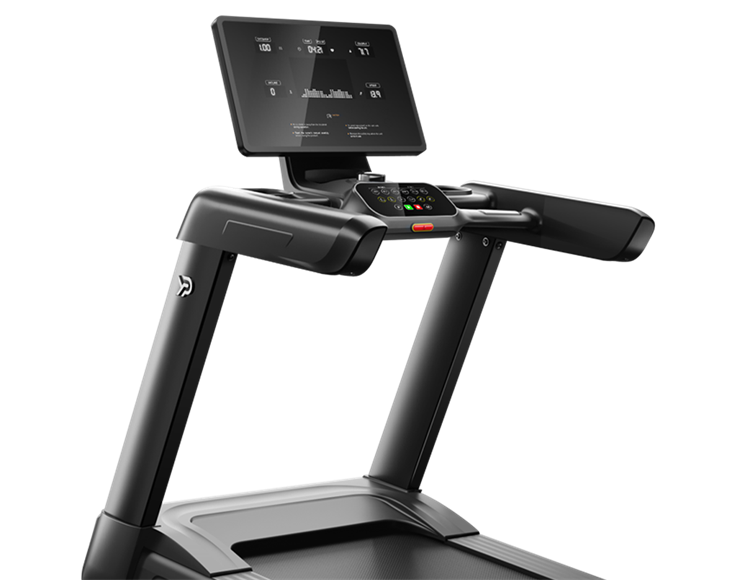
The console is more than a display. In shared spaces, users need simple start/stop logic, clear speed and incline feedback, visible emergency stop access, and quick controls that do not require staff assistance.
For distributors and private-label buyers, console decisions also affect warranty risk. Large touchscreens can improve the product impression, but they also add electronics, software, packaging, and replacement questions. Basic LED or LCD consoles may be easier to support in some markets, while TFT screens may help premium projects.
Ask whether the console language, units, programs, branding, and spare parts can be configured for your market. Also ask how long replacement console parts will remain available for repeat orders.
9. Testing, Standards, and Compliance Evidence
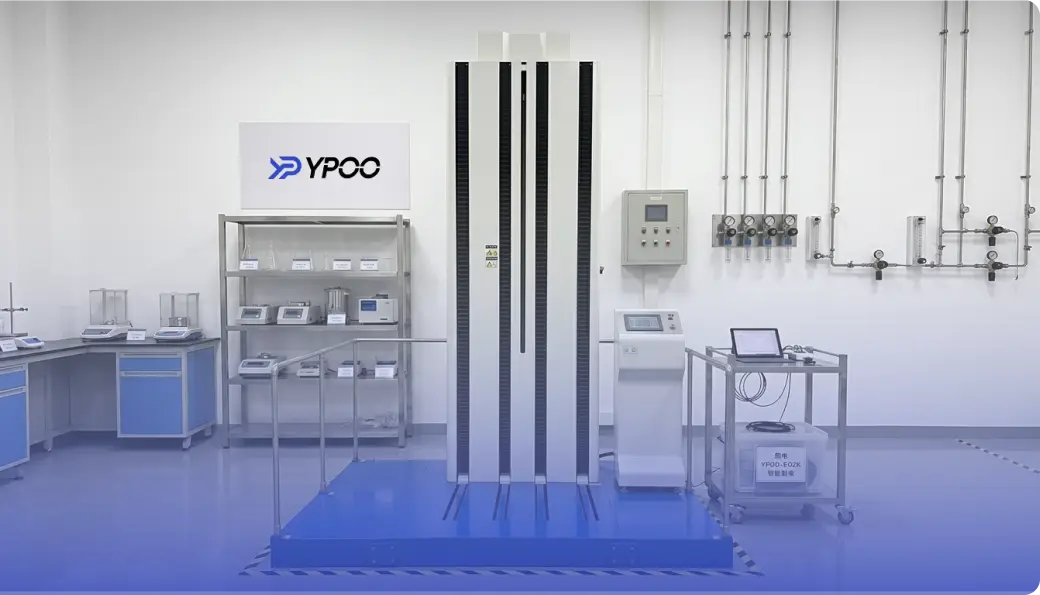
Heavy duty treadmill claims should be backed by documents. Relevant evidence can include model-specific inspection records, safety test reports, endurance tests, load tests, packaging drop or vibration tests, and electrical documentation for the destination market.
The ISO 20957 family is commonly used for stationary training equipment. For treadmills, buyers can reference ISO 20957-6:2021, while the general safety requirements are covered in ISO 20957-1:2024. These links do not replace local legal review, but they help buyers ask more precise documentation questions.
For importers, the key is model matching. The documents should match the exact treadmill model, voltage, plug, console option, and production configuration you are ordering. A generic certificate without model alignment is weak purchasing evidence.
10. Serviceability, Spare Parts, and Warranty Process
A heavy duty treadmill is still a moving machine. Belts wear, decks need attention, rollers require alignment, electronics can fail, and facilities need a clear service path. The difference between a good and bad purchase often appears after installation, not during quotation.
Before ordering, request an exploded view, spare parts list, maintenance schedule, warranty terms, service videos, and expected lead time for common parts. For project orders, ask which parts should be stocked locally. Common spare items may include running belts, decks, motor belts, rollers, emergency keys, console boards, control boards, and incline components.
Serviceability is also about physical access. A treadmill that is difficult to open, move, or diagnose may cost more over its lifecycle even if the purchase price looks attractive.
Example: YPOO Heavy Duty Treadmill Specs to Compare
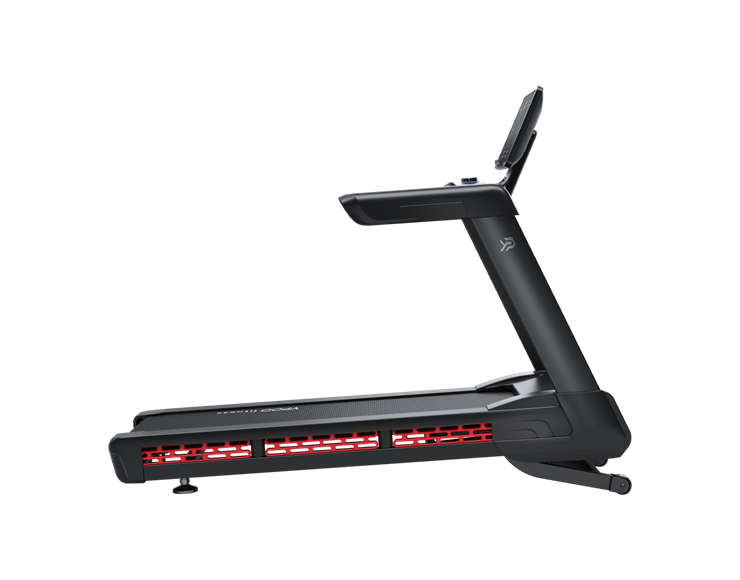
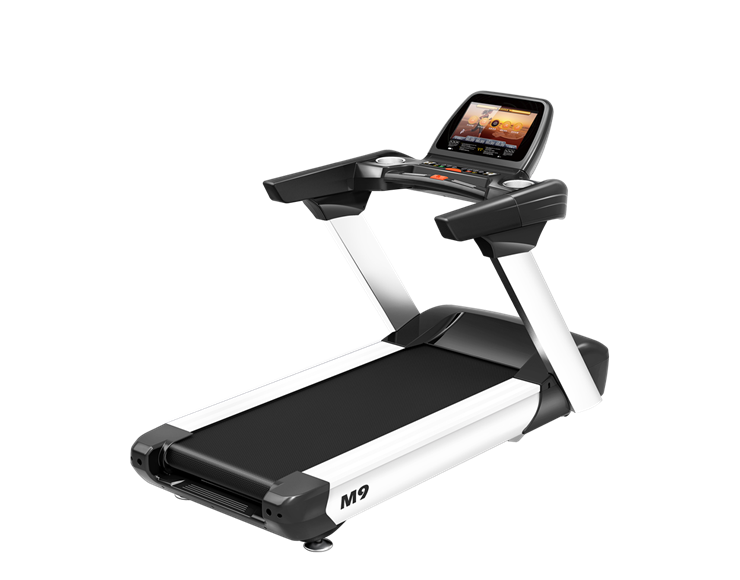
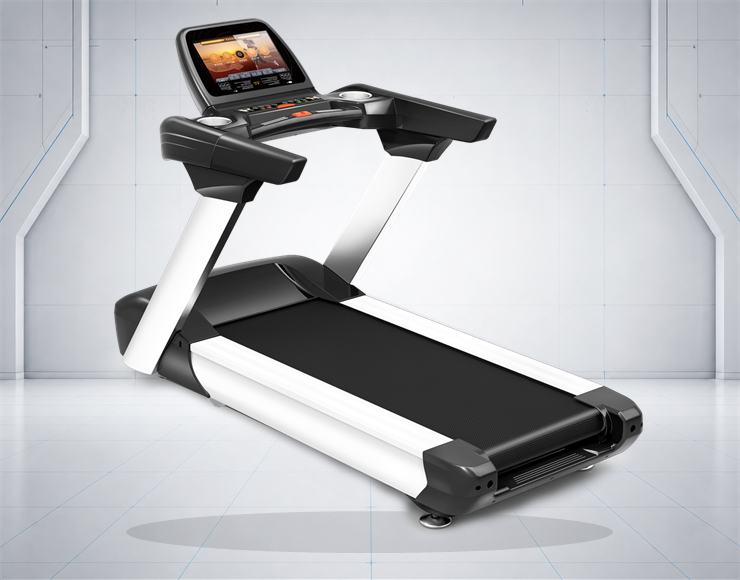
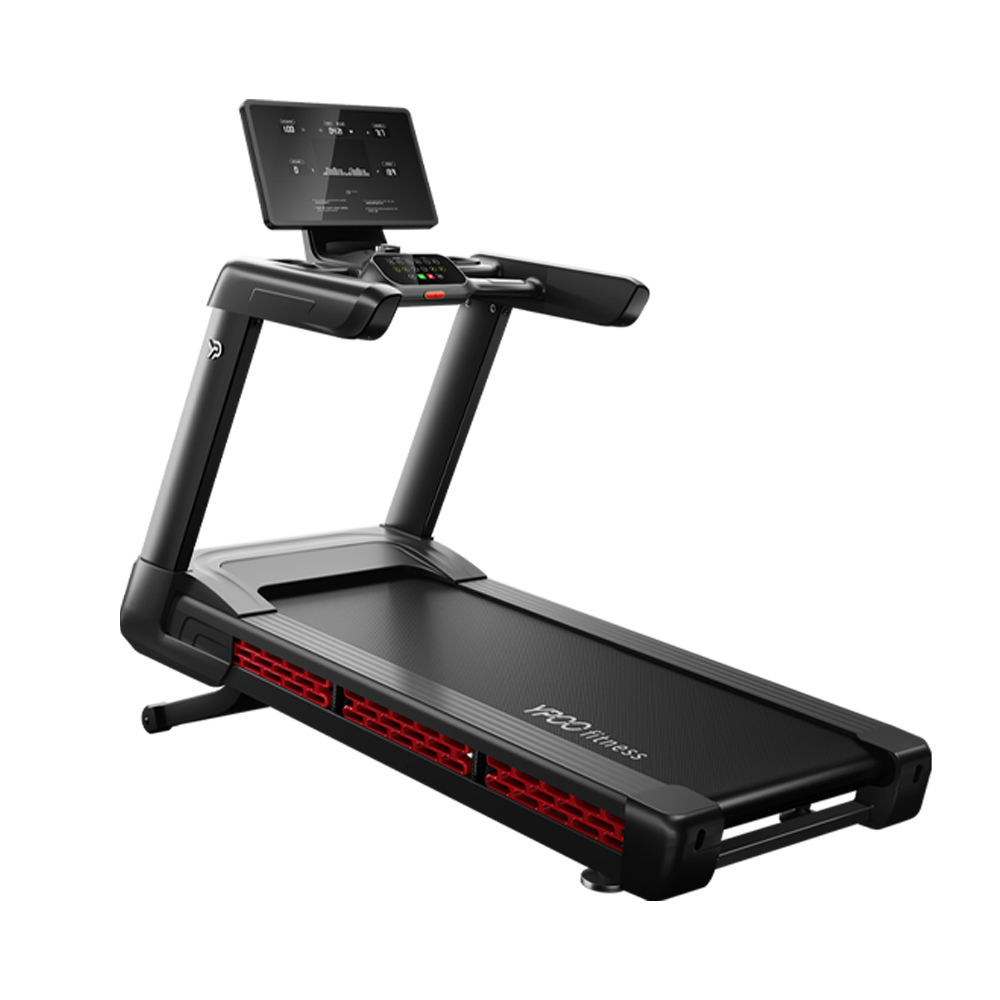
YPOO’s semi-commercial treadmill and heavy duty treadmill category is built for gyms, hotels, apartment fitness rooms, studios, and other shared-use environments. Within that range, the YP-M9 is a strong reference model for buyers comparing larger deck size, higher load rating, and heavy-duty construction.
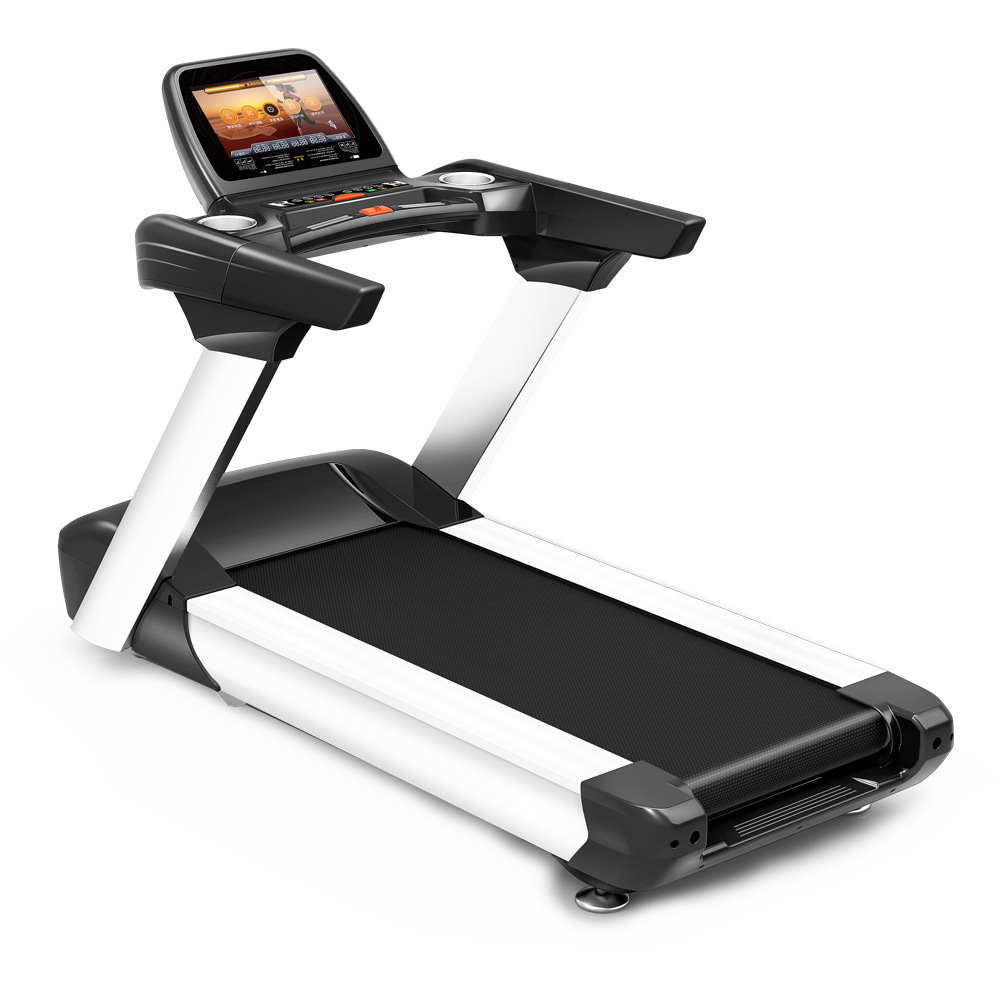
| Model | Motor | Speed | Incline | Running Belt | Max User | Net Weight |
|---|---|---|---|---|---|---|
| YP-M9 | AC 7.0HP peak | 1.0-25.0 km/h | 0-18 levels | 600 x 1650 mm | 200 kg | 202 kg |
| YP-M8 Pro | AC 3.0 CHP | 1.0-25.0 km/h | Auto 0-25 levels | 580 x 1600 mm | 180 kg | 172 kg |
These numbers are useful because they combine several high-use indicators: wide belts, strong load ratings, fast speed ranges, powered incline, and high machine weight. They still should be matched to the facility’s expected traffic, service plan, and local compliance needs.
Final Takeaway
A heavy duty treadmill should be selected around the real facility workload. The best buying decision balances 10 areas: use profile, motor system, running belt size, load capacity, frame structure, speed and incline, heat and noise control, console safety, documentation, and serviceability.
For high-use projects, YPOO can help buyers compare semi-commercial and heavy duty treadmill models, review OEM/ODM options, and prepare specification sheets for gyms, hotels, apartment fitness rooms, and corporate wellness spaces. Use the checklist above to build a clearer RFQ and reduce the risk of underbuying.
FAQ
What makes a treadmill heavy duty?
A treadmill is usually considered heavy duty when it combines a stronger frame, higher machine weight, larger running surface, higher user capacity, more durable drive components, effective cooling, and a service plan for repeated shared use. The label should always be verified with specifications and test evidence.
Is a heavy duty treadmill the same as a commercial treadmill?
Not always. “Heavy duty” describes durability expectations, while “commercial” may describe the target sales channel or facility class. Some heavy duty treadmills are suitable for high-use shared facilities, but buyers should confirm the recommended use, test reports, and warranty terms for their exact site.
What belt size is best for a high-use facility?
Many facility buyers prefer wider and longer running belts because they support more user types and more confident running. For example, YPOO’s YP-M9 lists a 600 x 1650 mm running belt, while the YP-M8 Pro lists a 580 x 1600 mm belt. Final selection should also consider room size and service clearance.
How important is treadmill motor horsepower?
Motor horsepower is important, but it should not be the only decision point. Buyers should also check whether the rating is continuous or peak, how the controller and cooling are designed, and how the treadmill performs under repeated starts, incline changes, and heavier users.
What documents should importers request before ordering?
Importers should request model-specific safety reports, inspection records, load and endurance evidence where available, electrical information, user manuals, labels, packing details, and spare-parts documentation. Documents should match the exact model and configuration being ordered.