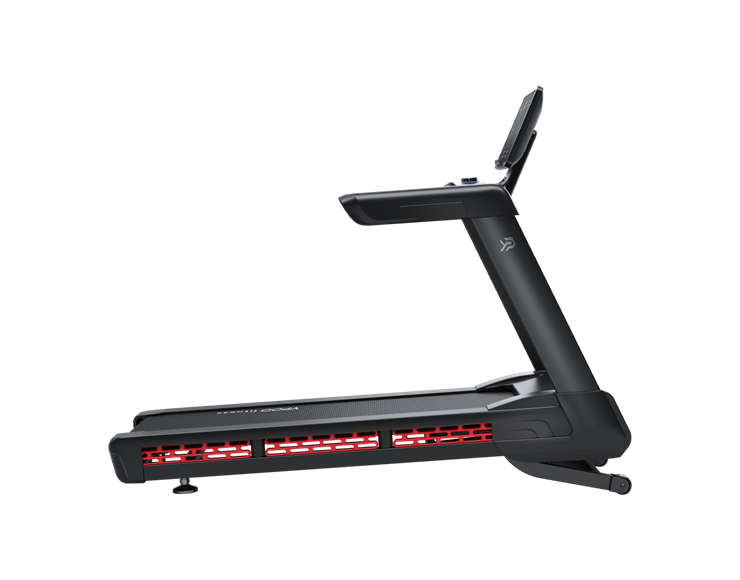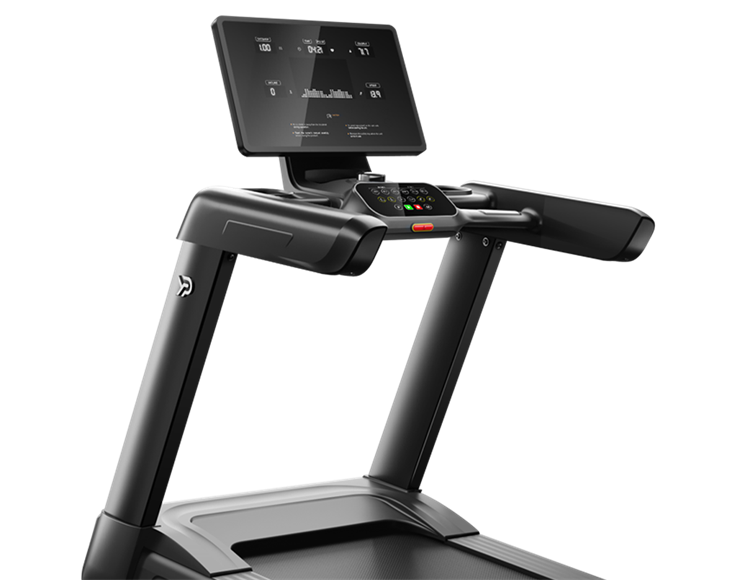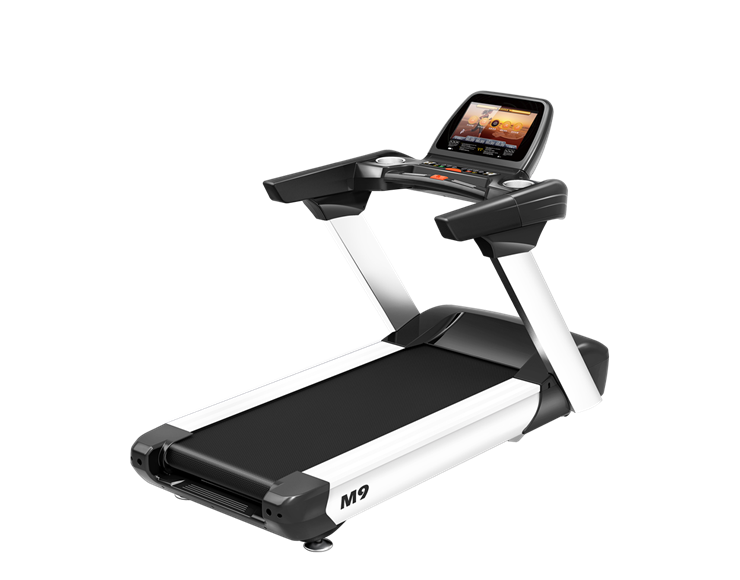

A semi-commercial treadmill is designed for shared-use environments that need more durability, stability, and serviceability than a typical home treadmill, without automatically requiring the size or cost of a full-commercial club machine. The category commonly fits hotel fitness rooms, apartment gyms, corporate wellness spaces, personal-training studios, school staff rooms, and premium home gyms.
However, “semi-commercial” is a market description, not one universal technical grade. A responsible buyer should define it through the intended use and a complete set of specifications. This guide explains the nine specs that matter most and shows how to compare models without relying on horsepower or maximum user weight alone.
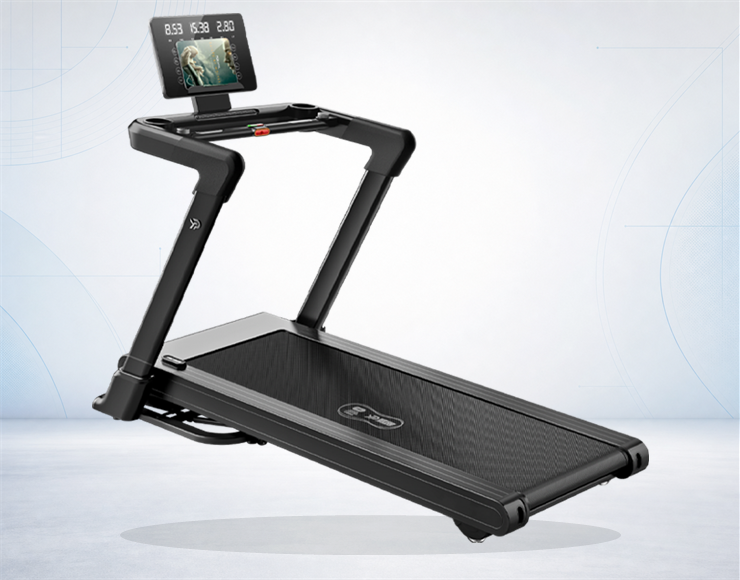
What Is a Semi-Commercial Treadmill?
A semi-commercial treadmill is a heavier-duty treadmill positioned between mainstream home equipment and full-commercial equipment built for high-traffic fitness facilities. Compared with a home model, it usually has a stronger frame, wider and longer running surface, higher machine weight, more robust drive components, powered incline, better cooling, and a clearer spare-parts plan. Compared with a full-commercial unit, it may be lighter, easier to install, more space-efficient, and better matched to facilities with moderate rather than continuous traffic.
The label alone does not prove any of those qualities. Two suppliers can use the same term for very different machines. Buyers should therefore treat “semi-commercial treadmill” as the start of a specification review, not the conclusion.
Quick Answer: The 9 Specs That Define the Category
| Specification | What to Verify | Why It Defines the Category |
|---|---|---|
| 1. Intended use | Site type, expected users, session pattern, operating hours, supervision | Determines the real duty requirement before hardware is compared |
| 2. Motor and drive | Motor type, continuous versus peak rating, controller, cooling, electrical supply | Shows whether the drive system can support repeated shared use |
| 3. Running belt | Usable width and length, belt construction, alignment, lubrication | Affects running confidence, user range, wear, and product footprint |
| 4. Frame and deck | Net weight, frame structure, deck, rollers, uprights, weld quality | Provides a better durability picture than appearance alone |
| 5. User capacity | Rated maximum load, test method, stability, side rails, handrails | Connects the rating to real structural and user requirements |
| 6. Speed and incline | Range, adjustment steps, accuracy, transitions, emergency stop | Defines training versatility and increases mechanical demands |
| 7. Console and controls | Display, programs, languages, connectivity, quick keys, replacement method | Changes user experience and long-term electronics risk |
| 8. Test evidence | Safety reports, life testing, load testing, packaging checks, inspection records | Turns marketing claims into auditable evidence |
| 9. Service support | Maintenance schedule, exploded view, spare parts, warranty process, response time | Determines whether a shared-use site can keep the machine operating |
Semi-Commercial vs Home vs Full-Commercial Treadmills
The comparison below describes a common market pattern, not formal certification bands. Actual classification must follow the manufacturer’s declared use, the applicable test report, the installation environment, and the buyer’s operating plan.
| Area | Home Treadmill | Semi-Commercial Treadmill | Full-Commercial Treadmill |
|---|---|---|---|
| Typical location | Individual household | Hotel, apartment, office, studio, premium home | High-traffic gym, health club, institutional facility |
| Use pattern | Known users and intermittent sessions | Multiple users and repeated daily sessions | Heavy traffic across long operating periods |
| Structure | Prioritizes folding, footprint, and price | Balances space efficiency with stronger frame and deck | Prioritizes maximum stability, duty, and service access |
| Drive system | Commonly DC or BLDC | BLDC, DC, or AC depending on model and project | Often AC or another high-duty drive architecture |
| Console | Basic LED/LCD or consumer app features | LED through large TFT options, with a focus on usability and service | Robust club controls, asset management, or advanced entertainment options |
| Buyer priority | Convenience and household value | Total project fit, durability, and after-sales control | Uptime, fleet management, and intensive-use lifecycle |
1. Intended Use and Duty Cycle
The first defining specification is not horsepower. It is the operating profile. A treadmill used by one family has a predictable load and recovery time. A treadmill in a 120-room hotel can receive many unrelated users, back-to-back sessions, different running styles, and less careful handling. That is why the same motor rating can perform very differently in two locations.
Before requesting a quotation, define the facility type, number of potential users, expected peak periods, average session length, weekly operating days, user weight range, ambient temperature, ventilation, supervision, and cleaning routine. Ask the supplier to confirm the recommended use in writing. If a model is not intended for the project’s usage pattern, a larger screen or higher top speed will not solve the mismatch.
There is no universal “hours per day” number that applies to every semi-commercial treadmill. Duty depends on the complete system: motor, controller, cooling, rollers, belt tension, deck friction, electrical supply, environment, and maintenance. A useful supplier response should explain the assumptions behind its recommendation rather than provide a single unsupported number.
2. Motor Rating and Drive-System Design
Motor specifications must be compared on the same basis. Continuous horsepower, peak horsepower, and nominal motor labels are not interchangeable. A short peak figure can look impressive but does not describe how the motor and controller behave during repeated running sessions.
Ask for the motor type—DC, brushless DC (BLDC), or AC—together with the continuous rating where available, peak rating if separately stated, controller specification, input voltage and frequency, current requirement, cooling design, overload protection, and speed under load. Also ask whether the sample and bulk production use the same motor and controller combination.
BLDC systems can provide efficient, relatively quiet operation in space-sensitive projects. AC systems are commonly considered for higher-duty models. Neither label guarantees performance by itself. Controller tuning, thermal management, belt and deck friction, roller alignment, and component consistency are equally important. During sample approval, run the machine with an appropriate load and check acceleration, speed stability, temperature, noise, vibration, and restart behavior.
3. Running Belt Width and Length
A semi-commercial running surface should support the intended users without making the machine unnecessarily large for the room. Wider and longer belts generally improve confidence for running, taller users, and higher speeds, but they also increase product size, shipping volume, and drive load.
YPOO’s current semi-commercial range lists running surfaces from 520 mm to 600 mm wide, with examples ranging from 1,350 mm to 1,650 mm long. That range shows why the category cannot be reduced to one threshold. A 520 × 1,410 mm model can fit a compact shared gym, while a 600 × 1,650 mm model targets users and projects that need a much larger platform.
Confirm that the number is the usable running belt size, not the overall deck or machine size. Inspect the side-rail clearance, rear-roller area, belt tracking, seam quality, surface grip, deck lubrication method, and tension-adjustment procedure. For a hotel or apartment project, compare belt size with doorway, elevator, room layout, safety clearance, and final assembled footprint.
4. Frame, Deck, Rollers, and Machine Weight
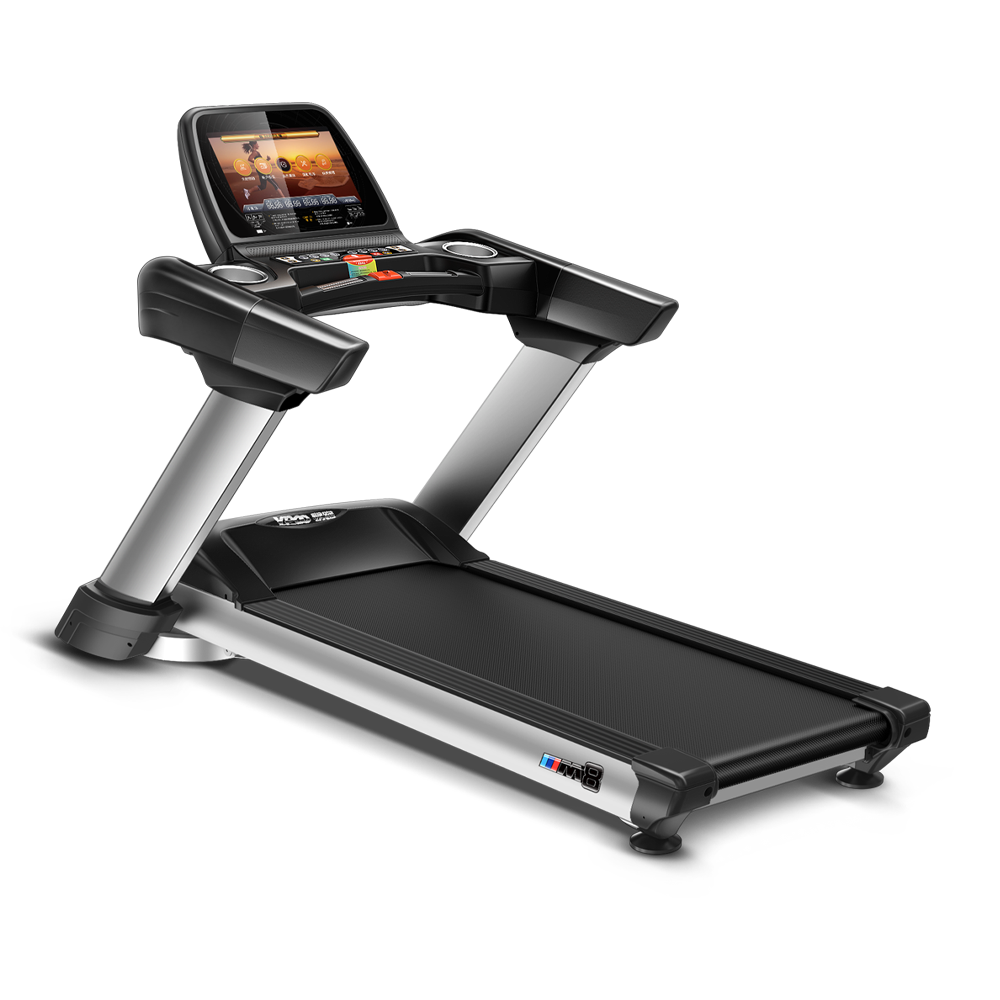
A strong-looking plastic shroud does not prove a strong treadmill. Structural review should include the steel frame, weld consistency, upright connection, console support, deck thickness and material, front and rear rollers, bearings, side rails, leveling feet, incline structure, and fastening method.
Net machine weight is a useful supporting signal because heavier components can improve stability, but it is not a standalone quality score. Weight can come from useful structure or from parts that do little for durability. Compare the net weight together with frame drawings, material specifications, critical dimensions, load tests, vibration behavior, and service access.
In YPOO’s listed semi-commercial range, machine weights vary considerably. The YP-M7 Ultra is listed at 89 kg net, the YP-M8 Pro at 172 kg, and the YP-M9 at 202 kg. These models do not serve exactly the same project. The buyer should choose the structure that matches traffic, installation constraints, target price, and service plan rather than simply selecting the heaviest catalog item.
5. Maximum User Weight and Stability
Maximum user weight is one of the most visible treadmill specifications and one of the easiest to misread. A 150 kg or 200 kg label does not explain the test method, dynamic loading, running speed, incline position, duration, or safety margin. It also does not reveal handrail stiffness, frame vibration, deck deflection, belt behavior, or long-term wear.
Ask the manufacturer how the rating was validated and request the relevant test record where available. Test the sample with users or controlled loads that represent the project, while following safe procedures. Observe starting, walking, running, incline transitions, emergency stopping, side-step stability, and handrail movement.
For shared facilities, also consider accessibility and user confidence. Low step-up height, clear side rails, intuitive emergency stop, stable handrails, and easy speed controls can matter as much as the headline capacity. Select a stated maximum that leaves an appropriate margin above the facility’s expected user range.
6. Speed, Incline, and Training Range
Speed and incline determine who can use the treadmill and how much mechanical demand the system must manage. A moderate-speed model may be suitable for walking, jogging, and general hotel fitness. A model reaching 25 km/h requires a running surface, frame, belt control, and stopping behavior appropriate to that performance.
Incline should be reviewed as a system, not just a number of levels. Ask for the actual incline range or percentage, the number of levels, lift-motor specification, transition time, calibration method, maximum load during elevation, and behavior after a power interruption. Marketing “levels” are not automatically equal to percentage grade.
Test low-speed smoothness, speed accuracy under load, acceleration, quick-key behavior, incline noise, transition stability, emergency stop, safety-key response, and recovery after the safety key is replaced. For unsupervised facilities, simple controls and predictable transitions often produce a better user experience than an overloaded program list.
7. Console, Controls, and Connectivity
A semi-commercial treadmill console must be attractive enough for the target channel but practical enough to support for years. YPOO’s semi-commercial models include LED, LCD, and TFT configurations depending on the model, with screen options reaching 21.5 or 23.8 inches on selected products.
Large touchscreens can strengthen a premium hotel or apartment proposal, but they add software, display, cable, power-supply, and replacement risk. Ask whether the console is modular, how it is removed, whether settings and language packs are documented, how firmware is updated, which apps or protocols are supported, and how long replacement screens will remain available.
Review the physical interface as well. Speed and incline keys should be clear, start and stop controls should be obvious, and emergency-stop operation should not depend on navigating a touchscreen. Confirm measurement units, language, program names, heart-rate inputs, Bluetooth or Wi-Fi claims, USB functions, speakers, and any subscription dependence before approving artwork and manuals.
8. Safety, Durability, and Test Evidence
The words “semi-commercial” should be backed by evidence. At minimum, ask for model-specific safety and performance documentation, internal life-test records, load-test conditions, inspection standards, electrical checks, belt and incline tests, and packaging validation. Confirm that the model number on each report matches the product, motor, controller, console, and market version being purchased.
ISO 20957-6:2021 specifies treadmill-specific safety requirements and test methods to be used with the general requirements in ISO 20957-1:2024. ISO 20957-6 covers treadmill usage classes S, H, and I as well as accuracy classes A, B, and C. “Semi-commercial” is not itself one of those class names, so buyers should ask which class applies to the exact model and obtain the corresponding evidence instead of inferring compliance from a product-page label.
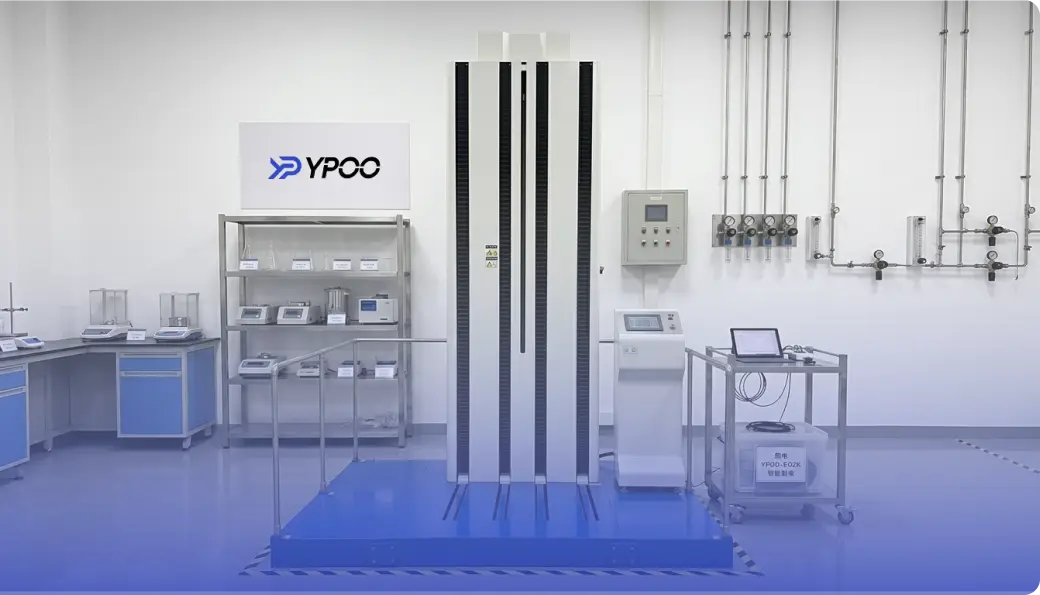
YPOO describes structured treadmill inspection and performance testing, including full-machine life testing, durability cycles, drop testing, and salt-spray testing. For procurement, the useful question is not whether a factory has a laboratory photo; it is whether the supplier can connect the test method, sample, acceptance limit, result, corrective action, and bulk-production inspection to the model on the purchase order.
9. Maintenance, Spare Parts, and Warranty Workflow
Serviceability is the final defining specification because shared-use equipment creates operational cost when it stops. Before ordering, request the maintenance schedule, lubrication instructions, belt-tension procedure, diagnostic guide, exploded view, wiring diagram, error-code list, parts list, recommended spare-parts ratio, and warranty claim process.
Identify the parts most likely to need support: running belt, deck, rollers, bearings, drive belt, motor brushes where applicable, controller, lift motor, safety key, speed and incline keys, console, cables, power switch, fuse, and side-rail hardware. Ask whether parts are model-specific or shared across a product platform, how they are labeled, how quickly they can be supplied, and whether the supplier can provide replacement videos.
A practical warranty statement should define coverage by component, start date, labor responsibility, freight responsibility, exclusions, evidence required, response time, and remedy. A long headline warranty is less useful than a workflow that allows a local technician or distributor to identify and replace a part quickly.
3 YPOO Semi-Commercial Treadmill Examples
The following published specifications show the width of the category. They are useful for initial model screening; final specifications should be confirmed on the quotation, pro forma invoice, approved sample record, and order specification sheet.
| Model | Motor | Speed | Incline | Running Belt | Net Weight | Max User |
|---|---|---|---|---|---|---|
| YP-M7 Ultra | BLDC 1.5/1.75 CHP | 1.0–18.8 km/h | Auto 0–36 levels | 520 × 1,410 mm | 89 kg | 150 kg |
| YP-M8 Pro | AC 3.0 CHP | 1.0–25.0 km/h | Auto 0–25 levels | 580 × 1,600 mm | 172 kg | 180 kg |
| YP-M9 | AC 7.0 HP peak | 1.0–25.0 km/h | 0–18 levels | 600 × 1,650 mm | 202 kg | 200 kg |
These three models illustrate why a buyer should compare the full platform. YP-M7 Ultra offers a compact 520 mm belt and BLDC drive. YP-M8 Pro moves to a 580 × 1,600 mm surface, AC motor, higher listed speed, and 172 kg frame. YP-M9 extends the surface to 600 × 1,650 mm and lists a 200 kg maximum user weight. The published CHP and peak-HP descriptions should not be treated as directly equivalent ratings.
Which Projects Are a Good Fit?
Hotels and Serviced Apartments
Semi-commercial treadmills can fit hotels and serviced apartments when expected traffic is moderate and the supplier confirms the usage profile. Prioritize simple controls, quiet operation, stable handrails, clear emergency stopping, wide user compatibility, and local maintenance access.
Apartment and Residential Gyms
For residential projects, check peak-hour traffic, noise transmission, floor loading, doorway and elevator access, ventilation, and who will perform routine maintenance. A serviceable console and common spare-parts platform can reduce management risk.
Corporate and School Staff Fitness Rooms
These sites often need reliable walking and running rather than maximum entertainment features. Match the model to the expected user range, room rules, supervision, electrical supply, and inspection schedule.
Personal-Training Studios
Studios may produce intense sessions even with a smaller number of users. Discuss interval use, repeated speed changes, incline work, athlete weight, ventilation, and recovery periods with the manufacturer. A full-commercial model may be the safer choice when training demand is high.
Premium Home Gyms
A semi-commercial model can suit a buyer who values stability, a larger running surface, and longer-term service access. Check footprint, machine weight, delivery route, floor protection, power requirements, and noise before purchase.
Common Buying Mistakes
The most common mistake is choosing a semi-commercial treadmill from one headline number. High horsepower does not compensate for a weak controller or poor cooling. A wide belt does not prove frame stability. A high maximum user weight does not reveal the dynamic test. A large touchscreen does not guarantee a replacement will be available. A certificate from a similar model does not prove the ordered configuration is covered.
Another mistake is ignoring logistics and service. A machine can fit the gym but not the elevator. A strong frame can arrive damaged in an under-designed carton. A reliable treadmill can remain out of service because the buyer cannot identify one cable or controller. Include installation, packaging, documentation, spare parts, and warranty response in the same evaluation as product specifications.
Semi-Commercial Treadmill Buyer Checklist
- Write the real site and duty profile before comparing models.
- Compare continuous and peak motor ratings on the same basis.
- Confirm usable running-belt dimensions and assembled footprint.
- Review frame, deck, rollers, machine weight, and stability together.
- Ask how maximum user weight and speed were validated.
- Test incline transitions, emergency stop, and controls under load.
- Approve the exact console, language, functions, and replacement method.
- Match test reports and certificates to the ordered model and configuration.
- Agree on maintenance, spare parts, warranty evidence, and response workflow.
Frequently Asked Questions
What is a semi-commercial treadmill?
A semi-commercial treadmill is a market category for machines designed to provide more durability, stability, and serviceability than typical home treadmills while serving moderate shared-use environments such as hotels, apartments, offices, and studios. The label is not a universal technical grade, so buyers must verify the intended use and full specification.
What is the difference between a semi-commercial and commercial treadmill?
A semi-commercial treadmill usually balances stronger shared-use construction with a smaller footprint or lower project cost. A full-commercial treadmill is generally designed around heavier traffic, longer operating periods, maximum uptime, and institutional service needs. The manufacturer’s declared use and test evidence should decide the fit.
How many hours per day can a semi-commercial treadmill run?
There is no universal daily-hour limit for all semi-commercial treadmills. Safe duty depends on the motor, controller, cooling, belt and deck friction, user load, session pattern, room conditions, and maintenance. Ask the manufacturer to approve the project’s expected usage profile in writing.
Is a 3.0 HP motor enough for a semi-commercial treadmill?
It may be, but the rating must state whether it is continuous, nominal, or peak. Motor type, controller, cooling, electrical supply, speed under load, belt and deck system, and duty cycle must be evaluated together. Horsepower alone cannot define the category.
Can a hotel use a semi-commercial treadmill?
Yes, when the selected model is approved for the hotel’s expected traffic, users, session pattern, environment, and maintenance plan. Hotels should also prioritize simple controls, emergency stopping, quiet operation, service access, spare parts, and clear warranty support.
Final Recommendation
A semi-commercial treadmill should be defined by evidence, not by one catalog label. Start with the operating profile, then compare the motor and controller, running belt, frame and deck, maximum user weight, speed and incline, console, test documentation, and after-sales system. All nine specifications must support the same intended use.
YPOO offers semi-commercial treadmill platforms for different project levels, from compact BLDC models to larger AC-driven machines with wider belts and higher listed capacities. Importers, distributors, hotel project buyers, gym-equipment dealers, and private-label brands can use the nine-point framework above to shortlist the right configuration and build a clearer RFQ.
Review the YPOO semi-commercial treadmill range, explore the complete YPOO treadmill manufacturing program, or contact YPOO with your site profile, target specifications, quantity, market, and OEM/ODM requirements.