
Exercise bike sourcing looks simple at first. Buyers compare product photos, flywheel weight, resistance levels, screen options, and FOB prices. But in real B2B purchasing, those visible details do not fully show whether a manufacturer can deliver consistent production, stable components, strong cartons, accurate documents, and usable spare parts.
This guide gives importers, distributors, gym equipment dealers, private-label brands, hotel project buyers, and e-commerce sellers a practical way to choose an exercise bike manufacturer. It also uses YPOO’s exercise bike and spin bike range as a reference for what serious buyers should ask from any supplier.
What a Manufacturer Should Prove First
The first buying question should not be “What is your best price?” It should be “What can you prove?” A real exercise bike manufacturer should be able to show legal company information, factory address, product line, sample room, production area, QC process, packaging area, warehouse, export experience, and model-specific specification sheets.
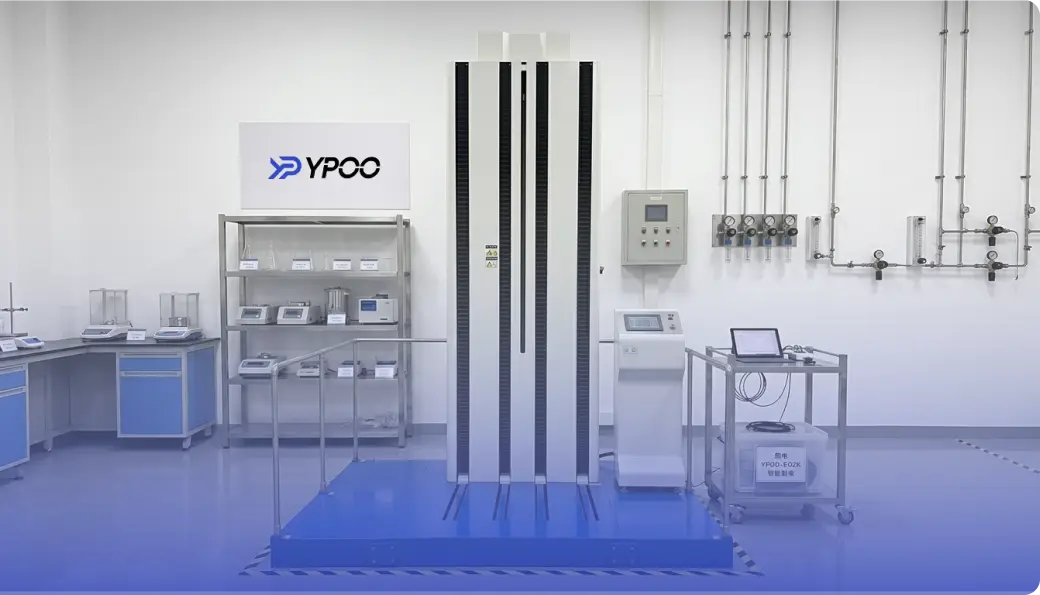
YPOO’s spin bike page positions the company as a factory-direct OEM manufacturer for fitness brands, gyms, distributors, and private-label buyers. Its about page describes manufacturing capabilities including motor and electronic control, metalworking, injection molding, spray painting, assembly line, national-level laboratory, CNAS laboratory, and high-standard product quality inspections. Buyers can use these areas as audit checkpoints when comparing exercise bike companies.
Exercise Bike Manufacturer Checklist
| Area | What to Check | Why It Matters |
|---|---|---|
| Factory role | Legal name, factory address, production role, export entity, payment beneficiary | Clarifies accountability for samples, bulk orders, documents, and claims |
| Product range | Spin bike, exercise bike, home bike, studio bike, magnetic bike, electronic resistance options | Shows whether the supplier can support a real product program |
| Flywheel | Weight, balance, noise, bearing quality, drive feel, service parts | Directly affects riding feel and user satisfaction |
| Resistance system | Magnetic, electronic control, knob control, resistance levels, calibration, brake system | Controls training feel, warranty risk, and product positioning |
| Frame and fit | Tube structure, welding, stabilizers, handlebar, saddle, adjustment range, max user weight | Prevents wobble, poor ergonomics, and channel mismatch |
| Console | LED, TFT, program options, app support, units, language, batteries or power supply | Changes user experience, compliance review, and spare electronics |
| OEM/ODM | Logo, color, stickers, carton, manual, plug, display, handlebar, saddle, frame changes | Separates simple branding from engineering development |
| Documents | Certificates, test reports, manual, labels, carton marks, shipment documents | Supports customs, marketplace review, distributor sales, and claims |
| QC and service | Incoming checks, frame inspection, resistance test, final inspection, spare parts, warranty workflow | Connects the approved sample to repeatable bulk quality |
1. Choose by Channel, Not by Catalog Photo
An exercise bike for a home fitness brand is not the same as a bike for a commercial studio, dealer network, hotel gym, or low-return e-commerce channel. The target channel changes the required frame strength, resistance feel, console simplicity, carton protection, assembly instructions, spare parts, and warranty process.
Before asking for prices, write a short buyer requirement sheet. Include target market, retail price band, expected user type, usage frequency, order quantity, certificate needs, packing channel, OEM scope, warranty promise, and spare-part plan. This makes supplier comparison much cleaner.
2. Verify Factory Identity and Production Control
Many exercise bike companies can quote quickly, but not all of them control production. Ask whether the company is the factory, a trading company, a sales office, or an export entity linked to a factory. Then check business license, legal company name, factory address, bank beneficiary, certificate holder, and contract name.
If the supplier uses different names for sales, factory, certificate, and payment, ask for the relationship in writing. Different names are not always a problem, but unexplained differences can create problems during inspection, claims, certificate review, and repeat orders.
3. Audit the Product Line
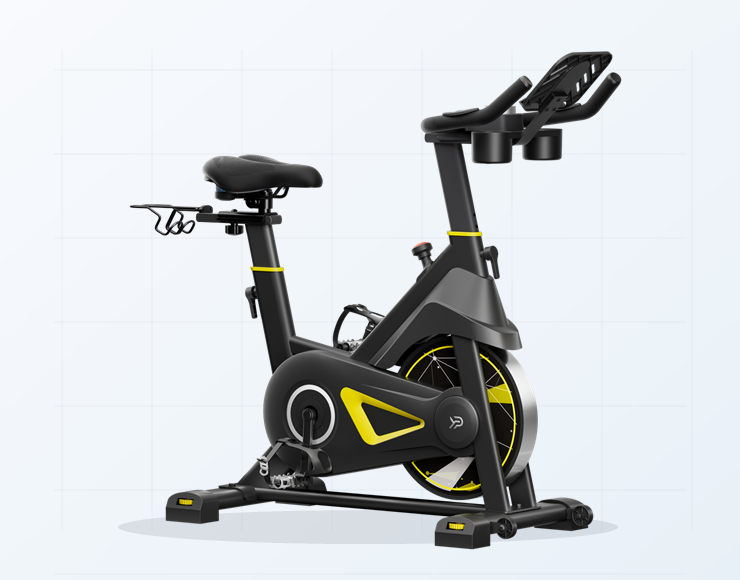
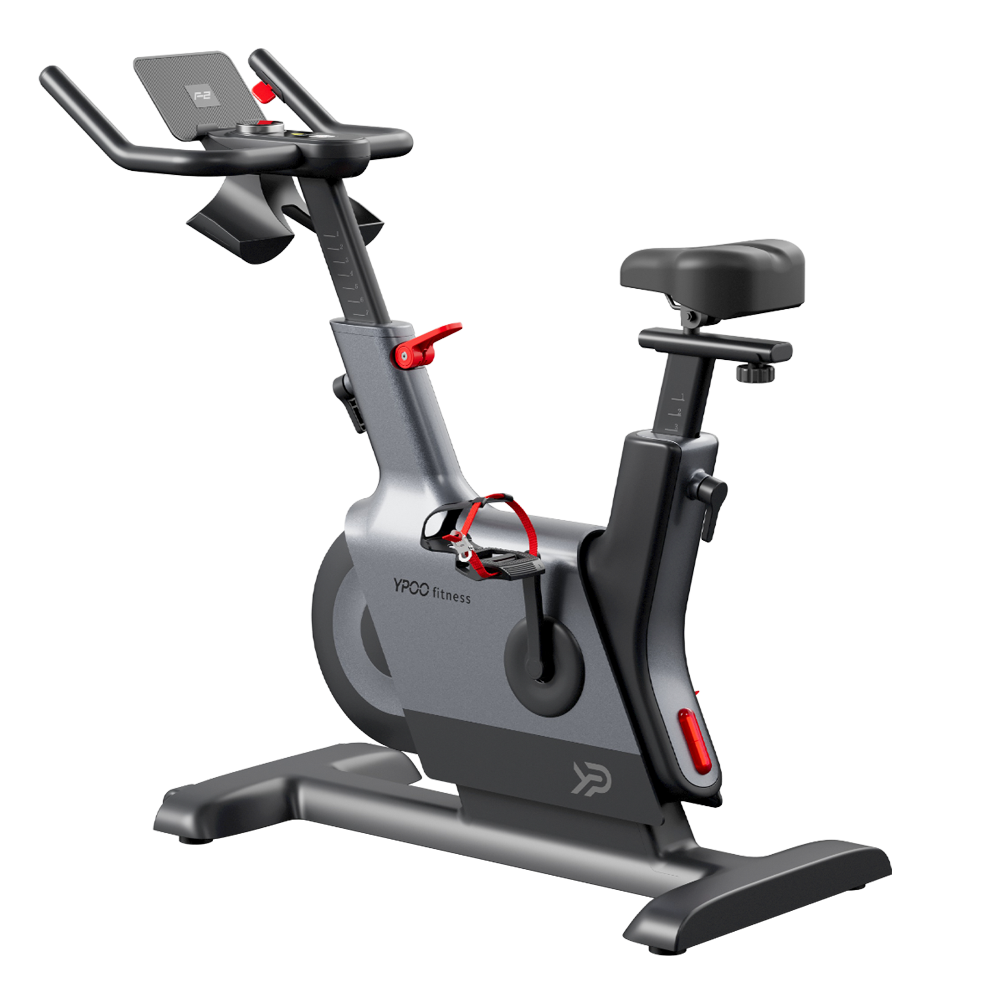
A strong manufacturer should not only show one attractive exercise bike. It should show a product range that supports different buyer needs. YPOO’s exercise bike and spin bike range includes models such as YP-F5 MAX, YP-F2, YP-F2 Mini, YP-F5 Ultra, YP-F7, and YP-X5, with differences in flywheel weight, display type, brake system, and resistance adjustment.
For buyer evaluation, product range matters because it shows whether the manufacturer can help you build a catalog, not just ship one SKU. It also gives you fallback options if a target price, flywheel, resistance system, or display option does not fit your market.
4. Compare Flywheel and Ride Feel
Flywheel weight is easy to list but not enough to judge quality. Buyers should also check balance, bearing quality, belt drive or chain drive, noise, resistance smoothness, stability, and spare-part availability. A heavier flywheel does not automatically create a better bike if the frame, brake system, and adjustment structure are weak.
YPOO’s current spin bike page lists examples such as 11.5 kg flywheel on YP-F5 MAX, 11 kg on YP-F2, 10 kg on YP-F2 Mini, 20 kg on YP-F5 Ultra, 10 kg on YP-F7, and 6 kg on YP-X5. Buyers can use this kind of model-specific comparison as a starting point, then test actual ride feel through samples.
5. Check the Resistance and Brake System
The resistance system decides training feel, maintenance needs, and product positioning. Ask whether the bike uses magnetic resistance, electronic control, friction resistance, knob control, or a digital resistance system. Confirm resistance levels, calibration, emergency stop behavior, noise, and spare parts.
YPOO models include electronic control resistance options and magnetic brake options. For example, YP-F5 MAX lists electronic control brake system with 1-32 resistance levels, while YP-X5 lists magnetic brake system with infinite knob adjustment. Serious buyers should compare the system to their channel: studio riders may need accurate resistance feel, while home users may prioritize quiet operation and simple control.
YPOO Exercise Bike Spec Examples
| Model | Flywheel | Display | Brake / Resistance | Good Buyer Check |
|---|---|---|---|---|
| YP-F5 MAX | 11.5 kg | TFT shuttle | Electronic control, 1-32 levels | Confirm display option, electronic resistance calibration, and spare electronics |
| YP-F2 | 11 kg | TFT shuttle / 21 inch TFT | Electronic control, 32 levels | Check console choice, MOQ, carton, and warranty parts |
| YP-F2 Mini | 10 kg | TFT shuttle | Electronic control, 1-32 levels | Compare compact size, riding fit, and home-channel packaging |
| YP-F5 Ultra | 20 kg | LED flying shuttle / 21 inch TFT | Electronic control, 36 levels | Test ride feel, frame stability, and display configuration |
| YP-F7 | 10 kg | LED flying shuttle / 21 inch TFT | Electronic control, 36 levels | Confirm channel fit, handlebar position, and service parts |
| YP-X5 | 6 kg | LED | Magnetic, infinite knob | Check price segment, quiet operation, and knob durability |
6. Inspect Frame Stability and User Fit
Frame stability is one of the fastest ways to separate serious exercise bike manufacturers from weak suppliers. Ask for tube thickness, welding process, stabilizer design, net weight, gross weight, max user weight, saddle adjustment, handlebar adjustment, pedal type, crank structure, and floor-leveling support.
During sample testing, ride out of the saddle, change resistance, adjust the saddle and handlebar, and check whether the bike shakes or makes noise. Also check whether shorter and taller users can fit comfortably. A bike that looks good in photos can fail quickly if the geometry and stability are poor.
7. Review Console, App, and Electronics
Console options can change cost, MOQ, certificate requirements, and after-sales support. Ask whether the bike uses LED, LCD, TFT, touchscreen, app connection, Bluetooth, heart rate, cadence, resistance display, program modes, and metric or imperial units. Ask whether the display is battery-powered or connected to the bike’s power system.
For OEM orders, confirm whether startup screen, console sticker, app name, units, manual language, and packaging artwork can be customized. If the console or app module changes after sample approval, compliance review and spare-part planning may need to be repeated.
8. Separate OEM From ODM
OEM and ODM are often mixed together in sales conversations. OEM usually includes logo, color, decals, manual, carton, labels, saddle, handlebar, pedals, plug, display option, and product photos. ODM goes deeper into frame structure, mold changes, resistance system, console hardware, app function, or new product development.
Ask the manufacturer to separate standard options from custom options. A good quote should state which customizations are included, which require extra cost, which require MOQ, which need sample confirmation, and which may affect certificate documents.
9. Make the Quote Specific
A quote should not only show unit price. It should define model number, flywheel, brake system, resistance levels, display, frame color, logo scope, carton, manual, certificate status, MOQ, lead time, payment terms, Incoterms, loading port, spare parts, warranty, and validity date.
If two suppliers quote the same-looking bike but one includes stronger carton protection, a better console, model-specific certificates, spare parts, and inspection support, the cheaper quote may not be the lower-risk option.
Quote Comparison Table
| Quote Item | Question to Ask | Risk if Missed |
|---|---|---|
| Model | Which exact model and configuration is included? | Suppliers may quote different specs under similar product photos |
| Flywheel | What is the flywheel weight, balance standard, and bearing quality? | Ride feel may differ from the sample or marketing claim |
| Resistance | Is it magnetic, electronic, friction, knob, or digital control? | Training feel, warranty risk, and spare parts change significantly |
| Console | Which display, app, units, language, and power setup are included? | OEM scope and certificate needs may change after price approval |
| Packaging | What carton, foam, accessory layout, and loading quantity are included? | Shipping damage can erase the price advantage |
| Documents | Which certificates, reports, manuals, labels, and export documents are included? | Marketplace or customs review may be delayed |
| Warranty | Which parts are covered, and how are claims handled? | After-sales promises may be difficult to execute |
10. Verify Certificates by Exact Model
Certificate files should match the exact exercise bike being imported. Ask for certificate files, test reports, user manual, product label, carton label, Declaration of Conformity where applicable, and any documents required by the destination market or sales channel.
Check model number, product photo, holder name, issue date, testing lab, standard, plug or power details, console module, and covered configuration. If the bike changes console, electronic resistance system, app module, plug, power supply, or structure, document review may be needed again.
11. Inspect Packaging Before Bulk Production
Exercise bikes are heavy enough to be damaged in transit and costly enough to hurt margins when returns rise. Ask for carton size, gross weight, foam protection, accessory layout, manual position, hardware pack, barcode, shipping marks, pallet plan, loading quantity, and drop-test method.
For e-commerce channels, packaging should survive parcel handling. For dealer and distributor channels, cartons should support warehouse storage, scanning, and repeat shipment. Packaging is part of the product, not a final detail.
12. Build a Sample Test Plan
Before approving a manufacturer, test samples with a written checklist. Check assembly, frame stability, saddle adjustment, handlebar adjustment, pedal fit, crank smoothness, resistance range, emergency stop, console functions, noise, belt or drive feel, accessory pack, manual, labels, and carton protection.
Ask the manufacturer to record any sample changes and confirm the final configuration in writing. The approved sample should become the reference for production, inspection, photos, carton, manual, and spare parts.
13. Ask for QC Records
Quality control should be model-specific. Ask for incoming material inspection, frame welding inspection, coating inspection, flywheel balance check, resistance system test, console function test, crank and pedal inspection, saddle and handlebar adjustment test, appearance check, accessory check, carton check, and final outgoing inspection.
YPOO highlights structured inspection and performance testing before shipment for reliable spin bike supply. Its about page also mentions high-standard product quality inspections and laboratory capability. Buyers should ask to see how those checks are applied to the exact model being ordered.
14. Confirm Spare Parts and Warranty Workflow
Spare parts should be prepared before shipment, not after customer complaints begin. Ask for exploded diagrams, part codes, recommended spare ratio, repair videos, claim evidence requirements, response time, and spare-part lead time.
Common exercise bike spare parts include pedals, crank, belt, flywheel parts, bearings, resistance parts, brake system parts, knobs, sensors, console, handlebar parts, saddle, seat post, covers, stabilizers, fasteners, and hardware packs. The spare-part list should match the exact model and configuration shipped.
15. Check MOQ, Lead Time, and Repeat Order Control
MOQ can change when buyers request logo, color, carton artwork, private-label manual, display changes, app changes, or mixed-model orders. Ask for standard MOQ, mixed-model MOQ, color MOQ, logo MOQ, carton MOQ, and sample lead time before approving the price.
Lead time should state when the clock starts: deposit date, artwork approval, sample approval, or final document confirmation. For repeat orders, ask how the manufacturer controls component consistency so the bulk shipment does not drift away from the approved sample.
Common Mistakes When Choosing Exercise Bike Companies
- Comparing only FOB price without checking flywheel, resistance system, frame, console, carton, and spare parts.
- Assuming every exercise bike manufacturer is also the actual production factory.
- Approving samples before checking certificates, labels, manuals, and packaging.
- Using a home-use bike for studio, hotel, or dealer channels.
- Ignoring resistance calibration and emergency stop behavior.
- Changing console or app options after sample approval without document review.
- Skipping pre-shipment inspection for first orders.
- Accepting vague warranty terms without part codes or a claim workflow.
When YPOO Is a Good Fit
YPOO is a good fit for buyers who need factory-direct spin bikes and exercise bikes for gyms, distributors, and private-label fitness equipment brands. The product range includes several flywheel, display, brake system, and resistance options, which helps buyers match models to different markets and price bands.
YPOO’s broader factory profile also supports buyers who need OEM/ODM communication, structured quality control, in-house manufacturing areas, laboratory checks, and repeat-order planning. For serious buyers, the next step is to share target market, order quantity, certificate needs, OEM scope, packaging channel, and warranty expectations before requesting a final quote.
FAQ
How do I choose an exercise bike manufacturer?
Choose an exercise bike manufacturer by verifying factory role, legal identity, product range, flywheel quality, resistance system, frame stability, console options, certificates, packaging, QC process, spare parts, warranty workflow, MOQ, lead time, and inspection support.
What is the difference between an exercise bike manufacturer and supplier?
A manufacturer controls production, factory process, model specifications, QC, and usually more of the engineering details. A supplier may be a trading company, sales office, or distributor. Suppliers can still be useful, but buyers should know who actually controls production and documents.
What specifications matter most for exercise bike sourcing?
Important specifications include flywheel weight, resistance system, brake system, drive system, frame weight, max user weight, saddle and handlebar adjustment, console type, product size, carton size, gross weight, certificate status, and spare-part availability.
Can exercise bikes be customized for private-label brands?
Yes. Common OEM options include logo, color, decals, carton artwork, manual language, labels, console sticker, saddle, handlebar, pedals, and product photos. Deeper ODM changes such as frame structure, resistance system, console hardware, app function, or molds require more development time and testing.
What should I test before placing a bulk exercise bike order?
Test assembly, frame stability, resistance range, flywheel smoothness, noise, pedals, crank, saddle adjustment, handlebar adjustment, console functions, emergency stop, accessory pack, manual, labels, carton protection, and spare-part availability before approving bulk production.
Final Recommendation
The best exercise bike manufacturer is the one that can prove production control, model-specific specifications, stable ride feel, clear documents, strong packaging, repeatable QC, and realistic after-sales support. Price matters, but it should be compared together with total sourcing risk.
If you are comparing exercise bike companies for import, wholesale, dealer sales, studio projects, or private-label programs, start with a structured requirement sheet and ask YPOO for model recommendations, sample planning, OEM/ODM options, and quotation details.
Contact YPOO to discuss your exercise bike manufacturer selection, or review the YPOO spin bike and exercise bike product range before choosing sample models.